EICR for London Landlords 2026: Cost, Frequency & What an Unsatisfactory Report Means
Complete London landlord guide to the EICR: what the law requires, the 2026 cost (£120–£500), the C1/C2/C3/FI codes explained, and the 28-day remedial rule.
An EICR (Electrical Installation Condition Report) is a legal requirement for all private rented properties in England under the Electrical Safety Standards in the Private Rented Sector (England) Regulations 2020. Landlords must have a satisfactory EICR carried out by a qualified electrician every 5 years, provide a copy to tenants within 28 days, and remediate any C1, C2, or FI faults within 28 days of the report. 2026 London costs range from £120 for a 1-bed flat to £500 for a large HMO.
The EICR — Electrical Installation Condition Report — became mandatory for all private rentals in England on 1 July 2020. Five years on, renewal cycles are now hitting landlords who had their first inspection in that initial compliance wave. If you're approaching your first five-year mark, or you're buying a property to let, this is the guide to know what you need, what it costs, and what an Unsatisfactory report actually means for your rental. If you're ready to book, contact our team — we work with NICEIC and NAPIT registered electricians across all 32 London boroughs.
This guide covers the legal framework, the inspection process, 2026 London costs, the report codes (C1, C2, C3, FI), and the 28-day remedial rule that trips up so many landlords when their first unsatisfactory report lands.
What Is an EICR?
An EICR is a formal inspection of the fixed electrical installation in a property — the bits of the electrical system that are part of the fabric of the building rather than plug-in appliances. The electrician tests the consumer unit (fusebox), every circuit, earthing arrangements, bonding, RCD protection, socket outlets, switches, and lighting points. The test is conducted against the current BS 7671 wiring regulations (at time of writing, 18th Edition with 2022 amendments).
The output is a multi-page report with two possible overall verdicts:
- Satisfactory: No dangerous faults found. The installation is safe for continued use. Only C3 (improvement recommended) observations may be present.
- Unsatisfactory: One or more C1, C2, or FI items found. Remedial work is legally required before the report becomes satisfactory.
An EICR is a snapshot. It reflects the installation's condition on the day of the inspection. It is not a warranty, not a guarantee that the installation will remain safe, and not a substitute for responsible day-to-day use.
The 2020 Electrical Safety Standards Regulations — The Law

The governing legislation is the Electrical Safety Standards in the Private Rented Sector (England) Regulations 2020. Key provisions:
- Mandatory inspection: Private landlords must have the electrical installation inspected and tested at least every 5 years by a qualified person.
- Tenant copy: A copy of the report must be provided to existing tenants within 28 days of the inspection, to new tenants before they occupy the property, and to any prospective tenant within 28 days of a request.
- Local authority: The report must be provided to the local housing authority within 7 days of a written request.
- Remedial work: If the report identifies any C1, C2, or FI issues, remedial work must be carried out within 28 days (or earlier if the report specifies). Written confirmation that the installation is now safe must be provided to tenants within 28 days of completion and to the local authority on request.
- Penalties: Local authorities can impose civil penalties up to £30,000 per breach.
The regulations apply to tenancies including assured shorthold tenancies, regulated tenancies, licence agreements, and rooms let under HMO arrangements. Lodgers in a live-in landlord arrangement, student lets granted by specified educational institutions, and long leases (7+ years) are outside the scope. The EICR sits alongside the annual gas safety requirement covered in our landlord gas safety certificate (CP12) guide — both are compulsory for most private rentals and both trigger a Section 21 block if missed.
💡 Scotland and Wales: Scotland has had its own EICR-equivalent regime (via the Housing (Scotland) Act 2006) since 2015, with a 5-year cycle and an Electrical Installation Condition Report requirement. Wales introduced broadly equivalent standards in 2022. If you let across borders, check the specific regime for each jurisdiction.
How Often Landlords Need an EICR
The statutory minimum is every 5 years. However, the electrician carrying out the inspection can — and does — recommend a shorter interval if the installation warrants it. A common recommendation for older installations or properties with accumulated C3 observations is 3 years.
The recommended re-inspection interval printed on the EICR is binding for your next renewal. If the 2021 report recommended 3 years, your 2024 inspection needs to have happened by 2024, not 2026.
Change of Tenancy
There is no statutory requirement to renew the EICR on every change of tenancy if a current satisfactory report exists. You can provide the existing EICR to the new tenant before they move in, as long as it was issued within the last 5 years. However, we see several situations where a fresh EICR is the right call:
- The property has had electrical works done during the previous tenancy that aren't documented on the existing EICR (e.g. a new electric shower, an EV charge point, rewired kitchen).
- The property has been vacant for an extended period.
- There was a water ingress event during the previous tenancy that could have affected the wiring.
- You don't have clear documentation of when the last EICR was done.
In these cases, a fresh EICR protects you against a tenant disputing the validity of the inspection down the line. Portfolio landlords typically roll EICR cycles into our London PPM contracts so the 5-year renewal is tracked and scheduled rather than forgotten.
What a Qualified Electrician Checks
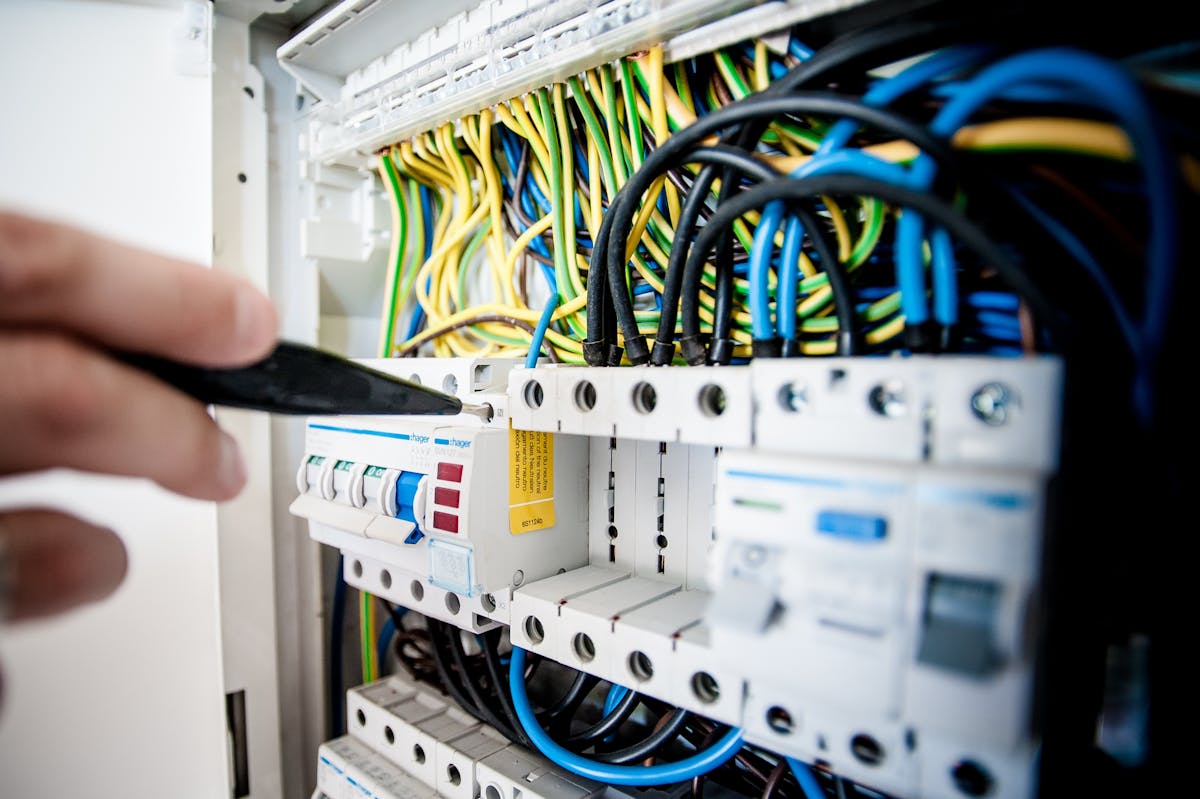
An EICR is a physical inspection combined with instrumented testing. Expect the electrician to spend 2–4 hours on a typical London 2-bed flat, longer for larger properties and HMOs. Turn-off of power during testing is required on most circuits. The inspection covers five main categories:
- Consumer unit (fusebox): Condition, age, manufacturer, presence of RCD protection, correct circuit labelling, proper gland entries, and whether it meets the current standards (metal enclosures have been required in domestic properties since January 2016 under Amendment 3 of BS 7671).
- Circuits: Each circuit is tested for continuity, insulation resistance, polarity, earth fault loop impedance, and RCD trip times. A typical London flat has 4–8 circuits; a family home 10–14.
- Earthing and bonding: The main earth terminal, the main protective bonding to gas, water, and any other extraneous conductive parts, and supplementary bonding in bathrooms are all inspected and tested.
- RCD protection: All socket outlets intended for general use and all circuits in a bathroom must have RCD protection. The electrician tests each RCD's trip current and time.
- Accessories and final circuits: A sample of socket outlets, switches, and lighting points is physically examined for damage, correct earthing, and signs of overheating. The sample size is typically 10–20% but varies with the installation.
The inspection is non-destructive — the electrician should not need to cut into walls or remove built-in features. If the installation can't be adequately inspected (e.g. hidden consumer unit behind kitchen units), this is recorded as a limitation and may generate an FI code requiring further investigation.
EICR Cost in London (2026 Rates)

Prices reflect the typical number of circuits and the time a competent inspection takes. London rates sit at the upper end of UK averages because of engineer labour rates, parking, ULEZ, and the older, more complex installations common in Victorian and Edwardian conversions.
| Property Type | Typical Circuits | 2026 Cost Range | Time on Site |
|---|---|---|---|
| Studio / 1-bed flat | 4–6 | £120–£180 | 2–3 hours |
| 2-bed flat | 6–8 | £160–£220 | 3–4 hours |
| 3-bed house | 8–12 | £200–£280 | 3–4 hours |
| 4-bed+ house | 12–16 | £280–£400 | 4–6 hours |
| HMO (4–6 bedrooms) | 10–18 | £300–£500 | 5–7 hours |
| Large HMO / converted townhouse | 18+ | £400–£700+ | 6–8 hours |
What Can Shift the Price
- Number of circuits: More circuits means more testing — each one has to be isolated, tested, and logged.
- Access: Boarded-over consumer units, blocked access to junction boxes, and inaccessible upstairs circuits all add time.
- Existing documentation: If you have the previous EICR, installation certificates for any newer work, and clear circuit labelling, inspection is faster and cheaper.
- Borough: Central London postcodes (WC, W1, EC, SW1) add £10–£30 for parking, ULEZ, and congestion.
- HMO complexity: Multiple consumer units (one per flat in a converted HMO) multiply the work — each needs full circuit testing.
⚠️ Be wary of unusually cheap quotes: An EICR under £100 in central London for anything larger than a studio is typically a rushed visual inspection rather than a full test to BS 7671. A legitimate EICR involves instrumented testing on every circuit — it cannot be rushed without cutting compliance corners. Cheap certificates that later fall apart under scrutiny are common and dangerous.
Understanding the Report — Codes C1, C2, C3, FI
The EICR classifies every observation using one of four codes. These codes determine whether the report is Satisfactory or Unsatisfactory and what action — if any — the landlord must take.
| Code | Meaning | Example | Action Required |
|---|---|---|---|
| C1 | Danger present. Risk of injury. Immediate action required. | Exposed live parts, broken socket with conductors accessible, severely overloaded circuit overheating | Make safe immediately — before the electrician leaves. Remedial work required within 28 days (typically much sooner). |
| C2 | Potentially dangerous. Urgent remedial action required. | No RCD protection on circuits where required, inadequate earthing, fuseboard not conforming to current standards in a way that creates hazard | Remedial work within 28 days. |
| C3 | Improvement recommended. Not currently dangerous. | Older plastic consumer unit (now requires metal), absence of RCD on lighting circuits (allowed but not ideal), cosmetic issues | No legal requirement to act. Report remains Satisfactory with C3-only findings. |
| FI | Further investigation required without delay. | Unidentified circuit, intermittent RCD trip, installation defect that requires opening up to diagnose | Investigation and remedial work within 28 days. |
The overall verdict works as a logic gate: any C1, C2, or FI makes the whole report Unsatisfactory. Only a report with zero C1/C2/FI observations (or only C3 items) is Satisfactory.
💡 C3 items are worth addressing at the next practical opportunity. They don't force immediate remediation but they do accumulate — three renewals of a report with "C3: plastic consumer unit" is a signal to upgrade. And a mis-coded C3 that should have been C2 can come back to bite you if an accident happens.
What to Do If Your Property Fails

A failed EICR is not a disaster. It's a fixed process with a fixed timeline. Work through it in order.
Read the report carefully
Identify every C1, C2, and FI item. The electrician should have noted these clearly with remedial recommendations and, usually, an estimated cost for the work.
Get the remedial work quoted and booked within 28 days
Use the same electrician who issued the report, or a different qualified electrician with scheme registration. The 28-day clock starts from the date of the report, not the date you received it.
Inform the tenant
Tenants must receive a copy of the EICR within 28 days and be kept informed of remedial progress. Clear communication prevents complaints to the local authority.
Have the work completed and certified
The electrician provides an Electrical Installation Certificate (EIC) or Minor Works Certificate for the remedial work. This is your written confirmation that the installation is now safe.
Provide written confirmation to tenants
Within 28 days of completing the remedial work, give tenants written confirmation that the installation is now safe, along with the EIC/Minor Works Certificate.
Supply to local authority on request
If the local housing authority has issued a remedial notice or requested confirmation, provide the certification within the timeframe they specify (often 7 days).
If You Can't Meet the 28-Day Deadline
Sometimes remedial work takes longer — for example, if a consumer unit replacement requires supplier isolation that can't be booked inside 28 days, or if the property is tenanted and access is difficult. In these cases:
- Document your attempts to meet the deadline — quotes, booked dates, tenant access correspondence.
- Take any immediate make-safe action to remove the acute risk (e.g. isolating an affected circuit).
- Communicate in writing with the tenant and, if relevant, the local authority about the timeline.
Local authorities use discretion when genuine reasons prevent compliance within 28 days and a landlord has clearly acted in good faith. Silence, however, is treated as wilful non-compliance. Where the fault is serious — exposed live conductors, a failed RCD on a bathroom circuit, overheating at the consumer unit — you should also line up an out-of-hours emergency response in case the appliance needs isolating before the scheduled electrician can attend.
Booking Your EICR with Emergency Repairs London
We work with a network of NICEIC and NAPIT registered electricians across all 32 London boroughs. Typical booking flow:
Call or book online
Phone 07456 975436 or use our contact form. We'll ask for the property address, approximate age, number of bedrooms, and whether the property is tenanted.
Fixed price confirmed upfront
We confirm the EICR fee based on the property type. Any remedial work quoted separately after the inspection.
Tenant access coordinated
We liaise with the tenant to arrange a 3–4 hour window. Power will be off during testing, so we agree a suitable time.
Full BS 7671 inspection carried out
Consumer unit, circuits, earthing, bonding, RCDs, and a sample of accessories all inspected and tested. Typical London 2-bed takes 3–4 hours.
Report issued within 48 hours
You receive the EICR electronically. If any remedial work is recommended, we provide a fixed quote alongside the report so you can action it inside the 28-day window.
Book Your Landlord EICR in London
NICEIC and NAPIT registered electricians across all 32 London boroughs. Fixed pricing, tenant access coordinated, reports within 48 hours of the inspection.
Call 07456 975436Frequently Asked Questions
What is an EICR?
How often does a landlord need an EICR?
How much does an EICR cost in London?
What do the EICR codes C1, C2, C3, FI mean?
What happens if my EICR is unsatisfactory?
What is the fine for not having an EICR?
Do I need a new EICR when a tenant changes?
Can any electrician carry out an EICR?
Key Takeaways
- EICR is legally required for all private rentals in England under the 2020 Regulations — not optional, not a good-practice recommendation
- Frequency: every 5 years minimum, with a new inspection often required on change of tenancy if the existing report's integrity is unclear
- Codes to know: C1 (immediate danger, act now), C2 (potentially dangerous, act within 28 days), C3 (improvement recommended, not required), FI (further investigation required — also 28 days)
- 2026 London costs: 1-bed flat £120–£180, 2-bed £160–£220, 3-bed house £200–£280, 4+ bed £280–£400, HMO £300–£500
- Unsatisfactory report means 28 days (or less if the report states) to complete remedials, with written confirmation sent to the local authority if requested
- Fines up to £30,000 per breach — local authority enforcement powers include remedial action notices and compulsory remediation at the landlord's cost
