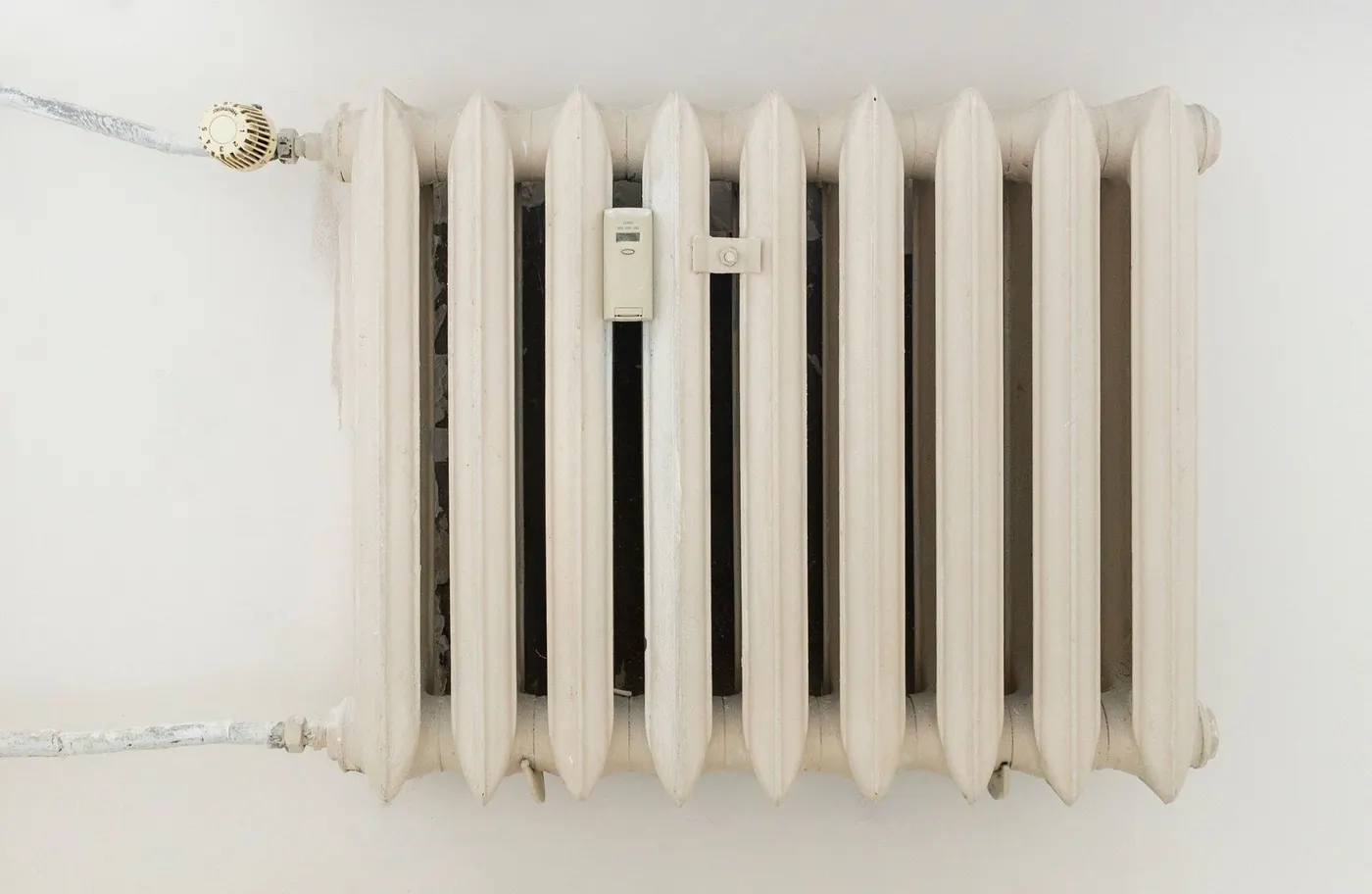
Radiator Cold at the Bottom? Causes and Fixes
Radiator cold at the bottom? Hot top and cold bottom usually means sludge; cold top and hot bottom means air. Bleed, check valves, then flush.
A radiator that is hot at the top and cold at the bottom usually has sludge settled in its base, restricting flow. If it is cold at the top and hot at the bottom, trapped air is the usual cause, so bleed it first. Also check the TRV and lockshield valve before paying for a flush.
Ask AI a questionYou put your hand on the radiator and the top is almost too hot to hold. Lower down, the panel is cold, sometimes only on one side. The room never quite warms up.
The cause is often cheap to fix, so work through the checks in order before you pay for a flush. This guide starts with the easiest check and ends with the most involved: confirm the pattern, bleed, check the valves, balance, deal with sludge, then look at the pump and pipework. That order matters most in an older London property where nobody knows when the system was last treated.
⚠️ Hot water scalds. Let the radiator cool before you bleed, drain or remove it, and keep a tray and towels under the valve. Never open the boiler casing. If you smell gas, turn the gas off at the meter, open the windows and call the National Gas Emergency Service on 0800 111 999.
Radiator Cold at the Bottom: What It Usually Means
A radiator that is cold at the bottom and hot at the top usually has sludge settled in its base, restricting the flow of hot water.
Hometree and Skills Training Group describe the same mechanism. Hometree calls it a mix of rust, dirt and metallic debris that settles at the base. Skills Training Group names iron oxides and limescale, and says the deposits gather in the flow channels at the bottom and block hot water from reaching the lower part of the radiator. It adds that any warmth you feel there is residual heat conducted through the metal, not flow.
Sludge is the most common explanation, but a stuck TRV, a closed lockshield valve or air in the radiator can produce a similar picture. Sludge is also the most expensive thing to fix, so rule out the cheap causes first.
Hot at the Top and Cold at the Bottom, or the Other Way Round
Hot at the top and cold at the bottom points to sludge, while cold at the top and hot at the bottom points to trapped air.
Run the heating for 20 minutes, then feel each radiator with the back of your hand at the top, middle and bottom. Glow-worm and Baxi both link a radiator that is cold at the top to trapped air. Hometree, Baxi and Glow-worm link the reverse, hot at the top and cold at the bottom, to sludge.
| What you feel | Likely cause | First check |
|---|---|---|
| Hot at the top, cold at the bottom | Sludge settled in the base | Rule out valves and air first, then look at a flush |
| Cold at the top, hot at the bottom | Trapped air | Bleed the radiator |
| Cold in the middle, warm at the edges | Unclear from touch alone | Bleed, then check valves, then consider a flush |
| Whole radiator cold, others on the system hot | Stuck or zero-set TRV, closed lockshield, or air lock in a new radiator | Check the TRV pin and both valves |
| Bleeding made no difference | Sludge, or an unbalanced system | Check the valves, then the flow-to-return drop |
| Several radiators cold, boiler running fine | Flow problem further back: pump, system sludge, pipework | Ask an engineer to check the pump and circuit |
A radiator that is cold only in the middle, or has patchy cold spots, does not point clearly at one cause, so do not diagnose it from touch alone. Work through the checks below.
Bleed First if the Radiator Is Cold at the Top
If the radiator is cold at the top, bleed it before you do anything else, because trapped air is cheap to remove and the most common cause of that pattern.
Switch the heating off and wait for the radiator to cool. Hold a cloth under the bleed valve at the top corner, open it slightly with a radiator key and listen for the hiss. Close it as soon as water comes out in a steady dribble. Then check the boiler pressure, because bleeding lets air out and can drop the gauge. If it has fallen below the manufacturer's minimum, our guide on how to repressurise a boiler walks through the top-up. If the bleed valve itself drips afterwards, see our guide to a radiator leaking.
If several radiators are affected, Baxi describes a whole-house approach:
- Turn every radiator to maximum and run the heating for about 15 minutes.
- Switch the heating off and leave the system for about an hour to cool.
- Bleed the radiator nearest the boiler first, then work through the rest until no more air escapes.
Recheck the boiler pressure at the end and top it up if it has dropped.
If the radiator is hot at the top and cold at the bottom, bleeding is unlikely to fix it, but it takes a minute and rules air out.
Check the TRV and Lockshield Valve, Then Balance
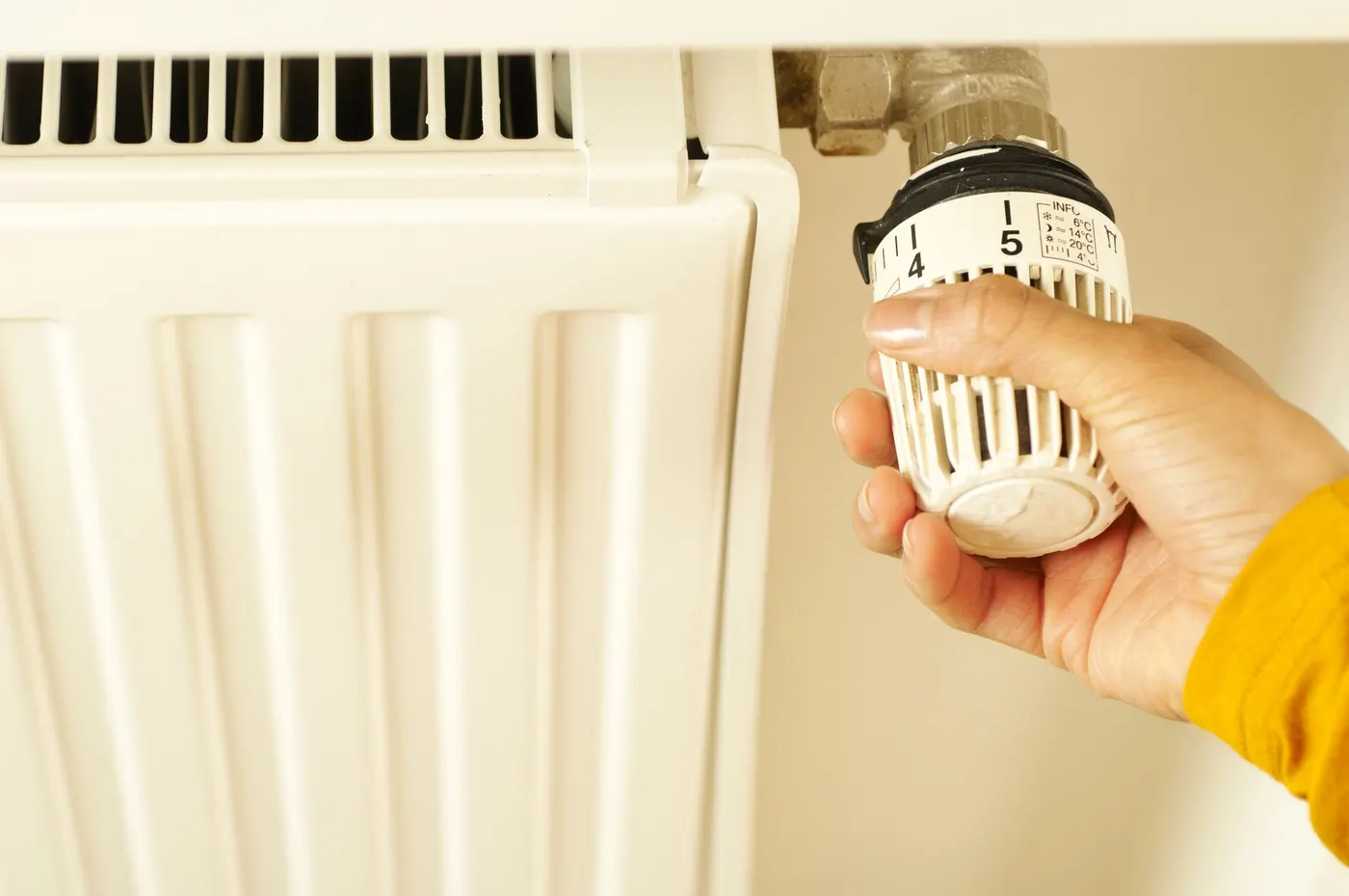
A thermostatic radiator valve with a stuck pin, or a lockshield valve that is closed or nearly closed, can leave a radiator cold, and both are quick to check.
Hometree says to rule out a stuck or zero-set TRV, a lockshield valve closed after decorating, and an airlock in a newly fitted radiator before you assume sludge. Baxi's advice for the TRV is to remove the head and check that the pin underneath moves freely. A stuck pin can keep the valve shut however high you set the dial.
- TRV: turn it to maximum and listen for the radiator to start filling. If nothing happens, take the head off and look at the pin. If it will not move, ask a heating engineer to look at it rather than forcing it.
- Lockshield valve: this is the plain cap on the other end of the radiator. It sets how much water the radiator receives. If it was closed for painting and never reopened, the radiator will stay cold.
- New radiator: if the radiator is newly fitted and cold from the start, an airlock is a reasonable suspect, so bleed it as above.
An engineer can tell you on the spot whether a stuck pin is worth freeing or the valve needs replacing.
Balancing
Balancing means adjusting each lockshield valve so hot water is shared fairly between radiators. If the ones nearest the boiler take most of it, the ones at the far end stay lukewarm, which can look like a cold-bottom problem even when the system is clean.
Ageas's guide opens all the valves, then works from the radiator that heats up first, usually the one nearest the boiler. You close its lockshield valve, reopen it a quarter turn and adjust in small steps until the two pipes differ by about 12C. Treat 12C as a target, and follow your boiler and valve manufacturer's instructions where they differ.
Radiator Sludge: Flush Options and Costs
If the valves are fine, the radiator is bled and the system is balanced, sludge is the most likely cause, and you have three levels of flush to choose from.
Single-radiator flush
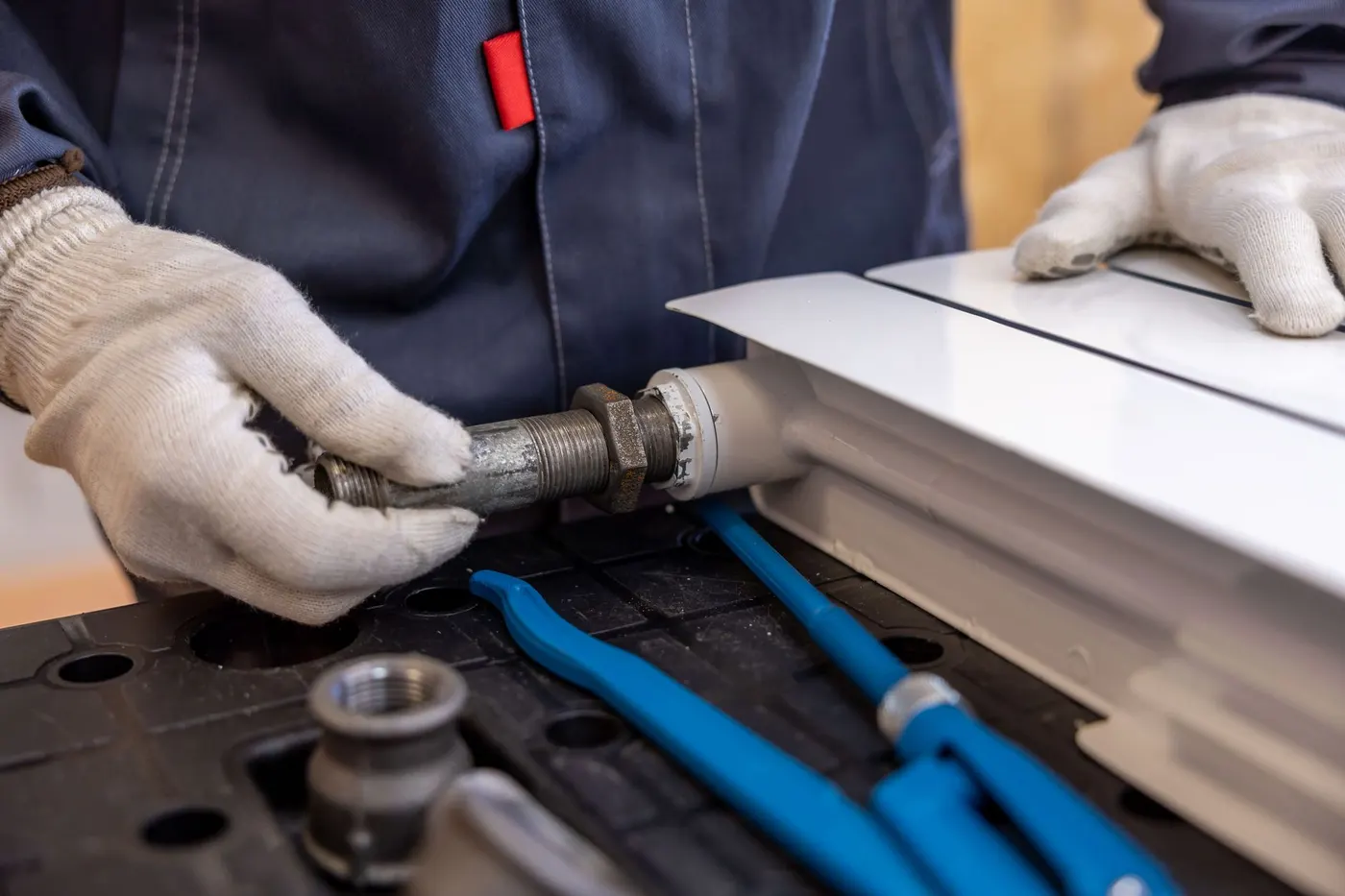
This suits one badly affected radiator. Skills Training Group lists the sequence: isolate the radiator, drain it, take it off the wall, flush it through with a hose, refit it, then bleed it and repressurise the system. Glow-worm advises closing the TRV, lockshield and bleed valve first and waiting 30 to 60 minutes before you start. Skills Training Group takes the radiator outdoors for the hose flush and puts towels and a bowl under the connector nuts, because a little black water is normal.
Chemical flush and power flush
A chemical flush circulates a cleaning agent around the system, while a power flush uses a pump to push water through at speed. Our guide to power flush vs chemical flush covers how to choose. If several radiators show the same pattern, the sludge is in the system, and a whole-system flush makes more sense than doing each radiator by hand.
Prices are indicative. These figures come from trade cost guides, not from an ERL quote:
- Chemical flush: about £75 to £250 (Hometree, October 2022).
- Power flush: about £300 to £700, taking 6 to 10 hours (Hometree, October 2022).
- Power flush by size, 2026: Whito lists £350 for a two-bed flat with about four radiators, £450 for about six, £550 for about ten and £800 for about fifteen. Whito gives no London premium.
- Magnetic filter: £120 to £250 fitted, or £250 to £400 and more if the system needs draining down (Trade2Base).
- Inhibitor bottle: £8 to £15 (Trade2Base).
- London labour: Trade2Base puts plumber hourly rates at £55 to £85 and day rates at £350 to £550.
More on likely quotes in our power flush cost guide, and our signs your radiators need a power flush page lists the other symptoms to look for.
Stop it coming back
Without protection, the sludge returns. Fernox says one 265ml bottle of Protector F1 treats an average system of about 100 litres. Its dosing guide counts a typical system as ten single-panel radiators, with each double-panel radiator counting as two. For BS 7593:2019 compliance, Fernox says inhibitor levels should be checked annually as part of the service.
If you are having a boiler fitted, Baxi says that since 15 June 2022 Part L of the Building Regulations has required a system clean and flush, an in-line filter and inhibitor on new boiler installs. Baxi also says its warranties do not cover repairs needed because of sludge. That is why the order of work matters, as we explain in power flush before or after a new boiler.
Cold Spots Everywhere: Pump, Flow and Pipework
If several radiators across the house are cold or only lukewarm, the fault is probably in the circulation around the boiler, not in one radiator.
A single cold-bottom radiator is a local problem. When radiators on different floors share the symptom, the question becomes whether the water is circulating properly at all. An engineer will look at the pump, the pipework and any sludge along the circuit once the radiator-level checks are done.
Pump settings and pipe sizes depend on the individual system, so there is no general rule to give here. In an older London house where the pipework has been altered over time, ask an engineer to look at the circuit as a whole. For boiler faults, see our boiler repair London page.
When to Stop DIY and Call a Pro
Call a heating engineer when the checks above have not fixed it, more than one radiator is affected, or the work involves draining the system or touching the boiler.
- You can do: the touch test, bleeding, checking the TRV pin and lockshield, a single-radiator flush if you are comfortable with it.
- Leave to an engineer: balancing with a thermometer if you are unsure, a chemical or power flush, filter fitting, pump and circuit faults, and anything involving the boiler itself.
- If you rent: report it to your landlord or agent in writing with a photo and date. Do not drain the system yourself. A written record helps if the repair drags on.
Radiators Still Cold at the Bottom?
Our engineers check valves, balance systems and quote for flushes across all 32 London boroughs, 24/7. £60 call-out fee at any hour for ordinary emergency work, waived for landlords, property managers and scheduled work.
Call 0207 046 1363Or WhatsApp a photo of the radiator and the valves to 07456 975436. More on our radiator repair London and power flush London pages.
Frequently Asked Questions
Why is my radiator cold at the bottom?
Why is my radiator hot at the bottom and cold at the top?
Can I fix a radiator that is cold at the bottom myself?
Is a power flush the only way to remove radiator sludge?
How much does it cost to fix a radiator cold at the bottom?
Should I tell my landlord if my radiator is cold at the bottom?
Emergency Repairs London provides same-day and 24/7 radiator repair, power flush and central heating services across all 32 London boroughs. Lines are open 24/7 on 0207 046 1363.
Key Takeaways
- Run the heating for 20 minutes, then feel each radiator. Hot at the top and cold at the bottom points to sludge; cold at the top and hot at the bottom points to trapped air
- For a whole-house bleed, Baxi suggests running every radiator on maximum for about 15 minutes, switching off for an hour to cool, then bleeding the radiator nearest the boiler first
- Ageas's balancing guide adjusts each lockshield valve until the two pipes differ by about 12C. Your boiler and valve manufacturer's instructions take priority
- Hometree's October 2022 guide puts a chemical flush at about £75 to £250 and a power flush at about £300 to £700, taking 6 to 10 hours
- A magnetic filter costs about £120 to £250 fitted, or £250 to £400 and more if the system needs draining down, according to Trade2Base
- Since 15 June 2022, Baxi says a clean system, an in-line filter and inhibitor are required on new boiler installs under Building Regulations Part L
