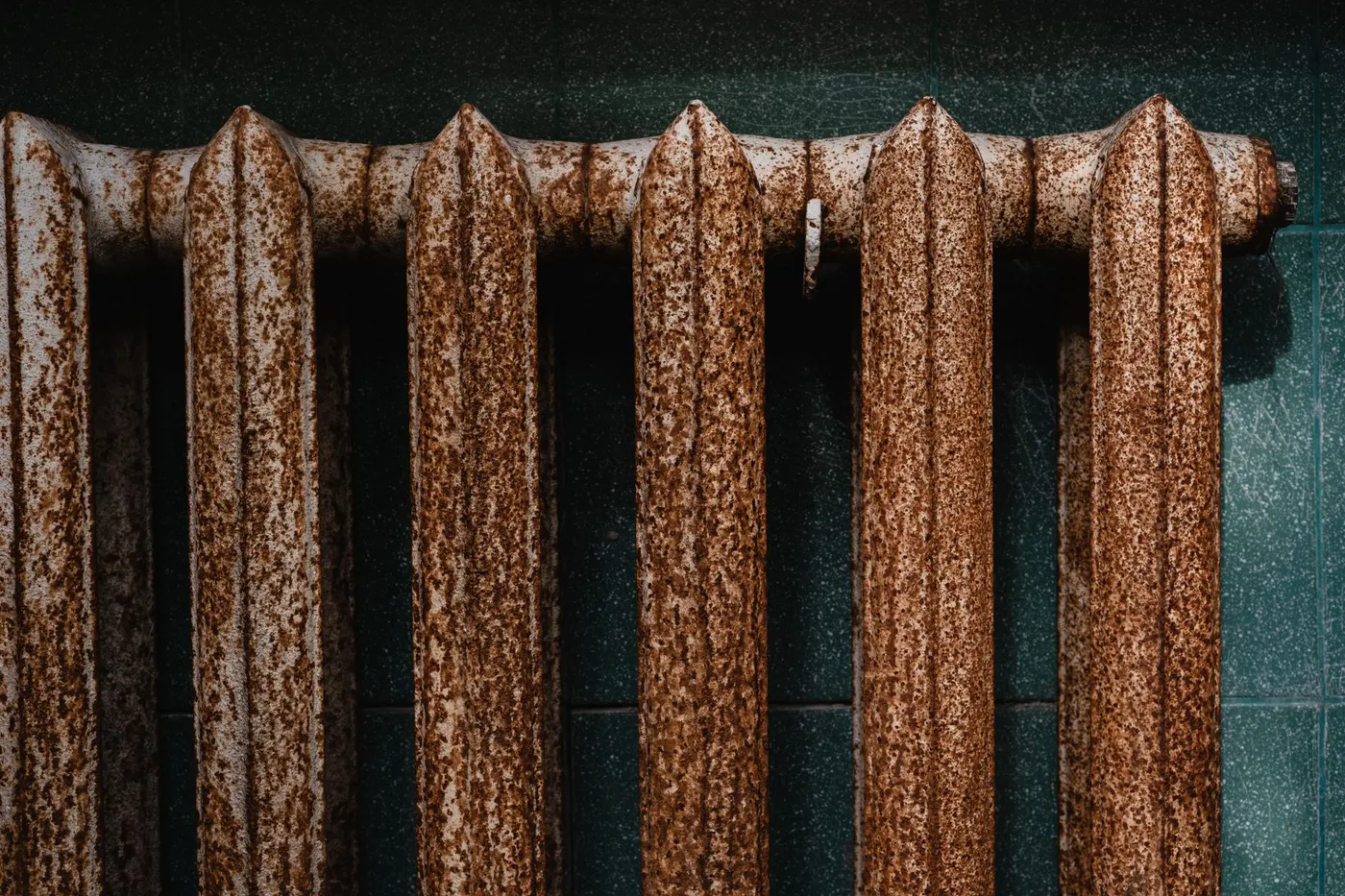
Radiator Leaking? Find the Leak and Fix It Fast
Radiator leaking? Turn off both valves, catch the drips, then see where it comes from. A valve gland nut often needs only a quarter turn to stop it.
Close the radiator's valves at both ends, switch the heating off and put a bowl and towels under the drip. Most leaks come from a valve gland nut, a loose pipe union or the bleed valve, and the first two often stop with a quarter turn. A leak from the panel itself, such as a pinhole, means replacing the radiator.
Ask AI a questionYou notice a damp patch on the carpet, a drip from a valve, or a bead of water running down the wall behind the radiator. It may be a slow weep or a steady drip.
This guide helps you stop the water, work out where it comes from and decide whether it is a ten-minute job or one for an engineer.
⚠️ Hot water scalds, and water near electrics is dangerous. Switch the heating off and let the radiator cool before you open or tighten anything. Keep away from wet sockets, wiring and light fittings below a leak, and switch off the affected circuit at the consumer unit if you can reach it safely. Call 999 only if there is fire, sparking or a risk of electric shock. If you smell gas, turn off the gas at the meter, open the windows and call the National Gas Emergency Service on 0800 111 999.
Radiator Leaking: What to Do First
Switch the heating off, close the valve at each end of the radiator, and put a bowl and towels under the drip before you look for the cause.
The valve on one end is usually the thermostatic radiator valve (TRV) or a plain manual valve. The one on the other end is the lockshield, covered by a plastic cap. Close both. On the lockshield, remove the cap and turn the spindle clockwise with a small spanner, and count the turns so you can reopen it to the same setting later. Water already inside can still drip, so leave the bowl in place.
- Dry everything. Wipe the valves, the pipe unions and the radiator body with kitchen roll, then watch for the first bead of water to form. That bead tells you where the leak starts.
- Check the floor. If the boards or carpet are wet, lift the carpet edge and mop up so the water does not travel to the room below.
- Keep the heating off until you know the cause. A pump pushing hot water at a failing joint makes the leak worse.
If the leak is heavy and will not stop with the radiator valves closed, the problem is probably on the pipework. Turn off the water at the stopcock and call us. Our guide on how to turn off the water at the mains shows where to find it and which way to turn it.
Why Is My Radiator Leaking?
Most radiators leak at a joint, because valves and unions wear and loosen far sooner than the steel panel itself.
The usual causes are a valve gland that has dried out, a pipe union or compression joint that has worked loose, a bleed valve that has not seated, and corrosion that has opened a hole in the panel. Heating pipes expand and contract every time the system heats and cools, and over years that movement can loosen joints.
The table below links each leak point to its likely cause so you can match what you see.
| Leak point | Usual cause | DIY fix | When to call |
|---|---|---|---|
| Behind the valve handle or TRV head | Worn gland packing | Tighten the gland nut about a quarter turn | Still weeping after that, or the valve is corroded |
| Where the valve meets the pipe | Loose or failed compression joint | Nip the nut gently; do not force it | Leaks again, the olive looks crushed, or the pipe is corroded |
| Where the valve meets the radiator | Worn union seal or loose nut | Close both valves and check the nut is snug | Needs draining down to remake the seal |
| Bleed valve at the top corner | Screw not seated, or worn threads | Close it, dry it and rewrap with PTFE tape | The body of the bleed valve is damaged |
| Panel seam or weld, top or bottom | Corrosion from inside | None; a stopgap only | Always: the radiator needs replacing |
| Small spot on the front or back of the panel | Pinhole corrosion | None; a stopgap only | Always: replace the radiator |
| Stains on the floor but nothing visible on the radiator | Leak from pipework under the floor | None | Straight away: it may need leak detection |
Radiator Leaking From the Valve or TRV
A leak from the valve, including a leaking TRV, usually comes from the gland nut or the compression joint, and a gentle quarter turn on the right nut often stops it.
Work out which joint is weeping. If water runs down from under the valve handle or the TRV head, the gland packing is the likely culprit. If it forms where the valve body meets the pipe, the compression joint is loose. If it appears where the valve screws into the radiator, the union is the suspect.
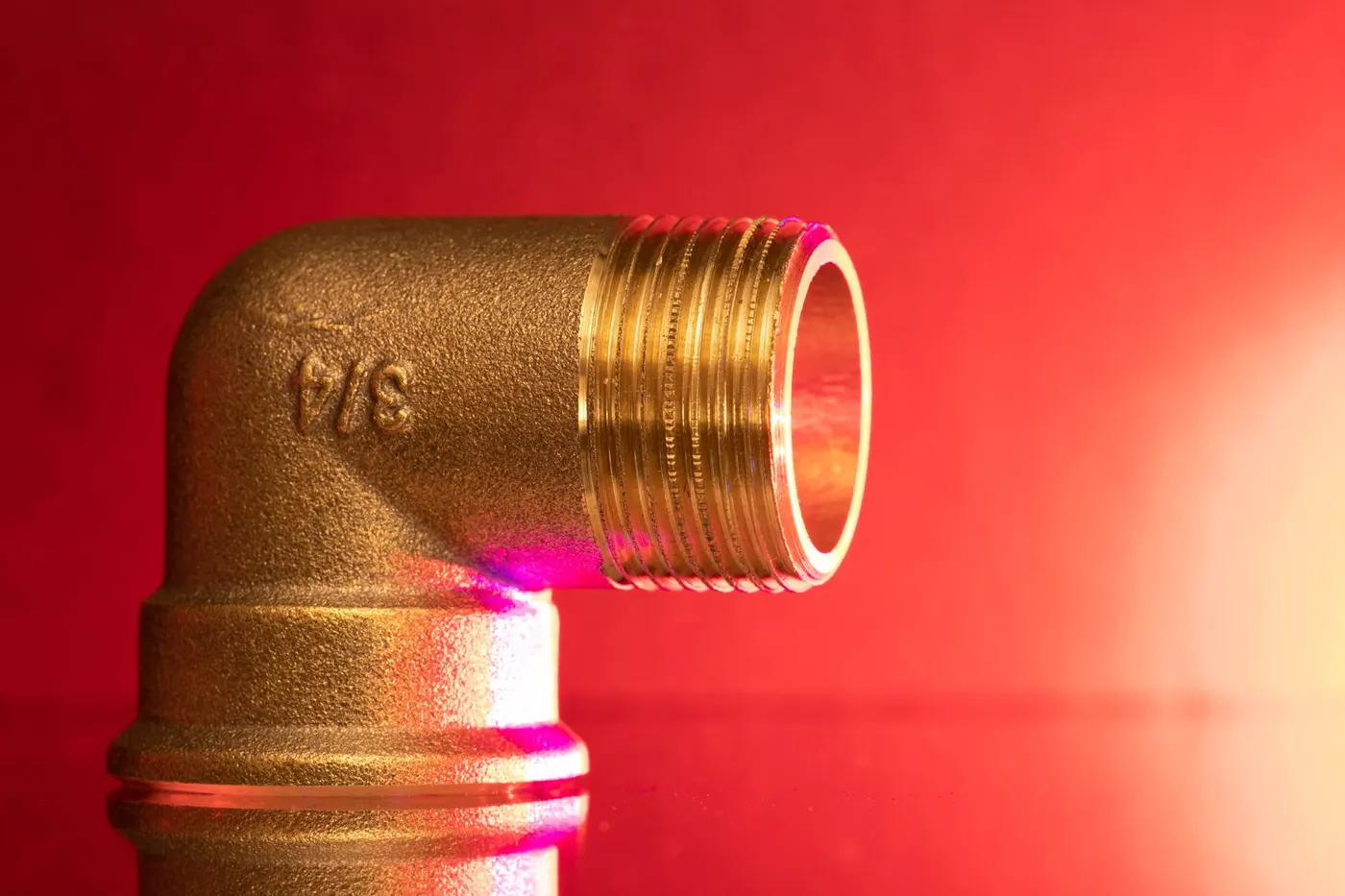
How to fix a leaking radiator valve
- Heating off, radiator cool, valves closed, tray and towels in place.
- Remove the handle or TRV head to expose the gland nut just below it. On some valves the nut sits under the cap; check how yours comes apart before you force anything.
- Tighten the gland nut about a quarter turn, then dry the valve and watch. If the weep slows or stops, leave it there.
- Do not keep tightening. Too much force can crush the olive in a compression joint and turn a weep into a steady leak.
- Reopen the valves slowly, turn the heating on, and check the joint again once the radiator is hot and the metal has expanded.
If it still drips, the gland packing is worn out or the valve is damaged. Some valves allow the packing to be replaced with the radiator still full, but many need the radiator drained or the whole valve changed. That means draining part of the circuit, refilling and bleeding it, and rechecking the boiler pressure. If you are not confident isolating and draining a heating system, stop here and call an engineer.
Radiator Leaking From the Bleed Valve
A radiator dripping from the bleed valve is nearly always caused by the screw not seating, and closing it, drying it and resealing the thread usually cures it.
If grit sits on the seat, the screw is cross-threaded, or the thread has worn, the valve will not close fully and water seeps out. First check that you have closed it by hand with the radiator key, firmly but without force. If it still weeps, let the radiator cool, put a cloth underneath and take the screw out.
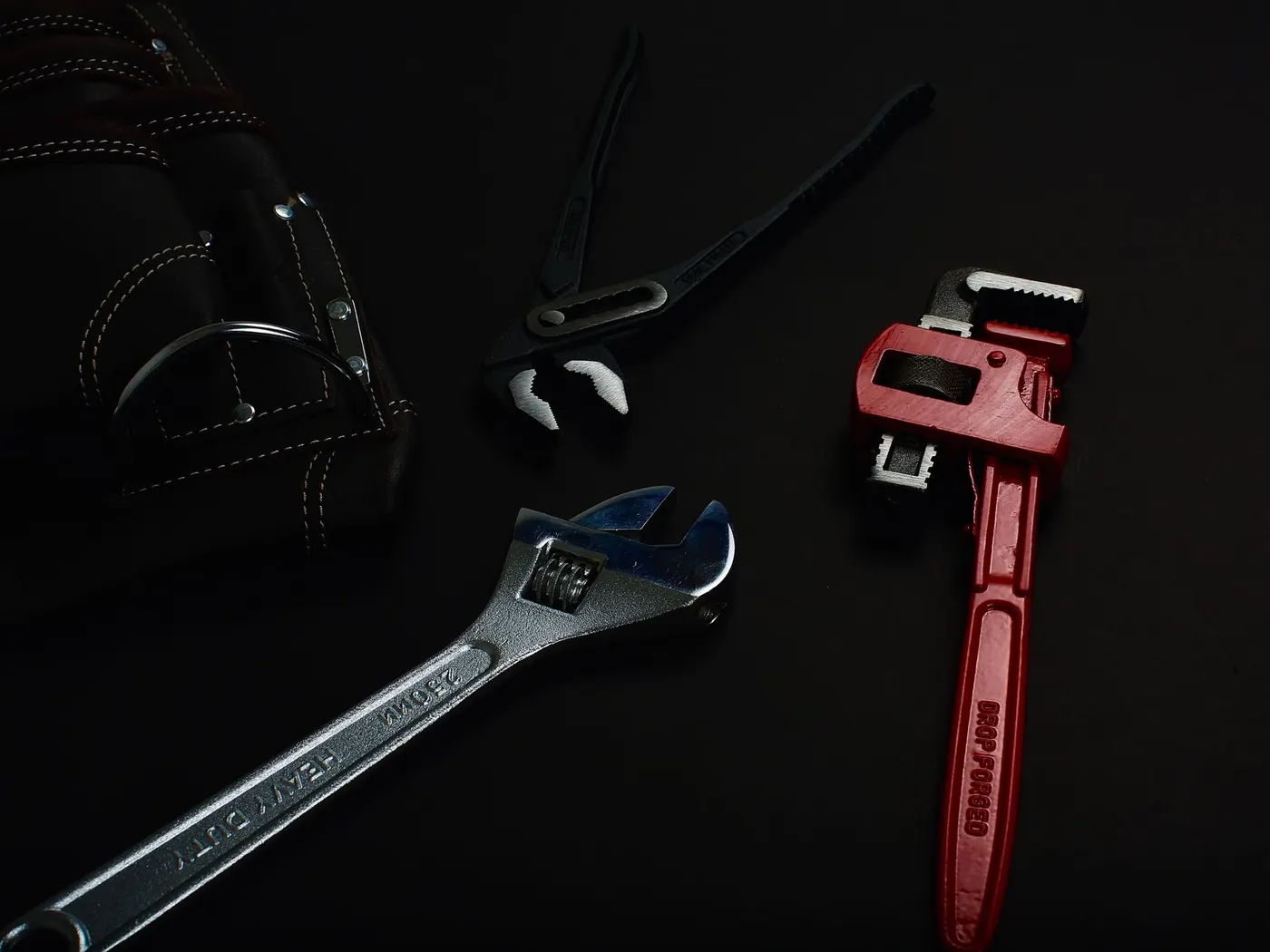
Wipe the screw and the seat clean, wrap a few turns of PTFE tape clockwise round the screw thread, and refit it. Close it and watch for a few minutes. If the body of the bleed valve is damaged or the thread in the radiator has stripped, the valve itself needs replacing, which means draining the radiator.
Whenever you open a bleed valve you lose a little water from the system. Check the boiler pressure afterwards.
Radiator Leaking From the Top or Bottom, and Pinhole Leaks
If the water comes from the radiator panel itself, at the top, the bottom or the seams, the radiator has corroded through and needs replacing.
A leak from the top is often the bleed valve or the blanking plug in the top corner, so check those first. A leak from the bottom is more serious, because it usually means the panel has corroded through. If you can see rust staining, bubbling paint or a damp streak running down from a seam, the metal is failing from the inside.
A pinhole leak is a tiny hole, often no bigger than a pin, that sprays or weeps a fine stream of water. It shows up as a wet spot on the front or back of the panel and sometimes only as a rust-coloured stain on the wall. You cannot mend a hole in a steel radiator properly. A sealant or epoxy putty may slow it for a while, but it will not last, and it is not a repair to trust under a carpet or next to a skirting board.
The sensible route is to isolate the radiator, drain it, and fit a new one. While the radiator is off, ask the engineer about the condition of the system, because pinhole corrosion can point to dirty water elsewhere. Our guide on the signs your radiators need a power flush lists what to look for.
Radiator Leaking and Boiler Pressure
On a sealed heating system, a leak shows up as falling boiler pressure, so the gauge is often the first sign that something is weeping.
Worcester Bosch says the gauge should read around 1 bar with the heating off and typically 1.5 bar or more when the system is running, and that you should top the pressure up if it is below 1 bar. In its Greenstar i troubleshooting guide, it also tells you to check all visible joints, including radiator valves and connections, for leaks, and to contact the installer if pressure keeps dropping. Check your boiler's manual for its own figures.
If you have repaired a leak, top the system up and watch the gauge over the next few days. Pressure that holds means the repair worked. Pressure that keeps dropping means water is going somewhere you have not found yet, and in an older London building that can be a joint under the floor or behind a wall. Our guide on why a boiler keeps losing pressure ranks the usual causes.
Do not run the system for long at low pressure. Top it up through the filling loop, then recheck the leak once the system has heated and cooled.
When to Call a Plumber
Call an engineer if the leak survives a quarter turn on the gland nut, comes from the radiator body, or you cannot isolate and drain the radiator with confidence.
- You can do: closing the valves, catching the water, tightening a gland nut by a small amount, and resealing a bleed screw with PTFE tape.
- Leave to an engineer: replacing a valve or a radiator, draining and refilling the system, repressurising after major work, and tracing a leak under floorboards.
- Anything involving the boiler: anyone employed to work on gas appliances in domestic premises must be Gas Safe registered, as the HSE explains. A radiator leak itself is not gas work, but the boiler it feeds is.
Radiator Still Leaking?
Our engineers replace valves, fit new radiators and trace hidden heating leaks across all 32 London boroughs, 24/7. £60 call-out fee at any hour for ordinary emergency work, waived for landlords, property managers and scheduled work.
Call 0207 046 1363Or WhatsApp a photo of the leak and the valves to 07456 975436. More on our radiator repair London page.
If you rent
Tell your landlord or agent as soon as you find the leak. Section 11 of the Landlord and Tenant Act 1985 requires the landlord to keep in repair and proper working order the installations that supply heating and hot water, and Shelter lists radiators as part of that. You can tell them verbally or in writing; writing it down, with a photo and the date, gives you a record if the repair drags on.
Closing the valves and catching the water is sensible while you wait. Draining the system or replacing parts yourself is better left to the landlord's contractor. Our guide to Section 11 and London landlord repair obligations explains how the duty works in practice.
Frequently Asked Questions
Why is my radiator leaking water?
How do I fix a leaking radiator valve?
Can I use leak sealer in a leaking radiator?
Is a leaking radiator dangerous?
Why does my boiler pressure keep dropping with a leaking radiator?
Who pays for a leaking radiator in a rented flat?
Emergency Repairs London provides same-day and 24/7 radiator repair, central heating and boiler repair services across all 32 London boroughs. Lines are open 24/7 on 0207 046 1363.
Key Takeaways
- Close the valve at each end of the radiator (2 valves) and switch the heating off before you touch anything, because a hot radiator can scald
- A leaking valve gland nut often stops with about a quarter turn; overtightening can crush the olive and make the leak worse
- A weeping bleed valve is usually fixed by closing it, drying the thread and rewrapping the screw with PTFE tape
- Worcester Bosch says a sealed boiler gauge should read around 1 bar with the heating off and typically 1.5 bar or more when running; top up if it falls below 1 bar
- Section 11 of the Landlord and Tenant Act 1985 puts radiators in the landlord's repair duty, so tenants should report a leak straight away, verbally or in writing
- Our call-out fee is £60 at any hour for ordinary emergency work, waived for landlords, property managers and scheduled work
