
Burst Pipe in a Rental Property: A London Landlord's Step-by-Step Guide
What a London landlord should do when a tenant reports a burst pipe: the first 10 minutes, legal responsibility under s.11 of the Landlord and Tenant Act 1985, insurance, and realistic repair costs.
When a tenant reports a burst pipe in your London rental, your first priority is damage control: instruct them to turn off the mains stopcock, drain the taps, switch off electrics near water ingress, and move belongings clear. Under Section 11 of the Landlord and Tenant Act 1985, the landlord is responsible for repairs to the pipework, heating, and structure — buildings insurance typically covers water damage to the fabric, with the burst pipe repair costing £150–£400 for accessible pipes and £800–£2,500 where water damage is significant.
A burst pipe in a rental property is one of the worst midnight messages a landlord can receive. Water pouring through a ceiling, a panicked tenant, belongings ruined, and a clock running on every minute of damage. How you respond in the first hour shapes the insurance claim, the repair bill, and — if it's handled badly — the legal fallout.
This guide is written specifically for London landlords. It covers the first 10 minutes (what you tell the tenant to do), your legal position under s.11 of the Landlord and Tenant Act 1985, realistic 2026 costs for burst pipe repair in London, and the winter prevention checklist that stops this happening again. If you need an engineer on site now rather than reading first, go to our burst pipe repair London dispatch line.
The First 10 Minutes — What You and Your Tenant Must Do
Speed matters. Every additional minute of uncontained water doubles the damage you will be claiming for. When a tenant calls or messages about a burst pipe, talk them through these steps before anything else:
Turn off the mains stopcock immediately
The main stopcock is usually under the kitchen sink, in a utility cupboard, or near the front door. In London flats it can also be in a shared riser cupboard on the landing. If the tenant doesn't know where it is — which is often — talk them through the likely locations. Turning off the water supply is always the first action.
Drain the taps to empty the pipes
Once the stopcock is off, the tenant should open every cold tap in the property — kitchen, bathrooms, utility. This drains the cold water stored in the pipes above the burst, reducing the volume continuing to escape. Hot taps can also be opened if the boiler is already off.
Turn off electrics if water is near lights or sockets
If water is coming through a ceiling or running down walls near electrical fittings, the tenant should turn off the consumer unit (main switch). Water and electricity are a fatal combination. It's better to sit in the dark for an hour than to risk electrocution. Advise the tenant not to touch any appliance that has been wet.
Catch water where you can
Towels, buckets, saucepans under drips. If a ceiling is bulging with trapped water, the least-bad option is usually to pierce a small hole in the bulge with a screwdriver and let the water drain into a bucket. A controlled release is much better than a sudden ceiling collapse.
Move belongings clear
Any furniture, electronics, or stored items in the affected room should be moved out or lifted off the floor. Anything the tenant photographs before moving it helps with their contents insurance claim.
Call an emergency plumber
Either you call directly or instruct the tenant to call and bill you. Most landlords prefer to control the plumber choice — so have a trusted 24/7 emergency plumber in London saved before it's needed, not scrambled for at 2am.
Confirm in writing
Reply to the tenant's message confirming the time you received it, the advice given, and that a plumber is on the way. This written trail matters if the insurance claim is ever queried or if the tenant later argues the response was slow.
⚠️ Keep the tenant safe first. If the property is badly flooded — water pouring through ceilings, standing water, no safe exit — tell the tenant to leave the property and call you from outside. A soaked ceiling collapsing on a tenant's head is a serious injury claim you don't want.
Who's Responsible — Landlord vs Tenant Under s.11 of the Landlord and Tenant Act 1985

The starting point is Section 11 of the Landlord and Tenant Act 1985, which applies to all assured shorthold tenancies of less than 7 years and cannot be contracted out of. The landlord is responsible for:
- The structure and exterior of the dwelling-house (walls, roof, external doors, windows, foundations)
- The installations for the supply of water, gas, electricity, and sanitation (pipes, taps, toilets, cisterns)
- The installations for space heating and hot water (boiler, radiators, pipework)
A burst pipe falls into categories (1) and (2) — it's the landlord's repair. The tenancy agreement cannot shift this obligation onto the tenant; even if it tries, the relevant clause is void.
What the Tenant IS Responsible For
- Using the property reasonably: Not damaging pipes, not leaving the property vulnerable (e.g. heating off in deep winter while away), not tampering with plumbing.
- Reporting problems promptly: If a slow drip or condensation starts before the burst, the tenant should report it. Failure to report can shift responsibility for the consequential damage.
- Providing access: The tenant must allow the landlord and their contractors reasonable access to inspect and repair.
- Their own belongings: Contents insurance is the tenant's responsibility. The landlord's insurance does not cover the tenant's sofa, TV, or clothing.
When the Tenant May Be Liable
There are specific scenarios where you can legitimately recover costs from the tenant:
- The tenant caused the damage — hammered through a pipe while fitting a shelf, disconnected a washing machine incorrectly, chipped pipework during DIY.
- The tenant left the property unheated in deep winter without draining the system when they knew (or should have known) pipes could freeze.
- The tenant knew about a slow leak for weeks or months and did not report it, turning a small repair into significant water damage.
- The tenant removed pipe lagging or insulation the landlord had installed.
Proving tenant liability requires evidence — usually the attending plumber's written report identifying the cause, plus photographs. Without that, you cannot lean on the deposit scheme or pursue recovery successfully.
Insurance — Buildings vs Contents, What Usually Gets Paid
Three separate policies may come into play on a burst pipe in a rental. They do different things and the distinctions matter.
| Policy | Whose | Covers | Typical Excess |
|---|---|---|---|
| Landlord buildings insurance | Landlord | Structural water damage, fitted kitchens and bathrooms, plaster, flooring, ceilings | £250–£500 |
| Landlord contents insurance (if carpeted/furnished let) | Landlord | Damage to landlord-owned carpets, curtains, white goods, furniture | £100–£250 |
| Tenant contents insurance | Tenant | Tenant's own belongings — sofa, electronics, clothing, personal items | £50–£150 |
| Home emergency cover (add-on or standalone) | Landlord | The plumber's call-out and initial repair — typically up to £500–£1,500 | £50–£100 |
| Loss of rent cover (on landlord policy) | Landlord | Lost rental income if the property becomes uninhabitable during repairs | Usually 24–72 hour waiting period |
What's Usually Covered
- A sudden burst caused by a cold-snap freeze on an inadequately insulated pipe: buildings insurance pays the structural damage, subject to the excess. The pipe repair itself is often not covered under buildings — it's your own cost or covered by home emergency add-on.
- A burst caused by a mains pressure spike: covered.
- A burst caused by a failed fitting (e.g. a compression joint that lets go): covered, though insurers may probe for whether the joint was properly installed.
For a deeper look at what standard buildings and home emergency policies pay out for plumbing claims, see our companion guide: does home insurance cover plumbing?
What's Usually NOT Covered
- Gradual leaks — slow drip from a weeping joint that caused damage over weeks.
- Wear and tear — a 40-year-old lead pipe that finally gave up.
- Damage from the landlord's failure to heat or drain an unoccupied property in winter.
- Damage the tenant caused (though this may be recoverable from the tenant separately).
- The cost of any building defect that "should have been" maintained.
💡 Get the plumber's written report. Every burst pipe repair should come with a written engineer's report stating: what failed, likely cause, whether sudden or gradual, time called out and attended, work done. This document is the evidence base for the insurance claim. A verbal "yeah it was just old" doesn't cut it with a loss adjuster.
Finding an Emergency Plumber at 2am — What to Ask, Red Flags, What to Expect to Pay

The middle-of-the-night emergency plumber market in London is uneven. There are genuine 24-hour operators with overnight rotas, and there are brokers who take your call, pass it to the highest bidder, and pocket a finder's fee. Knowing the difference saves you time and money. Our when to call a 24/7 plumber versus waiting until morning guide helps you decide honestly whether the call warrants unsocial-hours rates or can safely hold until 9am.
What to Ask Before They Arrive
- Are you a plumber or a call centre? Genuine plumbers answer direct; call centres hand off. Nothing wrong with a properly run dispatch operation, but know what you're calling.
- What's your call-out fee and what does it include? You want a clear number. "£150 call-out covers the first hour" is legitimate. "Depends on the job" at 2am is a warning.
- How long will you be? A London-wide operator should give a 60–90 minute ETA. If they say "we'll be an hour" and it's 3 hours, you're paying someone who was never close.
- Gas Safe registration number? Not strictly needed for a water pipe, but if the burst affects the boiler or heating system, it's essential.
- Do you give a written quote before starting? The answer should be yes, every time.
Red Flags
- Refusal to give any call-out figure over the phone.
- "Cash-only" insistence.
- Pressure to agree to work without a written quote once they arrive.
- A call-out figure far below market (£50 at 2am) — almost always climbs on arrival.
- No named plumber on the invoice or on arrival — a generic "engineer" with no ID card.
- Unwilling to issue a written report, receipt, or guarantee afterwards.
What to Expect to Pay at 2am in London
For an out-of-hours call-out in London (11pm–8am), expect:
- Call-out fee: £150–£250 including the first hour of work.
- Additional hourly rate: £80–£120/hour.
- Parts: charged at normal trade-plus-markup rates — a compression fitting is £5, a 15mm copper elbow 50p, a full pipe section with multiple fittings £30–£80.
A typical burst pipe repair at 2am comes in at £200–£400 for an accessible pipe, £400–£700 where access is harder, and £700+ where the pipe is behind tiles or in a concealed run that needs opening up.
Typical Cost of Burst Pipe Repair in London (2026)
| Scenario | Typical Total Cost | Time on Site | Notes |
|---|---|---|---|
| Accessible pipe — clamp or swap | £150–£400 | 1–2 hours | Kitchen under-sink, exposed pipe in loft, visible run in cupboard |
| Pipe section replacement | £300–£800 | 2–4 hours | Cut out damaged section, install new copper or plastic pipe, reconnect, test |
| Concealed pipe behind tiles or walls | £500–£1,200 | 3–6 hours | Includes opening up the wall or floor — making good usually separate |
| Burst with significant water damage | £800–£2,500 | Multi-visit | Repair plus drying out, ceiling remediation, flooring replacement |
| Lead pipe section replacement | £400–£1,000 | 3–5 hours | Common in older London properties; often upgraded to copper or MDPE |
| Frozen-pipe split — multiple sections | £600–£1,500 | 3–6 hours | Often several bursts along one run once thawed |
Out-of-hours premiums (evenings, weekends, bank holidays) typically add 30–50% to these figures. Central London postcodes may add £20–£50 for parking and congestion.
After the Emergency — Drying, Making Good, Preventing Recurrence
The plumber has stopped the leak. The pipe is repaired. That's the first two hours. The next two weeks is where most landlords lose money they didn't expect to lose.
Drying Out
Saturated ceilings, walls, and flooring must be dried properly before any making-good work. Rushing this leads to mould, paint failure, and recurring damp that the insurer will not pay for a second time. Typical options:
- Dehumidifiers: A decent commercial dehumidifier runs 7–14 days in a typical affected London flat. Costs £30–£60/week to hire plus the electricity. Loss adjusters often prefer professional drying contractors — check your policy.
- Professional drying contractor: £400–£1,200 for a typical event. Use moisture meters to confirm the affected fabric is below 15% moisture content before closing the claim.
- Keep heating on and ventilation open: Accelerates drying, particularly in winter.
Making Good
Once fully dry:
- Plasterboard ceilings may need the affected section cut out and replaced if they've sagged or started to fail.
- Artex / textured ceilings — check whether the material contains asbestos if the property is older (pre-1999); if so, a licensed removal contractor is required.
- Painting — mist coats on fresh plaster before topcoats. Water-stained ceilings that have merely discoloured often need a stain-block primer before repainting, or the stain bleeds through.
- Flooring — solid wood and laminate often need replacement if saturated. Carpet can sometimes be salvaged with professional cleaning and drying.
Pipe Lagging and Stopcock Labelling
Before closing out the incident, take the opportunity to:
- Lag any exposed pipework that contributed to the burst (typical materials cost £20–£60, fitter's time 1–2 hours).
- Label the main stopcock clearly (a simple laminated label tied to the pipe).
- Brief the tenant — or update the welcome pack — with a photo of the stopcock location.
Making Sure It Doesn't Happen Again — Winter Prep Checklist for Landlords
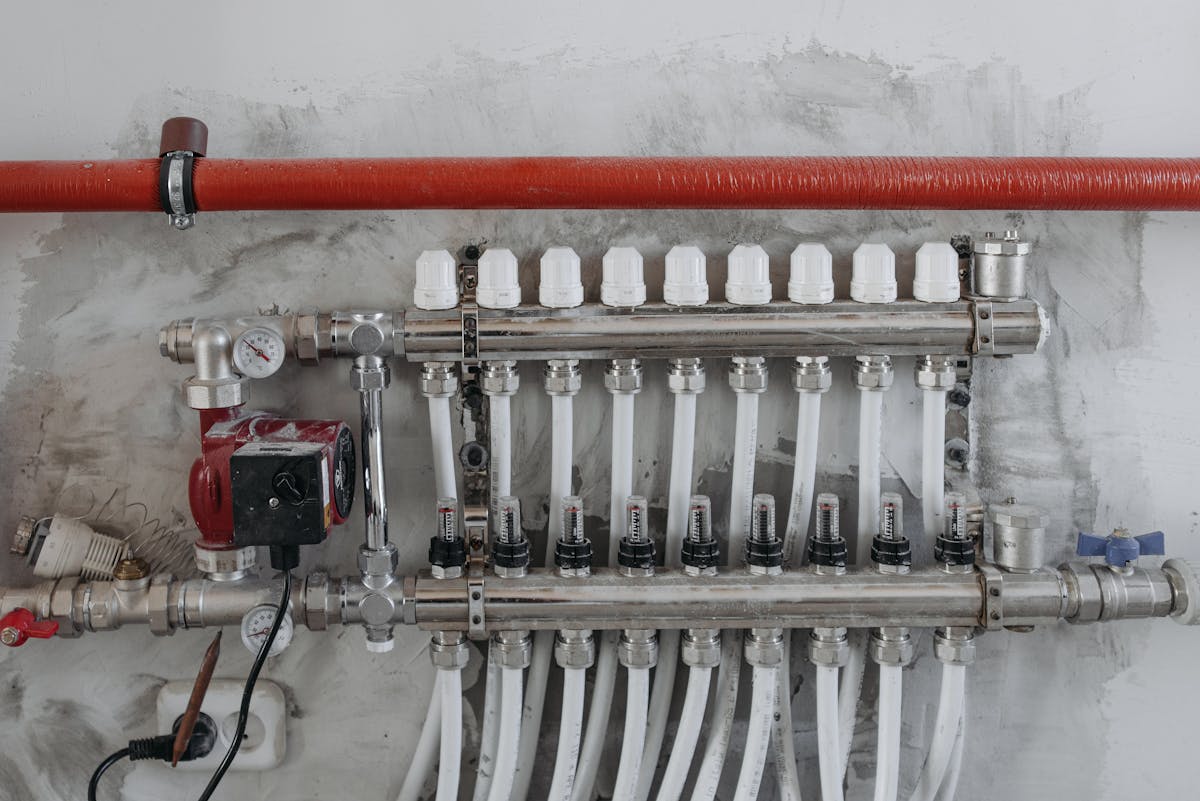
The single highest-value landlord habit in London is a November pre-winter walk-through of every property. 90% of burst pipe calls happen between December and early March. The following checklist, done once a year, prevents most of them. For the thawing and prevention detail on pipes that have already frozen, see our frozen pipes London guide.
| Item | Cost | Priority |
|---|---|---|
| Lag all exposed pipes in lofts, garages, external walls, under floorboards | £20–£60 materials + 1–2 hours labour | Critical |
| Annual boiler service (CP12 if gas — combine the two) | £85–£160 combined | Critical |
| Check loft insulation around cold water storage tanks — cover the tank but NOT under it (so rising household heat keeps it above freezing) | £20–£50 | High |
| Install trace-heating cable on condensate pipes that run externally — a frozen condensate is the #1 boiler callout in a January cold snap | £60–£150 + labour | High |
| Confirm the stopcock works — turn it off, verify taps go dry, turn it on again | Free (or £80–£150 if seized and needs replacing) | High |
| Label the stopcock clearly and photograph its location for the tenant welcome pack | £5 | Medium |
| Empty-property drainage plan — if the property will be vacant over winter, either drain the system or leave low-level heating (15°C minimum) running with an automatic boiler service kit | £0–£200 | Critical for voids |
| Tenant education — welcome pack page with stopcock location, what to do in a burst, emergency plumber number | £0 | High |
| Check external taps — isolation valve turned off for winter, external pipe drained | Free | Medium |
| Replace lead pipes where practicable (water quality and burst-risk reasons) | £500–£2,000+ | Long-term |
💡 Void property in winter: If your rental is empty for more than 5–7 days in sub-zero weather and you haven't drained the system, the insurance claim for any resulting burst is likely to be rejected. Either drain the property down fully (both mains and heating) or maintain a minimum low-level heating schedule — 15°C on a timer is cheap compared to a £5,000 water damage claim.
Burst Pipe in Your London Rental?
24-hour emergency plumbers across all 32 London boroughs. Fixed prices, written reports for your insurance, Gas Safe registered engineers. We work with landlords and letting agents across London every day.
Call 07456 975436Frequently Asked Questions
Is a burst pipe the landlord's responsibility?
Who pays — tenant or landlord?
What should I do first when a tenant reports a burst pipe?
How much does a 2am emergency plumber cost in London?
Does buildings insurance cover a burst pipe?
Can I claim on insurance and charge the tenant for damage?
How quickly must a landlord fix a burst pipe?
How do I prevent burst pipes in my rental?
Key Takeaways
- First move is always to shut off the mains stopcock — every tenant should know where it is before they need to find it
- Under s.11 Landlord and Tenant Act 1985 the landlord is legally responsible for the structure, pipework, and heating systems, regardless of tenancy agreement wording
- Buildings insurance usually covers water damage (fabric and fixtures); contents insurance is the tenant's responsibility for their own belongings
- Typical London burst pipe repair: £150–£400 accessible clamp/swap, £300–£800 with pipe section replacement, £800–£2,500 when ceilings and flooring are involved
- Expect a reputable 2am emergency plumber in London to charge £150–£250 call-out plus labour; anyone insisting on cash-only or refusing a written quote is a red flag
- Winter prevention — pipe lagging, boiler servicing, stopcock labelling, and tenant education — is cheaper than any single burst pipe claim
