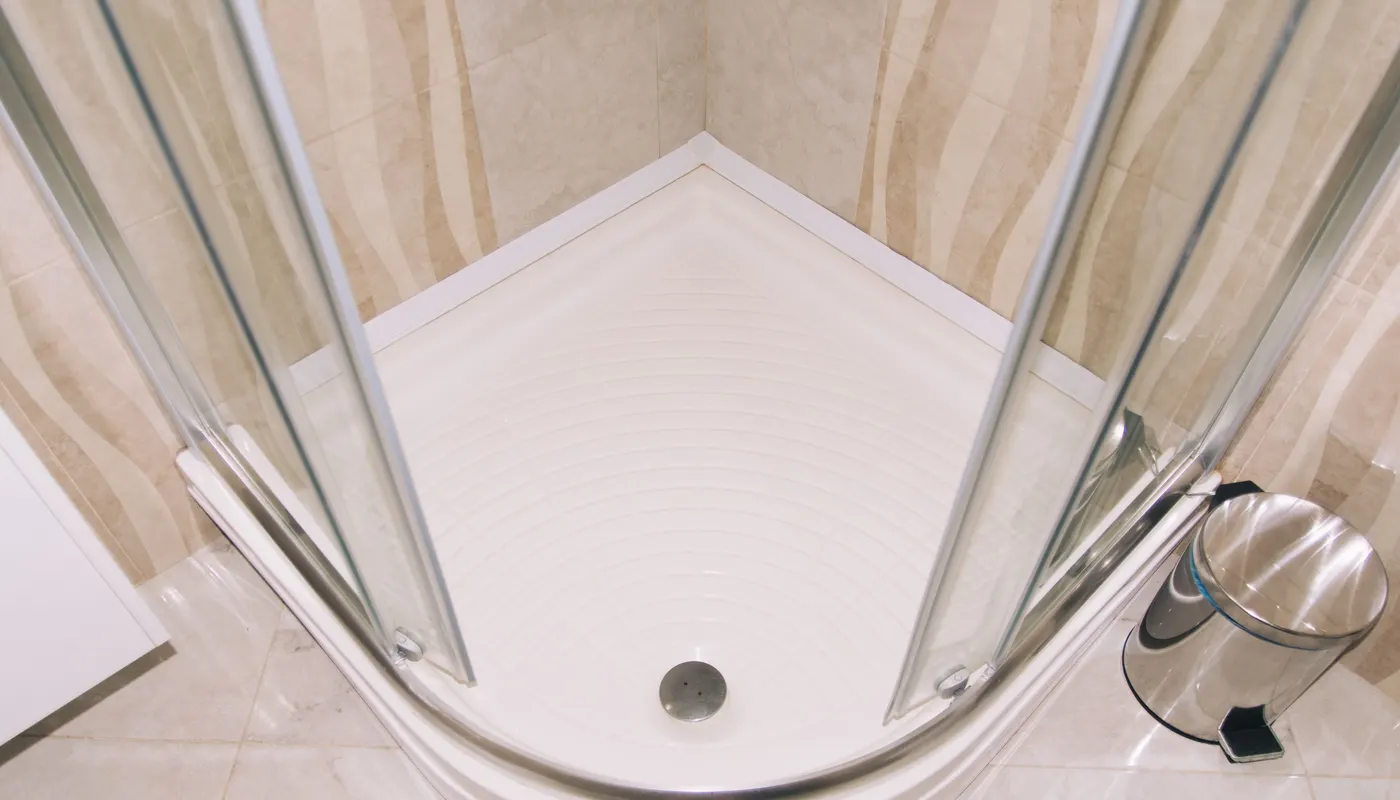
Shower Drain Smell? Usually a Dry or Dirty Trap
Shower drain smell? A dry trap gives a sewage smell, hair and biofilm give rotten eggs. Run the shower 2 minutes first, then clean the trap.
A sewage smell from a shower drain usually means a dry trap, so run the shower for 2 minutes to refill the water seal. A rotten-egg smell usually means hair and soap residue in the trap, which needs cleaning. If it only appears while the shower runs, suspect venting, the waste pipe or the tray seal.
Ask AI a questionYou step into the bathroom and the smell hits you before the water does. It might be damp and sewery, or it might be sulphur, and it is coming from the shower drain.
The cause is often simple: a trap that has dried out, or one clogged with hair and soap. Sometimes it is a venting or pipework fault, and when the smell shows up tells you which. This guide sorts the causes by what you notice, then covers what the Building Regulations say about shower traps. If you are chasing a smell across the whole house, start with our guide to sewage smell in the house.
⚠️ Rotten-egg smell and your health. Hydrogen sulphide (H2S) is a colourless, flammable gas that smells of rotten eggs. UKHSA says it is very unlikely the general population will be exposed to levels high enough to cause harm, but high concentrations can cause collapse and death within minutes. If the smell is strong or you feel dizzy or unwell, leave the room, open windows and get fresh air. If you suspect a natural gas leak, call the National Gas Emergency Service on 0800 111 999.
Shower Drain Smells Like Sewage
A sewage smell from a shower drain most often means the water seal in the trap has gone, so air from the drain is coming up into the room.
Every shower waste has a trap, a bend that holds water and blocks drain air. Use the table to match what you notice to the likely cause and the quickest test.
| Smell | When it happens | Likely cause | First test |
|---|---|---|---|
| Damp, sewage-like | After the shower has been unused for days or weeks | Dry trap, the seal has evaporated | Run the shower for 2 minutes and see whether the smell goes |
| Rotten eggs or sulphur | Constant, worse after a shower | Hair, soap and body oil biofilm in the trap | Lift the cover and look for hair and slime |
| Sewage smell | Only while the shower is running or just after | Trap seal pulled out by siphonage or poor venting, or a leaking waste | Listen for gurgling, then check under the tray for dampness |
| Musty, mouldy | Constant, stronger near the tray edge | Failed seal between tray and waste, or sealant gap | Check the edges and the waste outlet for staining or soft board |
| Sewage smell in several rooms | Any time, other drains gurgle | Drain or vent problem beyond the shower | Run other taps and check whether they gurgle or smell too |
| Smell back soon after cleaning | Hours or days later | Seal loss or a leak in the waste, not just dirt | Refill the trap, then see how long it lasts |
Work down the table from the top. The first two rows are the likeliest, and both cost nothing to test.
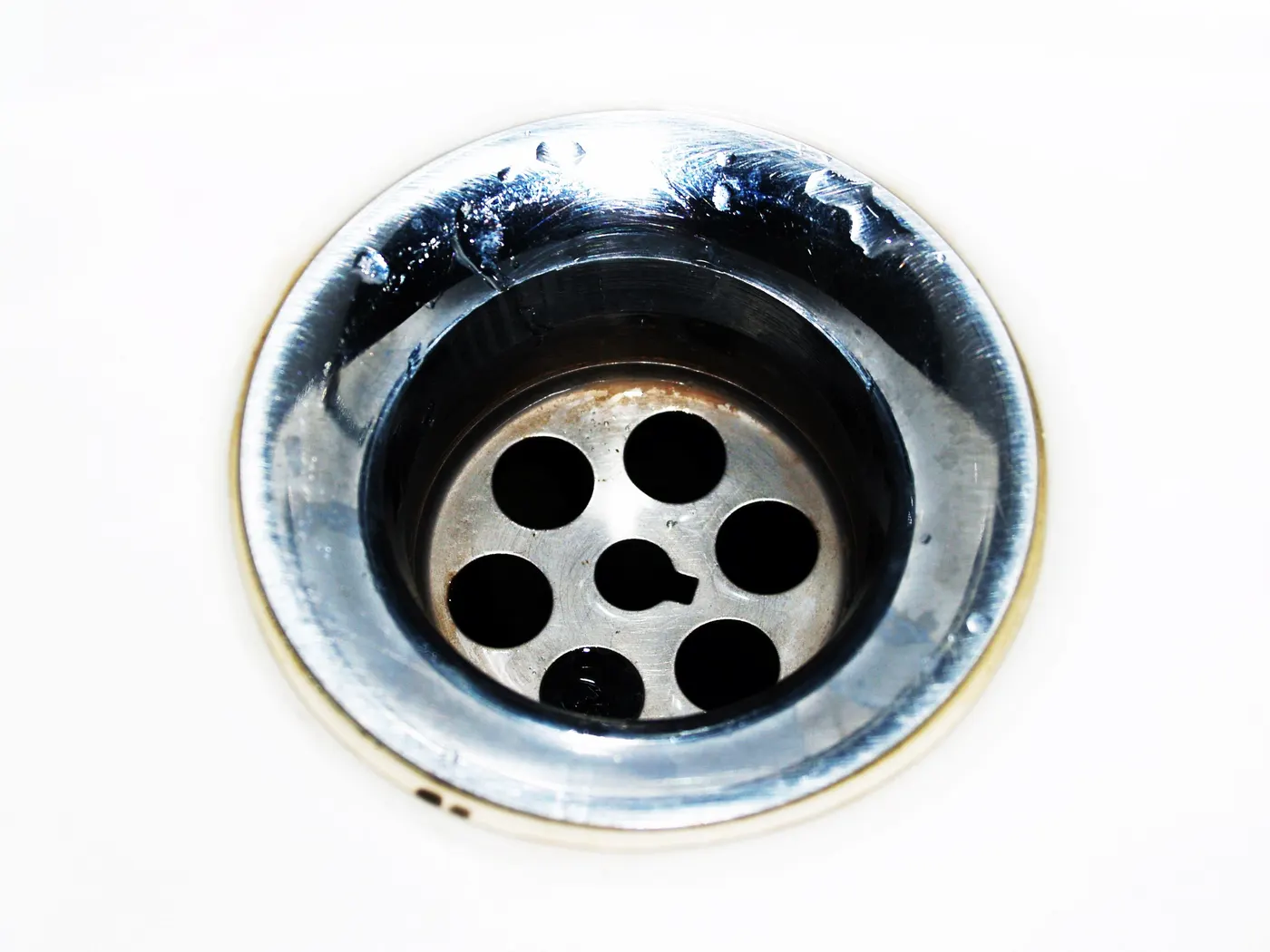
Dry Shower Trap: The First Thing to Check
If the shower has not been used for a while, run it for a couple of minutes first, because a dry trap is the easiest cause to rule in or out.
The water seal evaporates slowly, and how fast depends on heat and ventilation, so we will not put a number of days on it. The classic victims are a spare-room en suite, a shower in a second home or rental, and a bathroom left empty over a holiday. Summer makes it worse, which we cover in why drains smell in summer.
- Run the shower for two minutes so the trap refills.
- Close the bathroom door and give it ten minutes.
- Sniff at the drain. If the smell is gone, the trap was dry.
If the shower is rarely used, run it now and then to keep the trap filled.
If the smell comes back within a day or two of regular use, the trap is not simply drying out. Something is removing the seal, and the later sections cover that.
Shower Drain Smells Like Rotten Eggs
A rotten-egg smell from a regularly used shower is usually biofilm, a slimy layer of hair, soap scum and body oil in the trap and waste pipe.
Bacteria feed on that layer, and the smell is a sign it has been building for a while. A shower that drains slowly, or leaves a ring of grey scum, points the same way. It is the same build-up that causes blockages, so the cleaning steps in our guide on how to unblock a shower drain apply here too.
- Lift the cover and remove any visible hair. A pair of rubber gloves and a bent wire or plastic drain tool is usually enough.
- Clean what you can reach. Wipe the visible part of the trap and outlet with a brush and warm soapy water.
- Rinse with hot tap water and run the shower for a couple of minutes to refill the trap.
- Fit a hair catcher over the outlet. It stops most of the hair that causes the build-up.
If the smell is strong enough to make you dizzy or give you a headache, treat it as a gas issue, not a cleaning issue, and follow the warning above. Hydrogen sulphide also has a rotten-egg smell, and your nose cannot tell you which of the two you have. UKHSA publishes general information on hydrogen sulphide.
Smell Only When the Shower Runs, or After Cleaning
If the smell appears only while the water is running, or returns soon after you have cleaned and refilled the trap, the water seal is probably being lost through siphonage, poor venting, a leaking waste or a failed tray seal.
A clean, full trap that stinks shortly after use means something is pulling the water out or letting air bypass it. These are the usual suspects.
Siphonage and poor venting
When a lot of water leaves a pipe quickly, it can pull the water from a trap along with it. A branch that runs too far or too flat without adequate ventilation is a common reason. Signs include gurgling from the shower waste or from a nearby basin, and a smell that arrives just as the shower finishes. Approved Document H covers the limits, which we explain in the next section. Fixing it usually means changing the pipework layout or adding a vent, so this is one for a plumber.
A leaking waste
A loose or cracked joint on the waste pipe lets drain air out before it reaches the trap, and can leak water onto the floor below. If the ceiling under the shower is stained or damp, or you can see wet pipework, switch the shower off until it has been checked. A leak under a shower tray can soak the floor for a long time before you see it.
A failed tray seal
The waste outlet is sealed to the tray with a rubber gasket or sealant. If that seal fails, air and water can get past the trap. The smell tends to be mustier than sewage, and you may see staining around the tray or soft flooring nearby. Replacing it means lifting or removing the tray, which is not a quick job.
If you have just cleaned it and the smell is worse
Cleaning can disturb the biofilm and release a fresh burst of smell, which fades after a rinse. Check that you refilled the trap, that the cover is seated and that you did not leave a drain cleaner sitting in the pipe. If the smell is still there after a few more showers, treat it as seal loss and work through the list above.
Trap Seal Depth and Venting: What the Regulations Say
Approved Document H gives a shower trap a 40mm diameter and a 50mm water seal, and says no trap should ever hold less than 25mm under working conditions.
The figures below come from Approved Document H (2015 edition), the full PDF on GOV.UK, and the landing page for the document.
| Appliance | Trap diameter | Water seal |
|---|---|---|
| Shower, bath, washing machine, dishwasher | 40mm | 50mm |
| Washbasin, bidet | 32mm | 75mm |
| Sink | 40mm | 75mm |
A footnote to Table 1 says that where a bath, shower or washing machine discharges directly to a gully, the seal may be reduced to not less than 38mm.
Other points from the document that bear on a smelly shower:
- Paragraph 1.3: every point of discharge needs a trap, and the trap must keep at least 25mm of water seal under working and test conditions.
- Paragraphs 1.5 and 1.19 to 1.20: the seal must not be broken by pressure changes in the system. A branch needs no separate ventilation if it stays within the length and slope limits in Table 2 and Diagram 3. Beyond those limits it needs a branch vent, a ventilating stack or an air admittance valve.
- Paragraph 1.15: a branch serving one appliance should be at least the diameter of the trap, which is 40mm for a shower.
- Paragraph 1.6: traps should be removable or have a cleaning eye, so a plumber can reach them.
- Paragraph 1.33: air admittance valves should comply with BS EN 12380:2002 and be accessible.
- Standards: traps should be made to BS EN 274 or BS 3943.
We are not saying what applies to your particular house, because that depends on when the shower was installed and what has been altered since. These figures are the benchmark a plumber measures a layout against.
Resealing and anti-syphon traps also exist as a product type, designed to hold their seal better where siphonage is the problem. Whether one suits your layout is a plumber's call, and fitting one will not cure a leaking waste or a venting fault.
Bleach, Boiling Water and Safety
Do not mix bleach with vinegar, ammonia or any other cleaner, and use hot tap water instead of boiling water on plastic pipes.
Mixing cleaners can release toxic gas, and a smelly bathroom is a bad place for it. If you use bleach, use it on its own, follow the label and rinse it away. Cleaning the hair out of the trap does more for a smelly shower than any product poured down the drain.
Boiling water is a common home remedy, but it can soften plastic waste pipes and their joints. Hot water from the tap is enough to rinse soap residue.
Two more points:
- Ventilate. Open the window and run the extractor fan while you clean.
- Stop if it gets stronger. A sudden increase in smell, headache or dizziness is a reason to leave the room, not push on.
When to Call a Plumber
Call a plumber if the smell comes back after you have refilled and cleaned the trap, if you hear gurgling, or if you see damp under the tray or on the ceiling below.
- You can do: run the shower, remove hair, clean the visible trap, fit a hair catcher.
- Leave to a plumber: venting changes, an air admittance valve, a leaking waste, a tray seal, a trap swap, or smells across several rooms.
- If you rent: report it to your landlord or agent in writing with the date. Do not lift the tray yourself.
Shower Drain Still Smelling?
We trace shower waste smells, fix traps and venting, and clear drains across all 32 London boroughs, 24/7. £60 call-out fee at any hour for ordinary emergency work, waived for landlords, property managers and scheduled work.
Call 0207 046 1363Or WhatsApp a photo of the shower and waste to 07456 975436. If the smell is across several rooms, see our blocked drains London page.
Frequently Asked Questions
Why does my shower drain smell like sewage?
Why does my shower drain smell like rotten eggs?
Why does my shower smell only when the water is running?
How deep should a shower trap water seal be?
Can I pour bleach or boiling water down a smelly shower drain?
Is a shower drain smell dangerous?
Emergency Repairs London provides same-day and 24/7 blocked drain and emergency plumbing services across all 32 London boroughs. Lines are open 24/7 on 0207 046 1363.
Key Takeaways
- Approved Document H (2015) Table 1 gives a shower trap a 40mm diameter and a 50mm water seal, so a shower that stands unused can lose that seal and let drain air up
- Paragraph 1.3 says every trap must keep at least 25mm of water seal under working conditions, and the seal must not be broken by pressure changes in the pipework
- Where a shower discharges directly to a gully, the footnote to Table 1 allows the seal to be reduced to not less than 38mm
- A branch serving one shower should be at least 40mm (paragraph 1.15), and it needs a branch vent, ventilating stack or air admittance valve if it exceeds the Table 2 length and slope limits (paragraph 1.20)
- For a dry trap, run the shower for 2 minutes, close the door and re-check after 10 minutes before you assume anything worse
- Our call-out fee is £60 at any hour for ordinary emergency work, waived for landlords, property managers and scheduled work, but a strong smell with dizziness means leave the room first
