Signs of a Plumbing Emergency: How to Tell If You Need a 24/7 Plumber Tonight
The 6 definitive signs you have a plumbing emergency in London. What to do in the first 10 minutes, where your stopcock is, 5 scary-looking things that can wait until morning, and how to protect your property while you wait.
The 6 definitive signs of a plumbing emergency: (1) water you cannot stop at the stopcock, (2) sewage smell or backup coming up through drains, (3) water touching or near live electrical sockets or the consumer unit, (4) a wet patch on a ceiling or wall growing visibly in real time, (5) complete loss of water to the entire property, (6) gas smell — but that's not a plumber call, that's 0800 111 999 and leave immediately. Everything else can very likely wait until morning and save you £100+ in out-of-hours premiums.
At midnight with water coming through a ceiling, it's very hard to think clearly. This guide is designed to be read before that happens — so you already know what's an emergency, what isn't, and what the first ten minutes look like.
The 6 Definitive Signs of a Plumbing Emergency
Sign 1: Water you cannot stop.
If you've turned off your main stopcock (see below for how to find it) and water is still flowing — or if the stopcock is seized and won't turn — you cannot contain the damage. Active mains water at typical London pressure (2–5 bar) will fill a standard room with 5–10cm of water in under an hour. This is always an emergency. Call 24/7 immediately.
If you CAN turn off the stopcock and the water stops: good. Now you've converted an emergency into an urgent matter. The pipe still needs repairing, but the immediate risk is eliminated. You can now decide whether to call OOH (which is still reasonable if it's your only toilet or there's significant water damage to assess) or to wait until morning at significantly lower labour rates.
Sign 2: Sewage smell or brown water coming up from drains.
This means a mainline drain or sewer is blocked and backing up into the property. Brown water coming up through your shower tray, gurgling sounds from multiple drains simultaneously, or the toilet overflowing when you run the sink — these are signs of a mainline blockage. This is a biological hazard. Raw sewage carries E. coli, hepatitis A, and other pathogens. Do not use any water in the property (do not flush toilets, run taps, or use washing machines) until the block is cleared. Call 24/7.
Sign 3: Water touching or near live electrics.
Water and live electrical systems together create a risk of electric shock, fire, and tripped circuits. Specifically: water dripping onto or pooling near a fuse board / consumer unit, water entering or pooling inside an electrical socket, or an electrical circuit (e.g. the shower or immersion heater circuit) tripping repeatedly in a way that correlates with water presence.
First action: switch off the affected circuit (or all circuits if uncertain) at the consumer unit. Do not restore power until an electrician has confirmed safety. A plumber addresses the water source; an electrician assesses the wiring. Both may be needed. This is a 24/7 call.
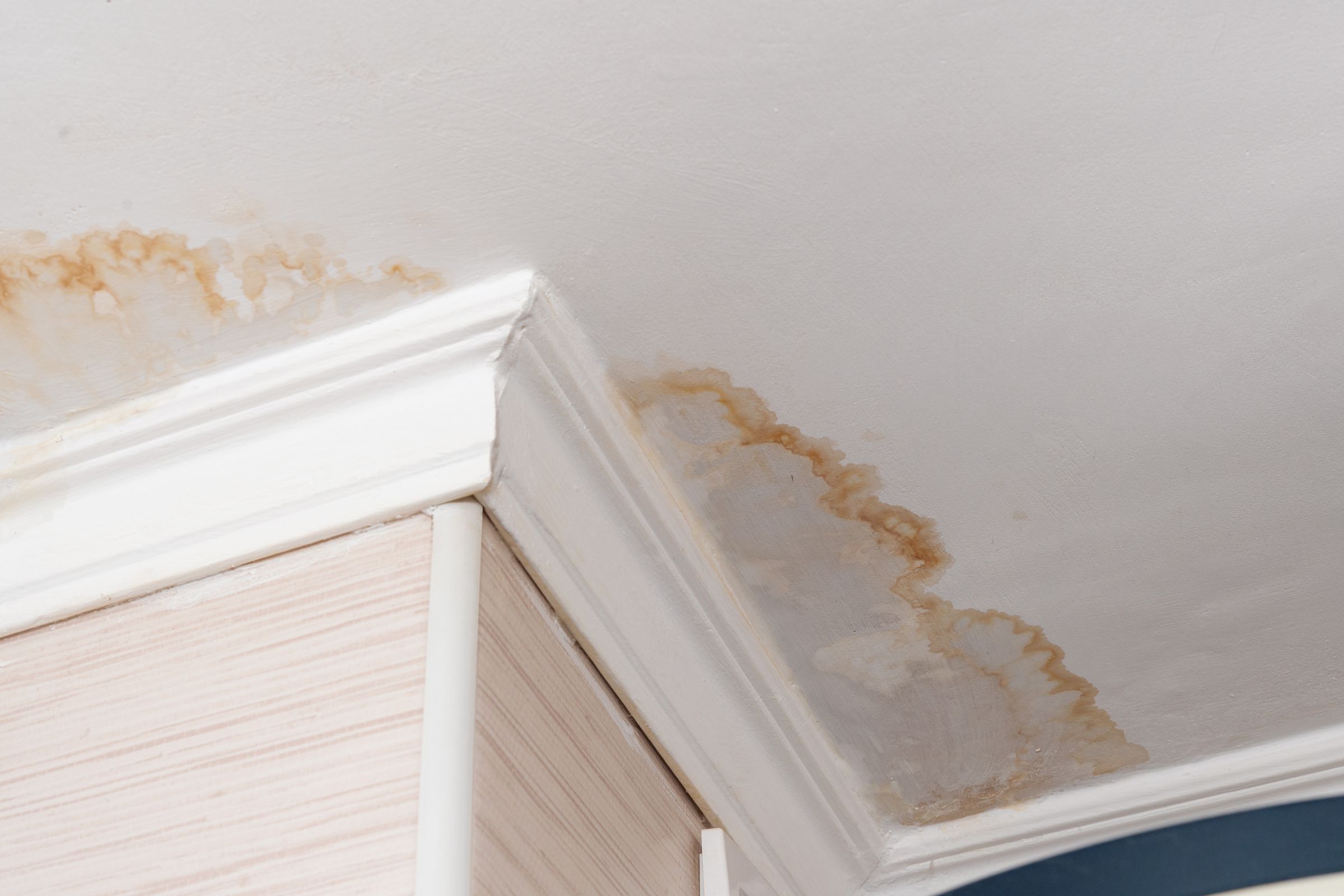
Sign 4: A wet patch on a ceiling or wall that is growing rapidly.
Water migrates. A small leak in the flat above travels through the floor slab, building up in the void, then appearing suddenly through your ceiling. A rapidly growing wet patch — one you can watch spreading over 10–20 minutes — means active water accumulation above you. If left, the ceiling plaster will eventually fail under the weight.
Important distinction: a damp patch that has clearly been there for days or weeks without growing rapidly is serious but not OOH emergency territory. A patch that has appeared in the last hour and is visibly spreading — call 24/7 or contact the flat above immediately.
Sign 5: Complete loss of water supply to the entire property.
First, check the Thames Water (or your local supplier's) outage map — your property may be within a supply zone that is currently off for planned or emergency works, which is a utility company matter, not a plumber matter. If there are no reported outages and your neighbours have water, the fault is inside your property or on your supply pipe. Total loss of water is an emergency — the property is unliveable without it.
Sign 6: Gas smell — but this is NOT a plumber call.
A gas smell is the one plumbing-adjacent emergency where you must not call a plumber as your first action. The correct response:
- Do not operate any switches (on or off — switches create sparks)
- Do not use your phone inside the building — go outside first
- Open windows and doors as you leave (do not stop to do this if the smell is very strong)
- Leave the property
- Call 0800 111 999 (National Gas Emergency Service — free, 24/7)
Only once the National Gas Emergency Service has attended, isolated the gas, and declared the property safe should you bring in a Gas Safe registered engineer to locate and repair the specific fault.
5 Scary-Looking Things That Can Wait Until Morning
These appear alarming — especially at 11pm — but genuinely do not justify out-of-hours rates:
- Boiler pressure at 0.5 bar or lower (boiler won't fire). A boiler that won't start due to low pressure is a nuisance, not a hazard. Re-pressurising takes under 5 minutes with no tools. Look up your boiler model on YouTube ("how to repressurise [your boiler model]"). If you're not comfortable doing it yourself, call in the morning. The property is not at risk overnight without heating unless outdoor temperatures are extreme.
- Dripping tap. Irritating, wasteful, but a dripping tap cannot cause structural damage overnight. Turn the isolation valve below the basin clockwise to reduce flow to a minimum. Call in the morning. An out-of-hours call for this typically costs £175 minimum for work that is £50–£80 during the day.
- Toilet that will not flush but is not overflowing. You can manually flush any toilet by lifting the cistern lid and pushing the float mechanism down or raising the flap valve directly. You can also pour a bucket of water directly into the bowl — the flush mechanism is gravity and flow, not the cistern specifically. Handle the night this way; book a morning repair.
- Slow-draining sink or shower. If water is still leaving — just more slowly than usual — the drain is not blocked, it's partially restricted. Try a plunger. If that doesn't resolve it, book a drain clearance for the morning. A partial restriction does not become a flood overnight.
- No hot water (heating still working). A cylinder or combi issue that has taken your hot water but left your central heating functional is uncomfortable — not dangerous. You can boil water, use a cold shower, or manage until morning. The repair rate drops from £150–£175/hr to £85–£105/hr by waiting until 8am. Same job, significantly lower bill.
What to Do in the First 10 Minutes
For genuine emergencies, these 10 minutes determine how bad the damage gets:
- Turn off the main stopcock. This stops the water source. See the section below for where to find it in different London property types.
- Turn off electricity at the consumer unit if there is any risk of water near live sockets, the boiler, or the fuse board.
- Photograph everything immediately — before you clean up. Water spread, water source, wet ceiling, pooling on floors. Timestamps on your phone camera. This is your insurance claim evidence. Insurers have rejected claims where the homeowner cleaned up before photographing, as there was no evidence of the extent of damage.
- Contain what you can. Buckets under active drips, towels around the spread perimeter, mops to reduce standing water. This limits secondary damage while you wait.
- Call your home insurer if the damage is significant. Escape of water is the most common home insurance claim type in the UK. Your insurer needs early notification — some policies have clauses about delayed reporting. Most insurers have a 24/7 claims line.
- Then call a plumber. With the water isolated and the evidence photographed, you can brief the plumber accurately: what's happened, what you've isolated, what's still running. A well-briefed plumber can bring the right parts and equipment on the first visit.
How to Find Your Stopcock
Knowing where your stopcock is before an emergency is one of the most genuinely useful pieces of property knowledge you can have. It varies by property type:
- Victorian or Edwardian terrace (London): Usually under the kitchen sink, or in a utility area near the back of the house. Sometimes in a floor-level cupboard in the hallway. Occasionally in the cellar if the property has one.
- 1930s–1960s semi or terrace: Under the kitchen sink in the majority of cases. Sometimes in a cloakroom or ground floor cupboard.
- Modern purpose-built flat: Inside a service cupboard (look for a door in the hallway that houses meters and pipes). Sometimes in the bathroom under the basin.
- Older converted flat: May be in a shared riser cupboard on your floor or in the communal stairwell. In some older conversions, there is no individual flat isolation — the whole building supply is controlled from a communal stopcock in the basement or meter room.
- External stopcock (pavement): Every London property has an external stopcock at the boundary of the property, usually under a small metal plate in the pavement. You need a stopcock key (£5–£15 from any plumbing merchant or hardware store) to operate it. Thames Water can also operate this in an emergency — call their 24-hour line: 0800 316 9800.
Find your stopcock today — before you need it. Turn it gently to confirm it moves (old ones seize up). If it's seized and won't turn, get it replaced by a plumber during a routine visit. A seized stopcock that fails when you actually need it in an emergency is a very common and very expensive problem to discover at midnight.
What to Tell the Plumber When You Call
The information you give in the first 60 seconds determines whether the right engineer and right equipment arrive on the first visit:
- What exactly is happening — describe the visible symptom, not your diagnosis ("water coming through my kitchen ceiling" not "I think I have a burst pipe")
- Whether you've isolated the water — yes/no, and at which point (stopcock, isolation valve under fixture, etc.)
- Your property type — terrace, flat, which floor, how many storeys
- Approximate age of the property — pre-1939, 1960s, modern? This tells the engineer what pipework to expect
- Whether there is an active risk to electrics — water near sockets, consumer unit, etc.
- Your full address including flat number and entry code — 3am is not the time to be explaining how to get into a secure block
A plumber who asks you these questions before arrival is being professional, not stalling. The answers determine whether they bring copper pipe, push-fit fittings, specific drain jetting equipment, or specialist detection gear. Showing up without the right equipment means a return visit — which means more time, more cost.
Recognised a Plumbing Emergency? Call Us Now
Water you cannot stop, sewage backup, or water near electrics — these are the situations we handle every night across London. Fixed price on the phone before we come out.
Call 0207 046 1363 NowFrequently Asked Questions
What are the signs of a burst pipe?
How do I find my stopcock in a London flat?
What should I do if water is near my electrics?
Is a wet patch on the ceiling a plumbing emergency?
Should I call 999 for a plumbing emergency?
Key Takeaways
- Water you cannot stop is always an emergency. Water you can isolate at a valve drops the urgency significantly
- Sewage backup is a biological hazard — Category 1 HHSRS. Do not use any water in the property until cleared
- Water near electrics: switch off at consumer unit first, then call a plumber and electrician
- Gas smell: do NOT call a plumber. Call 0800 111 999 (National Gas Emergency), leave the property, do not switch anything on or off
- Ceiling wet patches that are growing rapidly = emergency. Slow damp that's been there a while = urgent, not OOH
- First 10 minutes: stopcock off, electrics off if needed, photos before cleanup, call insurer if significant damage
