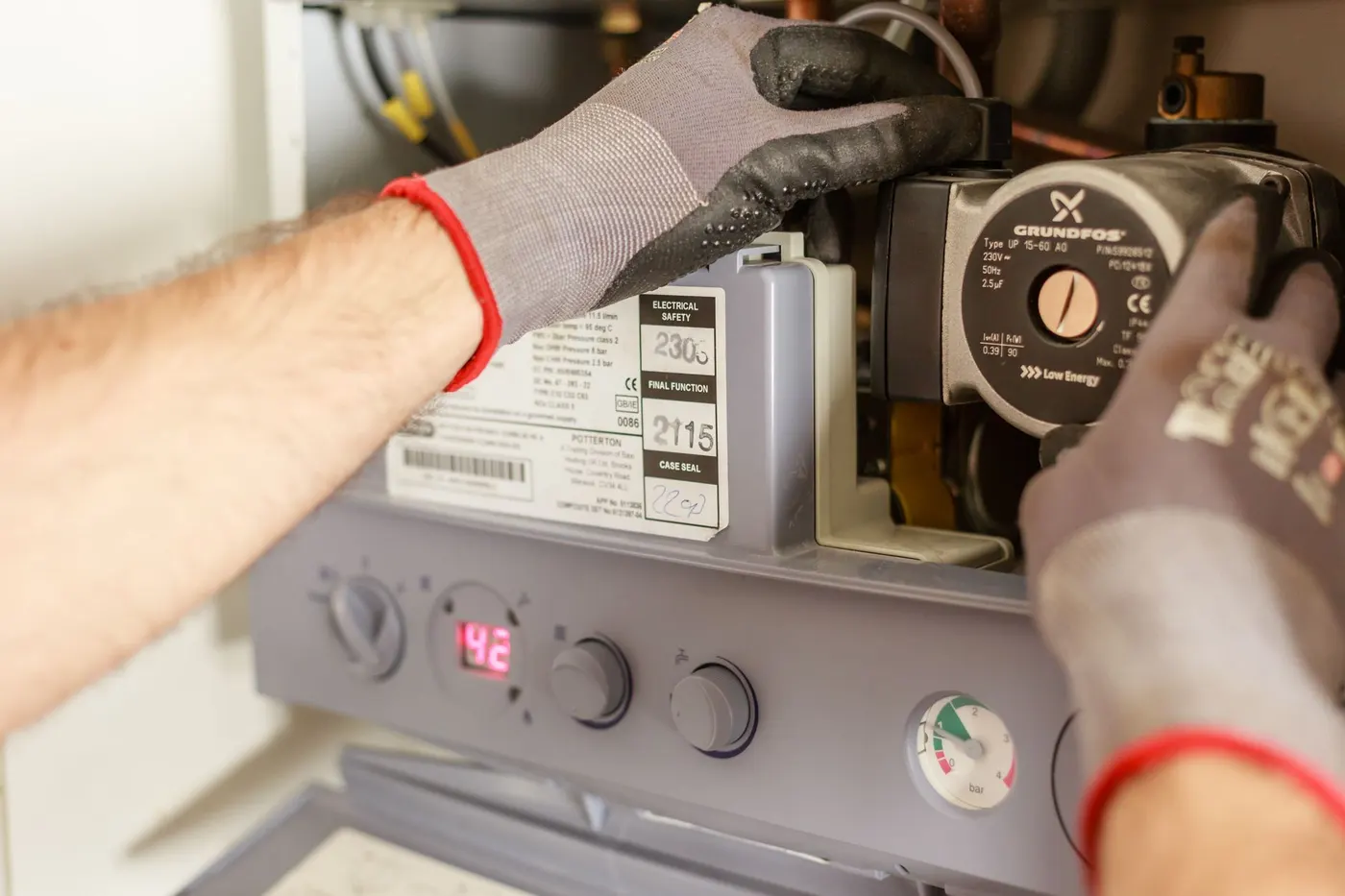
Boiler Pressure Too High? How to Lower It Safely (UK)
Boiler pressure too high? Above 2.5 bar with the heating on is too high. Switch off, let it cool, bleed a radiator slowly, and know when to call Gas Safe.
Boiler pressure is too high above about 2.5 bar with the heating on, or well above 1.5 bar cold. Switch the heating off and let the boiler cool. Check the filling loop is shut, then release a little water through a radiator bleed valve until the gauge reads 1 to 1.5 bar. If it climbs again, call an engineer.
You glanced at the little dial under the boiler and the needle is far into the red. Or the heating comes on and the pressure creeps up with it. Or there is a drip outside from a pipe you never noticed before.
Most combi boilers in London flats run on a sealed system with a filling loop and an expansion vessel. This guide covers what counts as too high, how to bring it down safely, what makes it climb back, and which jobs belong to a Gas Safe engineer. For the opposite problem, see our guide to repressurising a boiler.
⚠️ Do not touch hot water. If the outside discharge pipe is running or the boiler is hot, keep clear until it cools, because the water can scald. Never open the pressure relief valve yourself. If you smell gas, turn the gas off at the meter, open the windows and call the National Gas Emergency Service on 0800 111 999.
Boiler Pressure Too High: What to Do Now
If your boiler pressure is too high, switch the heating off, let the system cool, and release a little water through a radiator bleed valve until the gauge reads between 1 and 1.5 bar.
Too high means above about 2.5 bar with the heating on, according to Hometree, iHeat and HomeServe. The gauge is a dial or digital readout on the boiler. A cold system that reads well over 1.5 bar has often been overfilled.
Do this first:
- Turn the heating and hot water off and leave the boiler to cool.
- Check the filling loop. It is the flexible hose, usually underneath the boiler. Both ends should be closed and the hose should be dry.
- Read the gauge cold. A cold reading tells you whether you overfilled or whether something else is pushing the pressure up.
The full steps are further down. If the needle is already at 3 bar or you can see water at the discharge pipe, skip to the section on the pressure relief valve.
What Should Boiler Pressure Be?
Boiler pressure should be about 1.0 to 1.5 bar when the system is cold, and about 1.5 to 2 bar when the heating is running.
Hometree and iHeat give those figures, and HomeServe agrees on the heating-on range. Ideal Heating says pressure rises by around 0.5 bar as the water heats and expands. That small rise is normal, because the expansion vessel is there to absorb it.
| Reading on the gauge | When | What it means |
|---|---|---|
| Below 1 bar | Cold | Too low. Top it up first. See how to repressurise a boiler |
| 1.0 to 1.5 bar | Cold | Normal |
| 1.5 to 2 bar | Heating on | Normal |
| Well above 1.5 bar | Cold | Overfilled, or the filling loop is passing |
| Above 2.5 bar | Heating on | Too high. Reduce it and find the cause |
| Around 3 bar | Any time | Close to where the relief valve is designed to open. Treat it as urgent |
Your boiler manual gives the exact working range for your model.
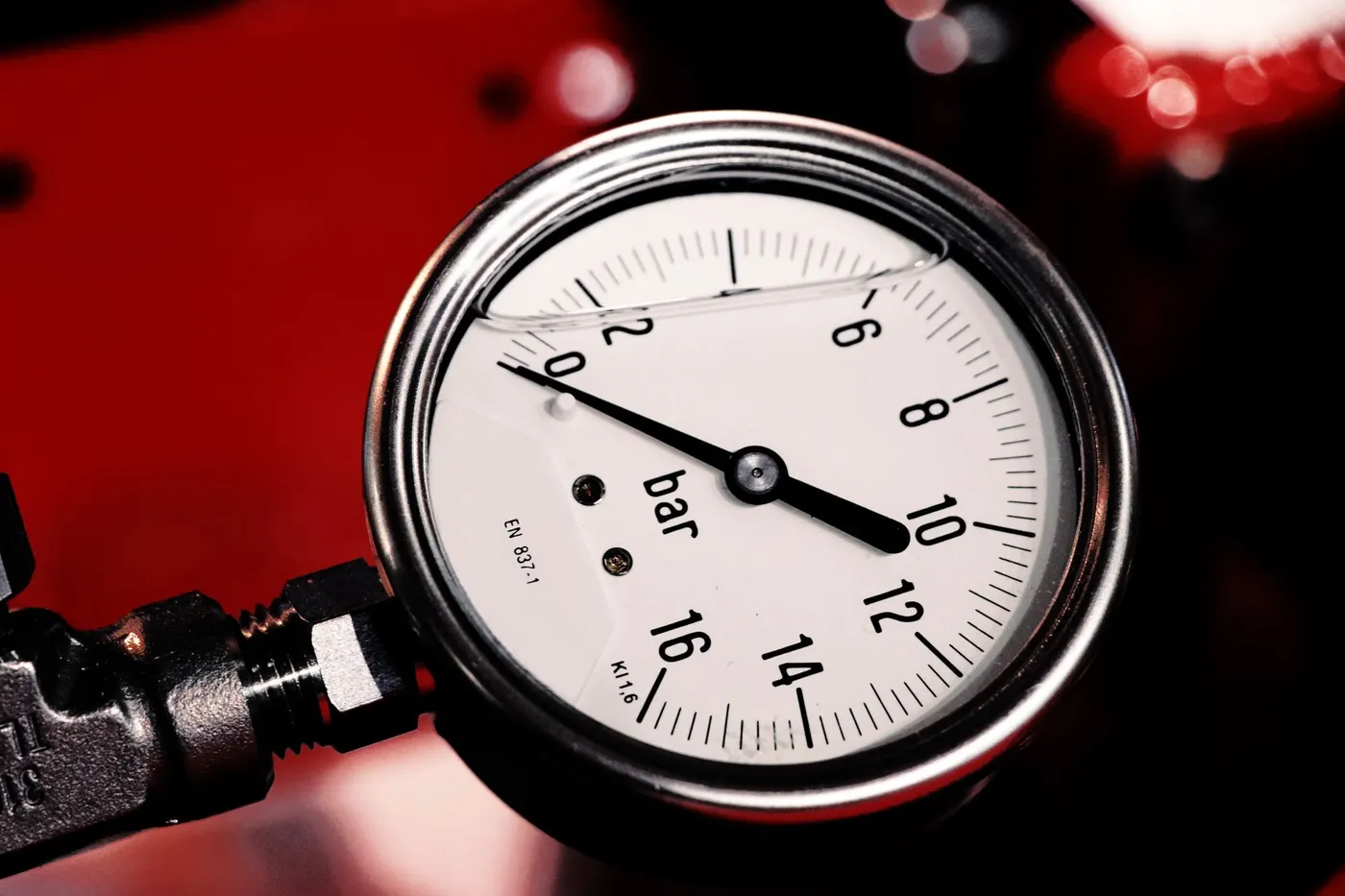
How to Reduce Boiler Pressure
To reduce boiler pressure, let the system cool, shut the filling loop, then release a little water through a radiator bleed valve while you watch the gauge.
Switch the heating off and wait
The boiler and radiators should be cool to the touch. Releasing hot water risks scalding.
Check the filling loop
Both ends closed, hose not dripping. If water is still entering, the pressure will not stay down.
Put a cloth and tray under a radiator bleed valve
Pick a radiator close to the boiler.
Open the bleed valve slightly with a radiator key
Air hisses out first, then water. Keep your eyes on the gauge.
Close it at 1 to 1.5 bar
Do not keep draining past that point.
Restart and re-check after 20 to 30 minutes
If the gauge is back above 2.5 bar, stop here and call an engineer.
iHeat warns against draining the system repeatedly. Each refill adds fresh oxygen, which can increase corrosion inside the system over time. One controlled release is fine. iHeat adds that if the pressure climbs back quickly, the cause is probably not overfilling and needs an engineer.
Why not the filling loop or relief valve?
You do not need to open the filling loop or the pressure relief valve to release pressure. A radiator bleed valve is the simplest release point for a homeowner. If you cannot get one open, or it will not stop weeping once closed, call a plumber rather than trying the relief valve.
Boiler Pressure Keeps Rising: Causes
If boiler pressure keeps rising after you have reduced it, the cause is usually an expansion vessel that has failed, a filling loop that is open or passing, or a faulty pressure gauge.
Viessmann, HomeServe and iHeat list a similar short set of causes. Here is how they tend to show up:
| What you see | Likely cause | DIY or engineer? |
|---|---|---|
| Pressure high on a cold system, soon after you topped it up | Overfilled through the filling loop | DIY: release a little, as above |
| Rises again over days with the heating off | Filling loop open or passing mains water | Check it is closed. If it still rises, engineer |
| Shoots up whenever the heating runs, and may discharge outside | Expansion vessel lost its charge or the diaphragm has failed | Gas Safe engineer |
| Gauge reads high but radiators and taps behave normally, no discharge | Faulty pressure gauge | Engineer |
| Discharge pipe wet or dripping outside | Relief valve opening, or a valve that no longer seals | Gas Safe engineer |
iHeat notes that a filling loop left open or faulty can let water in slowly over days or weeks. If the cold reading creeps up with nothing else changing, suspect it.
Vaillant says an expansion vessel typically lasts 5 to 10 years, so the vessel in an older boiler is a reasonable suspect.
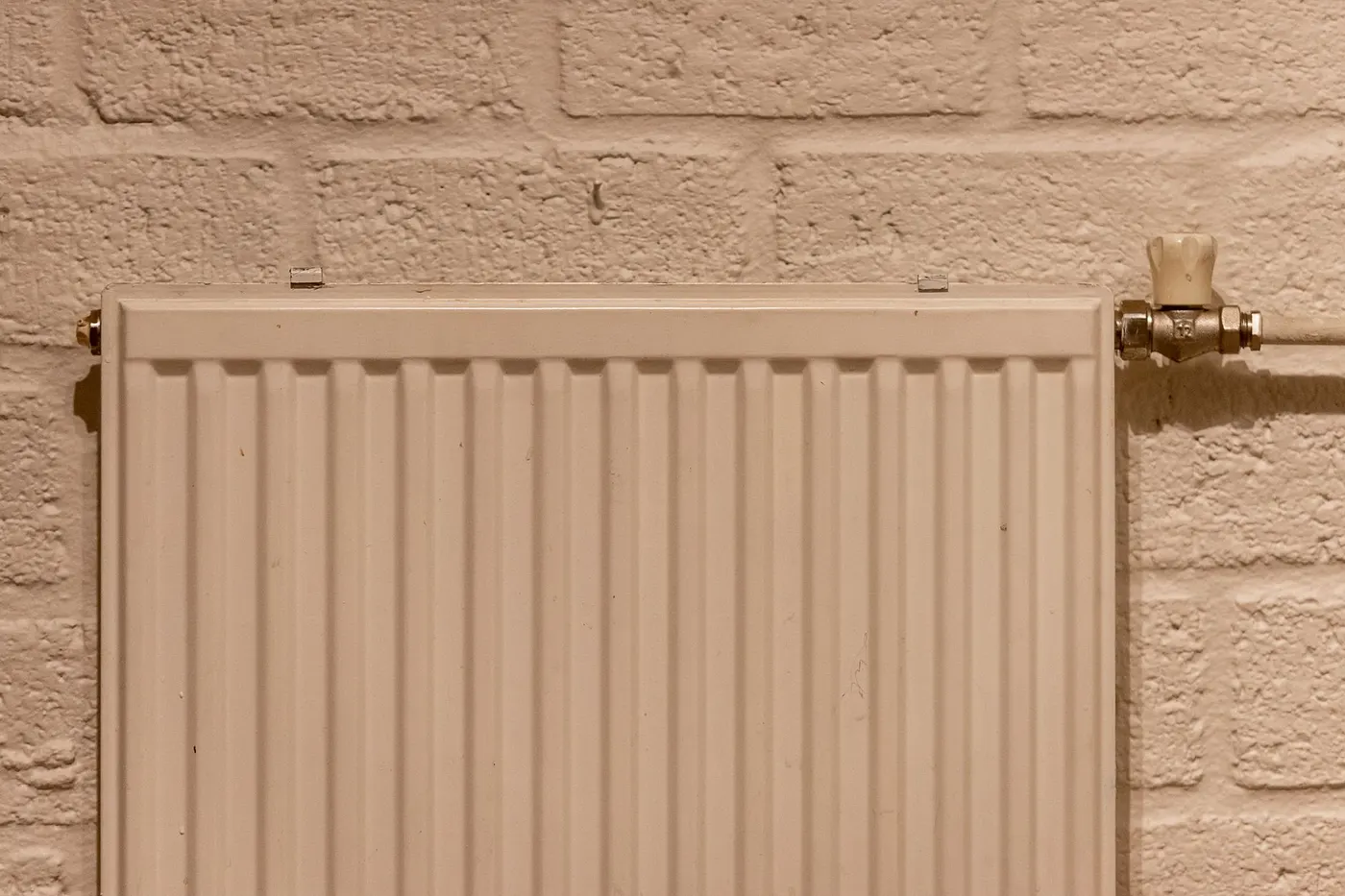
Boiler Pressure Rises When the Heating Is On
A rise of around 0.5 bar when the heating comes on is normal, but a jump to 2.5 bar or above can point to a failed expansion vessel.
Water expands as it heats. In a sealed system the expansion vessel has a flexible diaphragm and an air space that soak that up, so the gauge only moves a little. iHeat says a vessel that has lost its charge makes the pressure jump when the heating starts, because the extra volume has nowhere to go.
The pattern can be easy to spot. You set the cold pressure to 1 to 1.5 bar and the heating takes it past 2.5 bar. It usually falls again as the system cools. An overfilled system tends to read high even when cold, so the cold reading helps tell the two apart.
Repeated spikes can also set the relief valve off. Our guide to water coming from the outside discharge pipe covers that side of it.
Pressure Relief Valve Dripping, and Pressure at 3 Bar
A dripping pressure relief valve usually means the system has been overpressurised, and a gauge near 3 bar is close to the point where the valve is designed to open, according to iHeat.
Check your manual for your boiler's figure. The valve is a safety device. Its discharge pipe runs through an outside wall, usually close to the boiler, and lets water out to protect the system. Viessmann says 3 bar is not dangerous if the valve is working. That caveat matters, because you do not want to find out the valve is stuck the hard way.
What to check:
- The outside discharge pipe. Ideal Heating says it should be dry. If it is wet or dripping, call a Gas Safe engineer.
- The gauge. If it stays high after you have released pressure, the vessel or the filling loop is the problem.
- The pattern. Dripping only when the heating is on can mean the vessel is not absorbing the expansion. Dripping all the time can mean a valve that has not resealed, which iHeat lists as a known fault. Either way, have it checked.
Replacing a relief valve is a job for a heating engineer. A national guide from iHeat puts a PRV repair at £30 to £120 and a replacement at £70 to £190. That is a national range, not a London price, and it does not include the cost of finding why the pressure rose in the first place. Fitting a new valve without fixing a dead vessel can leave the new valve dripping too.
If water has run down the wall or collected under the boiler, see our guide to an overflow pipe dripping outside. Several outside pipes look alike but mean different things.

Vaillant and Worcester Boiler Pressure Too High
On a Vaillant or Worcester boiler, too-high pressure is reduced the same way as any sealed system, and the fault code is a clue, though codes vary by model, so check your manual.
Hometree lists F.47 on Vaillant boilers as a high-pressure related code, and 117 on Baxi and Worcester. Treat those as a pointer rather than a diagnosis. The code tells you the boiler has noticed the pressure, not why it is high.
- Vaillant: reduce the pressure as above. Our Vaillant fault code guide covers the other common codes.
- Worcester Bosch: the same procedure applies, using a radiator bleed valve. For the low-pressure side, see how to repressurise a Worcester boiler.
If the code returns after you have lowered the pressure, the fault is still there, and the boiler needs a Gas Safe engineer.
When to Stop and Call an Engineer
Stop and call a Gas Safe engineer if the pressure climbs again after one release, the discharge pipe is wet, or the gauge reaches 3 bar.
Vaillant states that only Gas Safe registered engineers legally install an expansion vessel, and that it is illegal for consumers to maintain, service or permanently adjust a gas appliance. Baxi also says a Gas Safe registered engineer should recharge or replace a vessel. That gives you a clear dividing line:
- You can: read the gauge, check the filling loop is shut, and release a small amount of water through a radiator bleed valve.
- Leave to an engineer: opening or replacing the pressure relief valve, recharging or replacing the expansion vessel, and repairing the filling loop assembly.
Boiler Pressure Still Climbing?
Our Gas Safe registered engineers diagnose expansion vessels, filling loops and relief valves across all 32 London boroughs, 24/7. £60 call-out fee at any hour for ordinary emergency work, waived for landlords, property managers and scheduled work.
Call 0207 046 1363Labour is from £110 an hour on weekdays and from £140 an hour out of hours. Or WhatsApp a photo of the gauge and the outside pipe to 07456 975436. More on our boiler repair London page.
Frequently Asked Questions
What should boiler pressure be?
How do I reduce boiler pressure?
Is 3 bar too high for a boiler?
Why does my boiler pressure keep rising?
Why is my boiler pressure relief valve dripping?
Can I release boiler pressure myself?
Emergency Repairs London provides same-day and 24/7 boiler repair and emergency plumbing across all 32 London boroughs. Lines are open 24/7 on 0207 046 1363.
Key Takeaways
- A cold sealed system normally sits at 1.0 to 1.5 bar, and rises by around 0.5 bar when the heating is on. Above 2.5 bar with the heating on is too high
- A pressure relief valve is typically designed to open around 3 bar, so a gauge near 3 bar means the safety valve is close to discharging. Check your boiler manual for the exact figure
- Wait for the boiler to cool, then release water slowly through a radiator bleed valve until the gauge is back at 1 to 1.5 bar. Re-check after 20 to 30 minutes
- A pressure that keeps climbing after you have reduced it can point to a failed expansion vessel (typically 5 to 10 years of life) or a filling loop that is passing water
- Only a Gas Safe registered engineer should replace an expansion vessel or pressure relief valve. A national guide puts a PRV repair at £30 to £120 and a replacement at £70 to £190
- Our call-out fee is £60 at any hour, with labour from £110 an hour on weekdays and from £140 an hour out of hours
