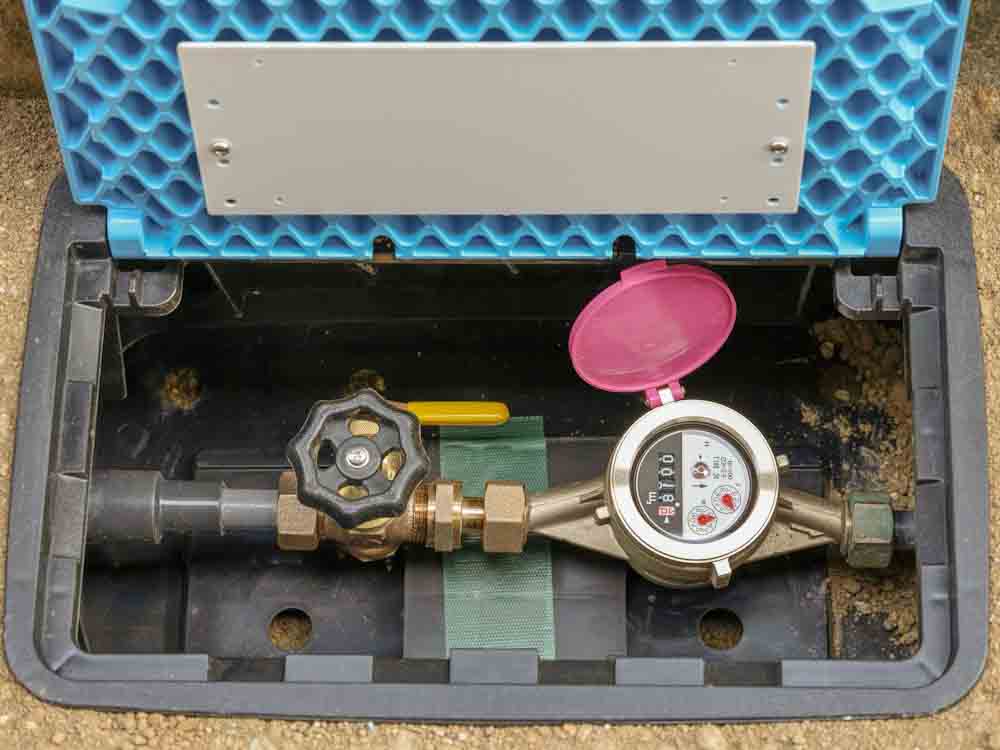
Which Way to Turn a Stopcock Off, and Where to Find It
Turn the stopcock clockwise to shut the water off. Where it hides in Victorian terraces, 1930s semis, flats and new builds, and what to do if it is seized.
To turn the water off at the mains, find the internal stopcock and turn it clockwise until it stops. In most London homes it is under the kitchen sink at the back of the cupboard where the cold pipe comes up. If it is not there, check by the front door, under the stairs, in a downstairs loo, in the airing cupboard, or next to an internal water meter. A traditional brass stopcock needs several full turns; a modern lever type needs a quarter turn until the handle sits across the pipe. Then open every cold tap in the house, lowest first, to drain the pipes so the leak runs dry. If the stopcock will not turn, do not force it, because a seized brass spindle can snap and turn a leak into a flood. Instead isolate at the nearest smaller valve you can reach, or at the external stop tap in the pavement boundary box (a stopcock key costs a few pounds). If water is anywhere near electrics, turn the consumer unit off only if it is safe to reach, and call an electrician. Emergency Repairs London is on 0207 046 1363, 24/7 across all 32 boroughs, £60 call-out.
If water is coming through a ceiling or spraying out of a pipe right now, skip the explanation and do the four things in the box below. The reading can wait. Everything after it covers where the stopcock hides in different kinds of London property, what to do when it is seized, and how to isolate one tap or one radiator instead of the whole house.
⚠️ Right now, in this order: 1) Go to the kitchen and open the cupboard under the sink. The stopcock is the brass valve on the cold pipe at the back. 2) Turn it clockwise until it is firm, or a quarter turn if it is a lever. 3) Open every cold tap in the property, lowest floor first, and flush the toilets. 4) If water is near light fittings, downlights or the consumer unit, turn the electricity off at the consumer unit only if it is safe to reach, keep clear, and call an electrician. Then call us on 0207 046 1363.
Do This First: The 60-Second Version
Water damage is a race. A 15mm pipe under mains pressure delivers roughly 12 to 15 litres a minute, so five minutes spent looking for the stopcock is somewhere around 70 litres through your floor and into the ceiling below. The single skill that decides whether this is a mopping job or an insurance claim is being able to shut the supply off quickly.
Kitchen sink cupboard, back wall
Clear the bin and the bleach bottles out of the way and look at the point where the cold water pipe emerges from the floor or the wall. The stopcock is the first valve on that pipe: a small brass body with either a round tap-style handle or a coloured lever.
Turn it clockwise
Round handle: several full turns until it comes up firm. Lever: a quarter turn until the lever sits across the pipe instead of along it. Firm hand pressure only.
Prove it worked
Open the kitchen cold tap. It should run, splutter and stop within a minute. If it keeps flowing at full pressure, you have either closed the wrong valve or the stopcock is not sealing.
Drain the pipes down
Open every cold tap in the property starting with the lowest floor, and flush the toilets. This pulls the water sitting above the leak out through the taps by gravity instead of through your ceiling.
If the stopcock is not under the kitchen sink, jump straight to where it hides by property type. If you have found it and it will not move, go to the seized stopcock section and do not force it.
What a Stopcock Is and What It Looks Like
A stopcock (also called a stop tap, stop valve or main water shut off valve) is the master switch on the cold water main feeding your property. Close it and the continuous supply of pressurised water to every pipe, tap, toilet, boiler and appliance behind it stops. A burst pipe stops being fed, and only the few litres already in the pipework can escape.
You will meet two designs in London homes:
- The traditional screw-down stopcock. A brass body roughly the size of a golf ball with a round crosshead or wheel handle on top, usually chrome, brass or red plastic. It closes clockwise and takes several full turns. This is what you will find in most homes built or plumbed before about 2005, and it is the design that seizes.
- The quarter-turn lever stopcock. A brass or chrome body with a straight lever handle, often blue, red or orange. On when the lever lies along the pipe, off when it sits across the pipe. A quarter turn, one hand, no seizing. This is what a plumber will fit if yours ever needs replacing, and it is a genuinely worthwhile upgrade.
Two things that are not your stopcock but get mistaken for it. A gate valve looks similar but has a flatter, usually red wheel handle and sits on tank-fed pipework rather than the mains; it is normally larger bore, 22mm or 28mm, and lives near a hot water cylinder or a loft tank. A drain-off cock is a small brass fitting with a square nut and a hose nozzle pointing downward, used to empty a system rather than isolate it. Neither will shut your mains off.
💡 The rule that finds it: the rising main enters the building at the lowest point nearest the street, and the stopcock is the first valve on that pipe. If you know which side of the property faces the road, you have halved the search area before you start looking.
Where the Internal Stopcock Is, by London Property Type
Across every property type, the order of likelihood is much the same: under the kitchen sink first, then wherever the mains enters near the front of the building. The detail below is what changes with the housing stock, and London's stock is unusually varied.
Victorian and Edwardian terrace
The kitchen is usually in a rear extension, and the mains often runs the length of the house under the floor before surfacing. Check under the kitchen sink first, then the cellar head or the top of the basement stairs if there is one, then the boxing in the hallway near the front door where later pipework was chased in. In a house that has been extended or had the kitchen moved, the original stopcock can be stranded under floorboards in the front room or beneath a hallway hatch, and a second valve added nearer the new sink. If you find two, close the one nearest the front of the house as well.
1930s semi
Look under the kitchen sink, then in the garage or the side passage store if the house has one, then under the stairs. Many 1930s London semis have the mains entering through the front bay area or under the hall floor, and a surprising number have the stopcock in the cupboard housing the electric meter by the front door. Where a downstairs cloakroom was added later, the mains sometimes got picked up there.
Purpose-built flat
The mains normally arrives from a communal riser, so the flat's own stopcock is usually close to where the pipework enters: a hallway cupboard by the front door, an airing cupboard, a utility cupboard housing the boiler, or the boxing in the bathroom. If your flat has its own internal water meter, there is nearly always an isolating valve immediately beside it. Beyond your front door there will also be a riser stopcock in a service cupboard, plant room or basement, which the managing agent, concierge or porter controls rather than residents.
Converted flat in an old house
This is the awkward one, and it is very common across Hackney, Islington, Camden, Lambeth and most of inner London. The building originally had one supply and one stopcock, and when it was carved into flats that single feed was branched, sometimes properly with a valve per flat and sometimes not. Your isolation point may be in a communal hallway cupboard, under the stairs in the shared entrance, in the flat below, or in a meter box outside. It is worth ten minutes on a dry afternoon to find out, because at 2am with water coming through the ceiling it is not a mystery you want to be solving. If you cannot find it, ask the freeholder or managing agent, and label whatever you find with a luggage tag.
New build house or apartment
Modern homes are the easiest. Expect a quarter-turn lever stopcock in the kitchen sink cupboard, in a utility room, or in the plant cupboard next to the boiler or unvented cylinder, usually with a manifold of plastic pipework and labelled isolation valves beside it. Many new builds also use a proprietary in-house meter and isolation assembly near the front door. If you moved in recently, the homeowner pack from the developer normally shows exactly where it is.
The full checklist, in order
- Under the kitchen sink, at the back of the cupboard on the cold pipe. Most common by a wide margin.
- Hallway or cupboard by the front door, often next to the electric or water meter.
- Under the stairs, in the understairs cupboard or on the pipework running up the wall.
- Downstairs loo or cloakroom, behind the WC or inside the boxing.
- Airing cupboard or boiler cupboard, where the pipework congregates.
- Utility room, near the washing machine feeds.
- Garage, side store or porch, on 1930s and post-war houses.
- Cellar head or basement, in older terraces.
- Beside an internal water meter, wherever that is.
- Under a floor hatch, in properties where the kitchen has been moved.
✓ Do it now, not later. Find your stopcock while the house is dry, close it, confirm the taps run dry, then reopen it fully and back it off a quarter turn. That single test tells you whether it works, frees it if it is stiffening, and puts the location in your memory. It takes about three minutes and it is the highest value three minutes in domestic plumbing.
Which Way to Turn It, and How Far
Clockwise to close. Righty-tighty, the same as a jar lid. The two designs behave differently once you start turning.
A screw-down stopcock lifts a washer down onto a seat as you turn, so it needs several complete revolutions before it is properly shut. People often turn it once, hear the flow change, and assume it is off. Keep going until the handle comes up firm under normal hand pressure. Then prove it: open a cold tap, and within a minute it should run, splutter and die. If it is still flowing hard, it is not closed.
A lever stopcock is a ball valve. A quarter turn is the whole travel. Lever along the pipe is open; lever across the pipe is closed. There is no partway, and there is nothing to seize.
When you reopen a screw-down stopcock afterwards, open it fully and then turn it back a quarter to half a turn. Leaving the spindle jammed hard against either end of its travel is what lets limescale weld it in place over the following years. That one habit is the difference between a stopcock that works in an emergency and one that does not.
💡 Expect a weep at the spindle. An old stopcock that has not moved in years will sometimes drip from under the handle once you turn it, because the packing has dried out. It is usually a small drip, it is not a reason to panic, and a plumber can repack or replace the valve. It is not a reason to force it back either.
If the Stopcock Is Seized or Will Not Turn
This is the situation that turns an ordinary leak into a bad night, and most guides skip it. London sits in one of the hardest water areas in the country, and hard water furs the brass spindle and washer of a screw-down stopcock with limescale. A valve that has not been moved since the house was plumbed is very often a valve that will not move at all.
⚠️ Do not force it. Reaching for pliers, a wrench or a length of pipe over the handle is the single most damaging thing you can do here. A corroded brass spindle shears off, or the body cracks, and now mains water is coming out of the cupboard with no valve left to shut it. A seized stopcock that is stuck open is a much better position than a snapped one. Stop, and isolate somewhere else.
What is reasonable to try, in the order you should try it:
- Firm, steady hand pressure only. A slow, even push rather than a sharp jerk. If it gives, close it fully and gently.
- Try both directions a fraction. Sometimes a valve that will not close will rock a few degrees each way and free itself. A few degrees, not a heave.
- Penetrating oil, if you have minutes rather than seconds. A spray on the spindle where it enters the body, left for a few minutes, occasionally frees a mildly stiff valve. This is for a slow leak you are managing, not for a burst pipe.
- Then stop. If it resists real force, leave it alone and move to another isolation point.
Your fallback options, in order of how quickly you can usually reach them:
- The in-line isolation valve nearest the leak. See the next section. If the leak is at a tap, toilet or appliance, this stops it without touching the mains.
- Gate valves on a tank-fed system. If you have a cold water storage tank in the loft or the airing cupboard, the pipes leaving it and the hot cylinder usually carry red-wheel gate valves. Closing those isolates the stored water side.
- The external stop tap in the pavement boundary box. Covered below. This is the whole-property fallback.
- The communal riser valve, in a block. The managing agent, concierge or building emergency line can close the riser feeding your stack, often faster than anyone reaching the street.
- Your water company's 24-hour emergency line. In most of London that is Thames Water on 0800 316 9800. They can isolate at the street.
We have written a longer, flat-specific version of this problem in stopcock won't turn: how to isolate the water in a London flat, which goes deeper on communal risers and shared conversions. Whatever happens, once the emergency is over, have the seized valve replaced. It has already failed you once.
Isolating One Tap, Toilet, Appliance or Radiator Instead
You very often do not need to shut the whole house down. If you can identify what is leaking, isolating it locally leaves you with running water everywhere else, which matters if the repair is going to take until the morning.
In-line isolation valves (taps, toilets, washing machines)
Modern plumbing puts a small isolation valve, also called a service valve or iso valve, on the pipe feeding most individual fittings. It is a chrome or brass fitting about the size of a coupling, with a screwdriver slot across the middle. Turn the slot a quarter turn with a flathead screwdriver so the slot sits across the pipe and that fitting is isolated. Look under the basin, behind the WC on the fill pipe, under the kitchen sink on the tap tails, and on the washing machine and dishwasher feeds. Some are lever versions with a tiny handle instead of a slot.
A leaking flexible tap hose or a running toilet fill valve is the classic case. Isolate it, and you have converted an emergency into a job for daytime rates. A dripping tap is the same logic, and our guide to fixing a dripping tap covers what happens after the valve is closed.
Appliances
Washing machines and dishwashers are fed by a braided hose from a valve, usually with a blue or grey lever, behind or beside the appliance. Turn the lever across the pipe. Failed washing machine hoses are one of the most common escape-of-water claims there is, and the valve is normally within arm's reach of the leak.
Radiators
A leaking radiator is on the heating circuit, not the water main, so the stopcock will not stop it. Close both ends of the radiator instead:
- The wheelhead or thermostatic valve at one end. Turn the plastic head clockwise to fully closed, or to the off setting on a TRV.
- The lockshield valve at the other end. Pull or unscrew the plastic cap to reveal a spindle, then close it clockwise with a spanner, pliers or a small adjustable. Count the turns and write the number down, because reopening it by exactly the same amount restores the balance of your heating system.
With both ends closed, the radiator is isolated from the rest of the system and the leak should stop or slow to a drip. Put a container underneath, because the radiator still holds water. If the leak is at a pipe joint rather than the radiator itself, or if the boiler pressure is dropping, that is a heating fault rather than a plumbing one.
The hot water cylinder
An unvented cylinder such as a Megaflo has its own isolating valve on the cold feed, and a vented cylinder is fed by a gate valve from the loft tank. If the leak is at or around the cylinder, isolating there is quicker and less disruptive than killing the whole supply, and you should also switch off the immersion heater or the boiler so nothing is heating a cylinder that is not being fed.
The External Stop Tap and the Stopcock Key
Every property also has an external stop tap, sometimes called the outside stop valve or the boundary stop tap. It marks the point where the water company's pipe becomes your supply pipe, and it is the fallback when nothing inside will shut the water off.
What you are looking for: a small cover set flush into the pavement, front path, driveway or garden, right at the property boundary. It is typically 15cm to 25cm square or round, made of cast iron or black plastic, often with a hinged lid, and usually marked with a W or the word water. In terraces it is commonly directly outside the front wall of the house, in line with where the mains enters. In a block or a converted house it may serve several properties at once.
How to open it: lever the lid up with a flathead screwdriver in the notch on the edge. Underneath is a narrow vertical chamber, often 60cm to 1m deep, sometimes with a plastic guard pipe. At the bottom you should see the tap spindle and, in many London properties, the water meter alongside it. Standing water and silt in the chamber are normal.
What you need: a stopcock key, sometimes called a stop tap key or water key. It is a long T-handled or crutch-handled bar with a socket on the end that drops down and engages the square spindle. They cost a few pounds from any DIY shop or builders merchant. Buy one and keep it under the kitchen sink. It turns the external tap from "needs a plumber" into something you can do yourself in ninety seconds. In an emergency, a long-handled adjustable spanner will sometimes reach a shallow chamber, but a proper key is the right tool.
Turn it clockwise to close, gently. Same rules as inside: if it will not move, stop. These valves are older, wetter and more corroded than anything indoors, and shearing one off underground is a genuinely serious problem.
⚠️ It may not be only yours. In many London terraces and converted houses, one boundary box serves several properties on a shared supply pipe. Closing it cuts your neighbours' water as well as your own, which is fine in a real emergency but not something to do casually. If you share a supply, it is worth knowing in advance, and our guide to shared supply pipe leaks and who pays explains how those arrangements work.
While you have the chamber open, note the meter reading. If you later suspect a slow underground leak on your supply pipe, the overnight meter test is the definitive way to confirm it.
After the Water Is Off: Drain Down and Make Safe
Turning the stopcock off is the first half of the job. The pipework above the leak is still full, and it will keep discharging until it empties. Getting that water out through the taps rather than through your ceiling is the second half.
Open all the cold taps, lowest first
Ground floor kitchen and cloakroom first, then work upwards. Gravity pulls the water down and out of the lowest outlets. Flush the toilets as well, and leave the taps open.
Switch off the boiler or immersion, then open the hot taps
Turn the boiler off at its switch, or the immersion heater off at its isolator, before draining the hot side. Never leave a heat source running on a system you are emptying. Then open the hot taps to drain that side too.
Deal with electrics
If water is near light fittings, downlights, sockets or the consumer unit, turn the electricity off at the consumer unit only if it is safe to reach without going near the water, keep everyone clear of the area, and call a qualified electrician. Do not operate switches in a room where water is coming through the ceiling, and do not go into a flooded space to reach a board. If you cannot get to it safely, leave it and say so when you call.
Contain and photograph
Buckets and towels under the drip, valuables and electronics moved out. Then photograph everything before you clear up, because the loss adjuster will want to see the damage in place. Our burst pipe insurance photo checklist lists the five shots that matter.
Tell the neighbours below
In a flat, knock on the door below before their ceiling comes down. It is a better conversation than the one you have afterwards, and it lets them move their own belongings.
💡 If the water keeps coming after the mains is off, the likely reasons are that the pipes are simply still draining (give it a few minutes with the taps open), that you have a cold water storage tank in the loft still emptying through the leak (close the gate valves on its outlets too), or that the leak is not on your supply at all: heating water, a blocked waste, a shower tray, a roof, or the flat above. That third case is the point to call rather than keep searching.
Water Still Coming Through? We're 24/7
If you cannot isolate it, cannot find the source, or the stopcock has failed, our engineers are out across all 32 London boroughs day and night. £60 call-out, quoted before any work starts.
Call 0207 046 1363When It Is the Water Company's Problem, Not Yours
The dividing line is the property boundary, and it decides who pays.
| Section of pipe | Whose responsibility | What that means |
|---|---|---|
| The water main in the street | Water company | Their repair, their cost, report it and they attend |
| Communication pipe: main to the boundary stop tap | Water company | Their repair, including the external stop tap itself |
| Supply pipe: boundary into your home, under garden or drive | Property owner | Yours to repair, and the usual cause of a big unexplained bill |
| All internal pipework, taps, cylinder, heating | Property owner | Yours, and normally your plumber rather than the water company |
| Shared supply pipe serving several homes | Shared between owners | Costs are typically split, arrangements vary, check the deeds |
Signs that the problem is on the water company's side rather than yours include water bubbling up through the pavement or road, a wet patch in the street that never dries, several neighbouring properties losing pressure at the same time, and clean water running along the kerb. In most of London the emergency number is Thames Water on 0800 316 9800, staffed 24 hours. Some outer boroughs are served by Affinity Water, SES Water or Essex and Suffolk, so check the name on your bill.
Water escaping continuously on your own supply pipe, by contrast, is your repair and your water bill. If your meter is spinning with everything off, you have a leak between the boundary and the house. We break the responsibility question down in full in Thames Water leak responsibility: what they fix and what you pay for, and a leak allowance can often be claimed once the repair is done.
One related point worth knowing: if turning the stopcock back on leaves you with weak flow everywhere, check the stopcock is fully open before assuming anything worse. A partly closed stopcock is one of the most common causes of low water pressure in a London home.
Making Sure It Works Next Time
Ten minutes of maintenance turns the next emergency into an inconvenience.
- Exercise the stopcock twice a year. Close it fully, confirm the taps run dry, reopen it fully, then back it off a quarter turn. A valve that moves regularly does not seize.
- Label it. A luggage tag on the handle reading "MAINS WATER OFF, TURN CLOCKWISE" means anyone in the household can act, including a house sitter or a visiting relative.
- Buy a stopcock key and keep it under the sink beside the internal stopcock, not in the shed behind the mower.
- Replace a tired screw-down valve with a quarter-turn lever stopcock. If yours is stiff, weeping or you had to isolate elsewhere last time, this is £120 to £250 well spent and takes an hour.
- Note the location of the external stop tap and lift the cover once, in daylight, so you know what you are dealing with.
- Turn the water off when you go away for more than a few days, leaving the heating on a frost setting in winter. The unnoticed leak in an empty property is the claim every insurer and every block of flats dreads. Our guide to what home insurance covers on plumbing explains where policies typically draw the line.
- Lag vulnerable pipework before winter. Most December and January burst pipe calls trace back to an unlagged pipe in a loft, an external wall or an outside tap feed. See frozen pipes in London for what to insulate and how to thaw safely.
2026 London Cost Guide
Indicative London pricing. The call-out covers travel and the first 45 minutes on site including diagnosis, and any parts or further work are quoted before they start rather than after.
| Job | Typical London cost (2026) | Notes |
|---|---|---|
| Call-out and diagnosis (any hour, including out of hours and weekends) | £60 | Includes the first 45 minutes on site |
| Engineer labour after the first 45 minutes | £110/hr weekday, £140/hr out of hours | Charged in 15-minute increments, plus parts |
| Replace seized screw-down stopcock with lever valve (normal hours) | £120–£250 | Depends on access and how the supply is isolated for the swap |
| Emergency or out of hours stopcock and burst isolation | £150–£300 | Where a leak is running while the valve is changed |
| Fit in-line isolation valves to taps, toilet or appliance | £60–£140 per valve | Cheapest insurance against the next small leak |
| Free a seized external stop tap or fit a new boundary valve | £120–£280 | Subject to the water company's position on the boundary box |
| Trace a hidden leak (acoustic or thermal survey) | £150–£350 | Where the source is not visible |
| Stopcock key (DIY purchase) | £3–£8 | The best value item on this table by a distance |
Set any of those against the cost of an escape of water that ran because nobody could turn the supply off. A ceiling replacement, floor, decoration and drying in a single London room starts in the low thousands, and in a flat it is rarely one room.
Frequently Asked Questions
Where is my stopcock?
What if my stopcock will not turn?
Who is responsible for the outside stop tap?
Which way do you turn a stopcock to turn the water off?
Do I need a stopcock key for the outside stop tap?
How do I turn the water off to just one radiator or appliance?
I turned the stopcock off but water is still coming through the ceiling. Why?
Should I turn the water off at the mains when I go away?
Is there a stopcock in every flat?
The Bottom Line
Find your stopcock today, while the floor is dry. Under the kitchen sink first, then wherever the mains enters at the front of the property. Close it, check the taps run dry, reopen it fully and back it off a quarter turn. Put a label on it, buy a stopcock key for a few pounds, and lift the cover on the boundary box once so you know what is under there.
If the day comes when a pipe lets go, the sequence is short: stopcock clockwise, cold taps open lowest first, boiler off then hot taps, electrics off at the consumer unit only if it is safe to reach, and phone. If the stopcock will not turn, do not force it, isolate at the nearest valve you can reach, and get help moving. The flood you stop in the first two minutes is always cheaper than the one you stop in the first twenty.
Emergency Repairs London provides 24/7 emergency plumbing, burst pipe repair and leak detection across all 32 London boroughs, including seized stopcock replacement and same-night leak isolation. Fixed £60 daytime call-out, quoted before work starts. Lines are open 24 hours on 0207 046 1363.
Key Takeaways
- The internal stopcock is the master off switch for your cold mains. Turn it clockwise to close. In most London homes it sits under the kitchen sink at the back of the cupboard, where the cold pipe rises from the floor or wall.
- If it is not under the sink, the rising main enters at the lowest point nearest the street, so check the hallway by the front door, under the stairs, the downstairs loo, the airing cupboard, or beside an internal water meter.
- A traditional screw-down stopcock takes several full turns. A modern lever stopcock takes a quarter turn, and the water is off when the lever sits across the pipe rather than along it.
- Never force a seized stopcock. London's hard water welds old brass spindles with limescale, and a snapped stopcock turns a controllable leak into an uncontrollable one. Isolate somewhere else instead.
- You often do not need to kill the whole house. In-line isolation valves (a screwdriver slot, quarter turn) shut off a single tap, toilet or washing machine, and radiator valves isolate one radiator.
- Once the water is off, open all the cold taps starting with the lowest in the house, then the hot taps. This drains the pipes so the leak stops feeding itself.
- If your home has a cold water storage tank in the loft, closing the mains stopcock does not stop a leak fed by that tank. You also need the gate valves on the tank outlets.
- Every property also has an external stop tap in a small boundary box at the pavement edge. It usually needs a long stopcock key, and in terraces and conversions it is often shared with neighbours.
- Pipework from the boundary into your home is your responsibility. The main in the street is the water company's. Thames Water's 24-hour line is 0800 316 9800.
- Exercise the stopcock twice a year, or have a plumber fit a quarter-turn full-bore lever valve (£120 to £250 in London) so it can never seize shut.
