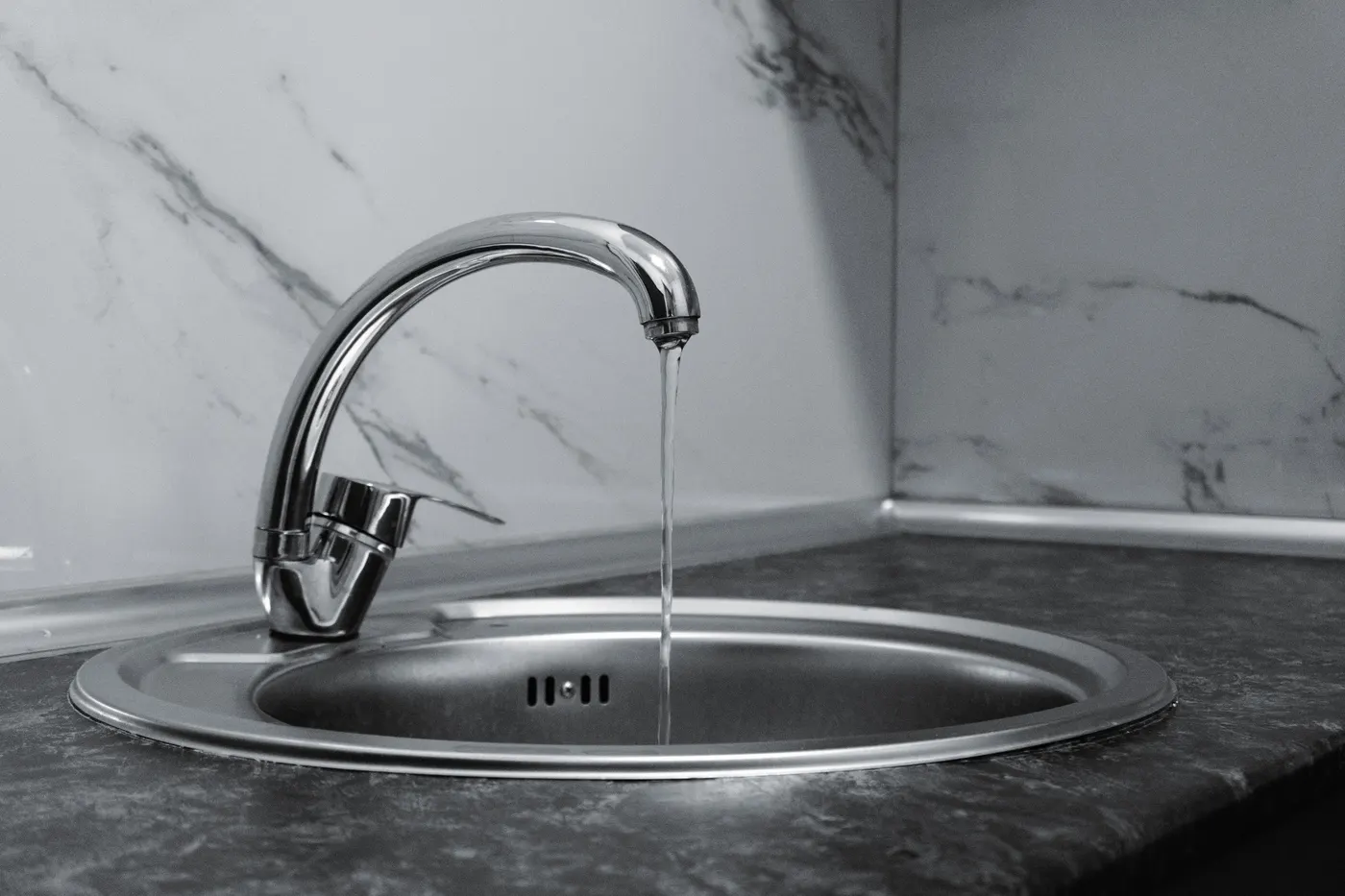
Kitchen Sink Smells: 6 Causes and How to Fix Each
Kitchen sink smells are usually grease in the trap, not the main drain. Clean the trap with a bucket under it first, then check the seal and the washer.
A kitchen sink that smells of rotting food is usually coated with grease and food residue in the trap and waste pipe, so clean the trap with a bucket under it. A sewage smell points to a dry or leaking trap seal, and a smell that appears when the washing machine runs points to the shared waste.
Ask AI a questionYou lean over the sink to rinse a mug and catch it: stale, greasy, maybe a bit sour.
In most homes the cause is plain kitchen waste, a film of fat and food that has built up in the trap and the pipe behind it. Less often it is a lost water seal or a problem with the washing machine waste. This guide sorts the causes by what you smell and when, then covers what the Building Regulations say about sink traps. If the smell is in several rooms, our guide to sewage smell in the house is the better starting point.
Why Does My Kitchen Sink Smell?
A kitchen sink usually smells because grease and food residue have built up in the trap and waste pipe, or because the water seal in that trap has gone and drain air is coming up.
Every sink has a trap, the bend under the bowl that holds water and blocks air from the drain. Match what you notice to the likely cause in the table below.
| Smell | When it happens | Likely cause | First test |
|---|---|---|---|
| Sour, rotting food | Constant, worse when hot water runs | Grease and food biofilm in the trap and waste | Put a bucket under the trap, open it and look for slime and debris |
| Musty, damp cloth | Constant, even after cleaning the bowl | Residue on the overflow or the underside of the plug and strainer | Remove the plug and strainer and smell them separately |
| Sewage or drain smell | After the sink has been unused for a while | Dry trap, the water seal has gone | Run the tap to refill the trap and re-check later |
| Sewage smell | Soon after the sink empties, with gurgling | Seal pulled out by siphonage or poor venting, or a leaking joint | Listen for gurgling and check under the sink for damp |
| Greasy, dirty-water smell | Only while the washing machine or dishwasher drains | Shared waste backing up greasy water | Run the appliance and watch the sink and trap |
| Drain smell in several rooms | Any time, other drains gurgle | Problem in the drain or vent beyond the kitchen | Check the bathroom and utility drains for the same smell |
The first rows are the likeliest, and the tests cost nothing.
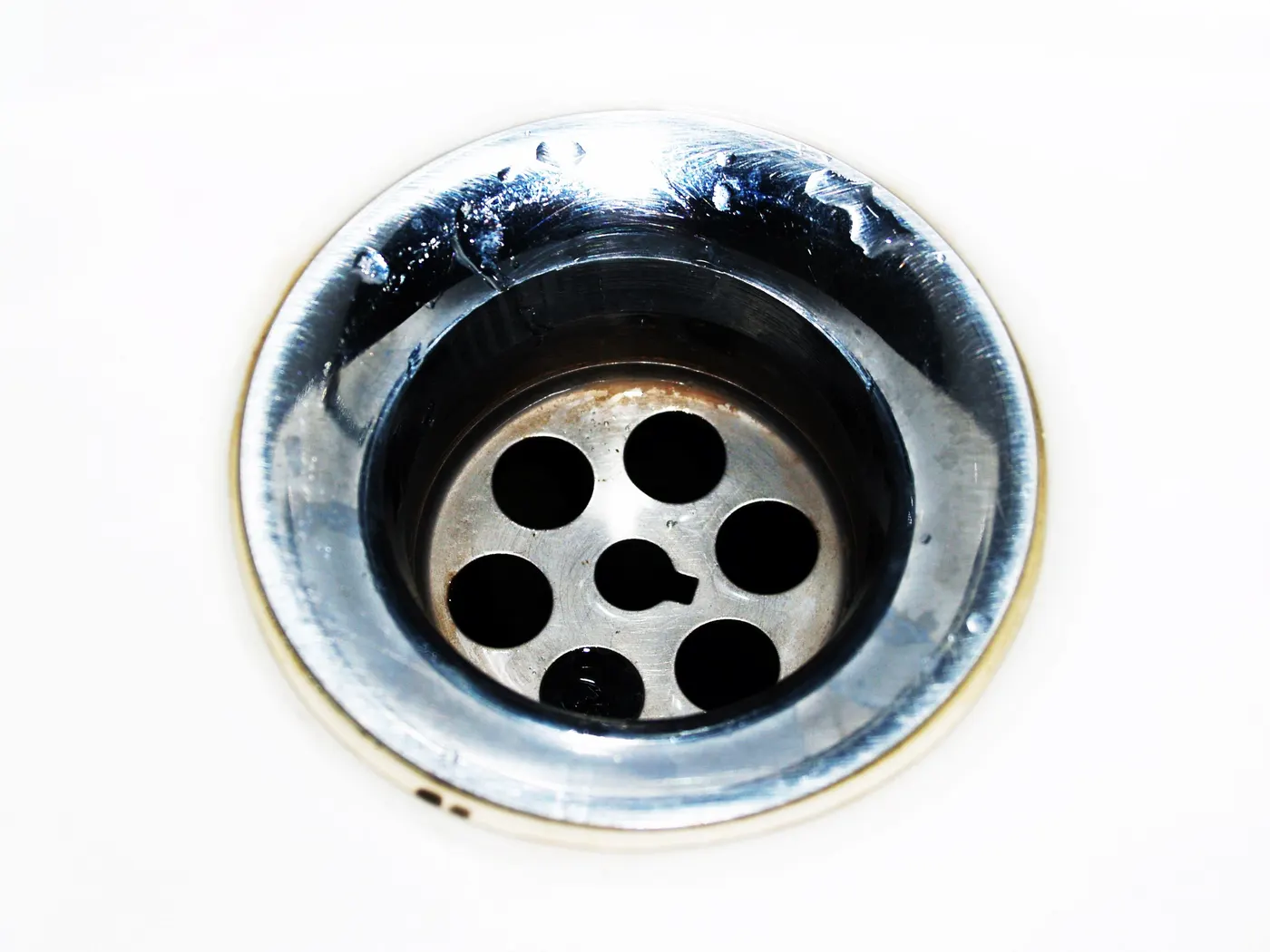
Bad Smell in the Kitchen Sink Drain: Grease and Food Build-Up
If the smell is sour or rotten and constant, grease and food biofilm in the trap and waste pipe is the most likely cause.
Cooking fat does not stay liquid. It cools on the pipe wall, catches food scraps and soap scum, and bacteria feed on the layer. That is why the smell is worst after washing greasy dishes and why rinsing the bowl never fixes it. The same layer narrows the pipe, so a slow-draining sink has the same cause. Our guide on how to unblock a drain covers what to do once it slows to a stop.
Thames Water is clear that hot water and washing-up liquid do not break down fat. They only move it further along the pipe, where it sets again.
Where the build-up sits
- The trap. The bend holds water and everything that settles out of it. It is the first place to look.
- The waste pipe behind it. The pipe runs to the wall or the stack and coats the same way, but you cannot see it from the trap.
- The plug, strainer and overflow. Residue collects on the underside of both, and the overflow slot has no flow to rinse it out.
Cleaning the trap
A trap is designed to hold water, so it will spill when you open it. Which? advises putting a bucket under the trap first and cleaning it every few months. Approved Document H says traps should be removable or have a cleaning eye (paragraph 1.6), so a kitchen trap is meant to come apart.
- Clear the cupboard and put a bucket under the trap, with a cloth or old towel around it.
- Unscrew the trap by hand. Turn the collars anticlockwise and keep the washers.
- Tip the contents into the bucket and scrape the inside with a bottle brush and warm soapy water.
- Refit the trap, hand-tighten the collars and run the tap while you check each joint for drips.
If a collar is seized, or the trap is part of a one-piece waste that does not unscrew, stop and leave it.
How to Get Rid of Kitchen Sink Smell
Clean the trap and the parts you can reach first, rinse with hot tap water, and use a drain product only if the smell lingers.
- Clean the plug, strainer and overflow. Scrub both sides with a brush and washing-up liquid.
- Clean the trap as above and refit it.
- Rinse with hot water from the tap. Keep it running for a while so the trap refills and the loosened residue is carried away.
- Fit a sink strainer. Thames Water recommends one, and it stops food scraps adding to the layer.
- Re-check after the next use. If the smell is gone by the next day, it was the build-up.
What about baking soda, vinegar and enzyme sticks?
Which? says baking soda and vinegar may tackle some smell, but in its testing the mixture did not shift a hairball, so it will not clear a real blockage. Enzyme sticks, which Which? lists at about £5 to £10 a pack, are a gentler routine option, but it has not tested them. Treat both as top-ups after cleaning the trap, not a replacement for it.
⚠️ Never mix bleach with acid-based products. Which? advises against mixing bleach with acid-based cleaners, and that includes limescale remover and vinegar. The mixture releases toxic gas, and a small kitchen is a bad place for it. If you use bleach, use it alone, follow the label, ventilate the room and rinse it away completely before trying anything else.
Which? also lists boiling water as a quick home remedy. We would not bother once the trap is clean: hot water from the tap is enough to rinse it, and it is gentler on plastic waste fittings.
Stopping it coming back
Most repeat smells come from the same habit, so it is worth fixing at the source. Thames Water’s fats, oils and grease guidance boils down to a short list.
- Do not pour fat, oil or grease down the sink.
- Put used oil in a sealable container and put it in the bin.
- Wipe greasy pans with paper towel before washing them.
- Use a sink strainer and bin what it catches.
Thames Water also says a blocked pipe on your own property is the homeowner’s responsibility and can cost more than £200 to clear. On its bin it page it reports clearing about 75,000 blockages a year.
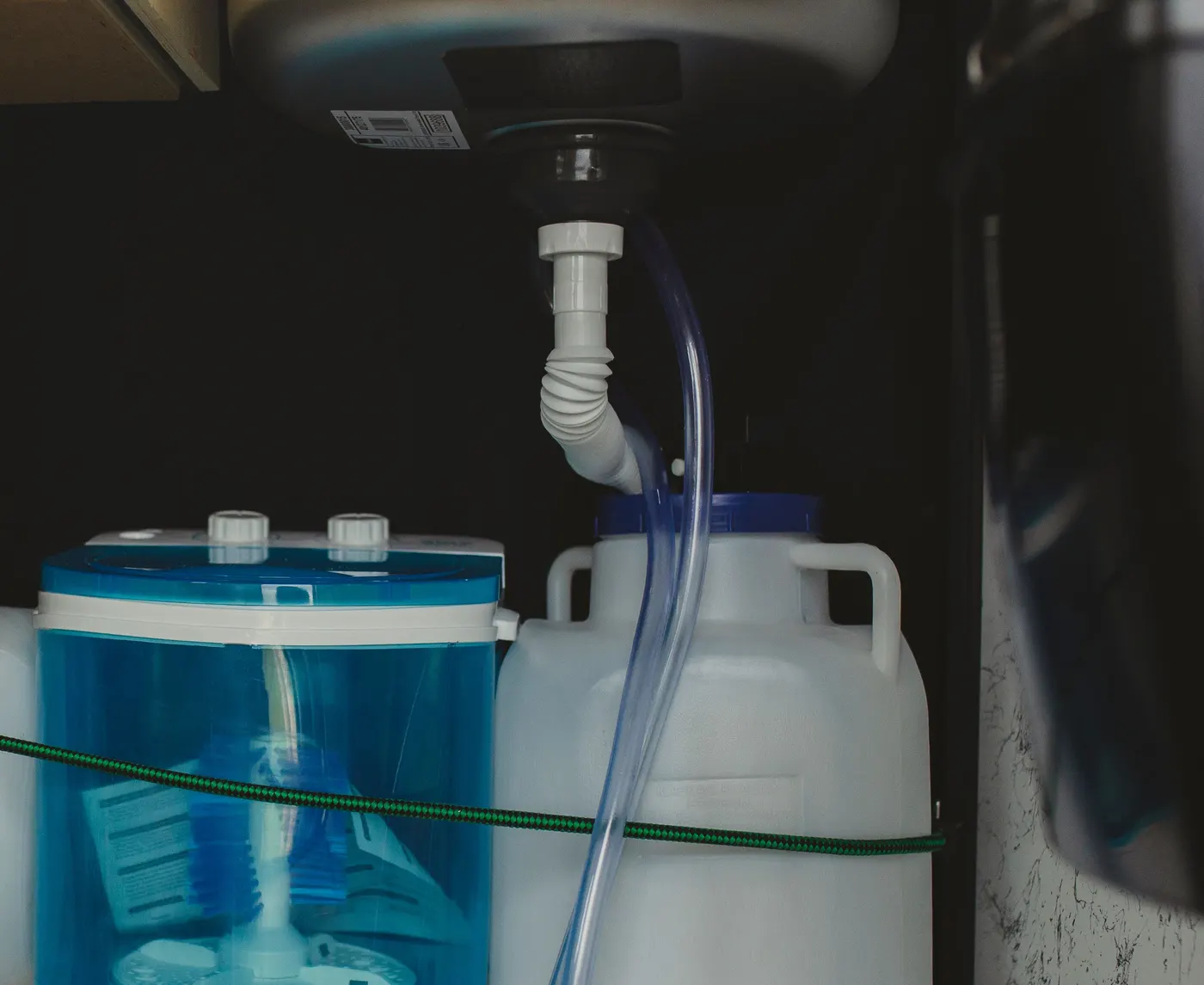
Bad Smell From the Kitchen Sink When the Washing Machine Runs
If the smell appears only while the washing machine or dishwasher drains, greasy water is probably backing up through the shared waste or draining past a partly blocked trap.
Many kitchens connect the washing machine hose to the sink waste, through a spigot on the trap or a standpipe. In Approved Document H the sink, washing machine, dishwasher and food waste disposal unit share one row of Table 1, so a single 40mm trap with a 75mm seal can serve several of them. Everything the machine discharges then meets the same trap and the same grease layer.
Two things tend to go wrong. The first is backflow. Hoover’s installation advice is that a washing machine hose at a sink should rise above the sink bowl or overflow so it acts as an air block, and that backflowed greasy water can smell. The correct arrangement depends on the model and the waste fitting, so check your machine manual.
The second is a partial blockage. A machine pushes out a lot of water at once, and if the trap or waste is half full of grease, some of it rises up through the sink. Clean the trap, then run the machine and watch the sink as it drains. If water or smell still comes up, a plumber can check whether the hose connection or the waste is at fault. In a rental, report it to the landlord rather than altering the connection yourself.
Sink Smells Like Sewage
A sewage smell from a kitchen sink usually means drain air is getting past the trap, either because the water seal has dried out or because something is pulling it out.
Grease smells sour and greasy, while drain air has the damp, sewer note you would know from a gully. The usual causes are these.
- A dry trap. A sink in a spare kitchen, a holiday let or a flat left empty can lose its seal as the water evaporates. Run the tap to refill it and re-check later. Our guide on why drains smell in summer covers why it gets worse in warm weather.
- A leaking joint. A loose collar or cracked waste lets drain air out before it reaches the trap and often leaves a damp cupboard floor.
- Siphonage or poor venting. When a lot of water leaves quickly it can pull the trap’s seal along with it. Gurgling from the sink as it empties is the usual clue.
- A problem beyond the kitchen. If other drains smell too, the fault is further along. See our guide on sewage smell in the house.
If the smell returns within a day or two of normal use after you refill the trap, it is not simply drying out. Something is removing the seal, and that is a job for a plumber.
⚠️ Rotten-egg smell and your health. Hydrogen sulphide (H2S) is a colourless, flammable gas that smells of rotten eggs. UKHSA says it is very unlikely the general population will be exposed to levels high enough to cause harm, but breathing high concentrations may cause collapse and death within minutes. If the smell is strong or you feel dizzy or unwell, leave the room, open windows and get fresh air. If you suspect a natural gas leak, call the National Gas Emergency Service on 0800 111 999.
You cannot tell which gas you have by smell alone. UKHSA publishes general information on hydrogen sulphide.
Trap Seal and Venting: What the Regulations Say
Approved Document H gives a kitchen sink a 40mm trap with a 75mm water seal, and says no trap should ever hold less than 25mm under working conditions.
The figures below come from Approved Document H (2015 edition), the full PDF on GOV.UK. It takes effect in England for work started on or after 1 October 2015.
| Appliance | Trap diameter | Water seal |
|---|---|---|
| Sink, washing machine, dishwashing machine, food waste disposal unit | 40mm | 75mm |
| Bath, shower | 40mm | 50mm |
A footnote to Table 1 says that where a bath, shower, washing machine or dishwasher discharges directly to a gully, the seal may be reduced to not less than 38mm. Other points that bear on a smelly sink:
- Paragraph 1.3: every point of discharge needs a trap, and the trap must keep at least 25mm of water seal under working and test conditions.
- Paragraphs 1.19 and 1.20, with Diagram 3: a sink branch needs no separate ventilation if it stays within 3m for 40mm pipe or 4m for 50mm pipe, at a slope between 18 and 90mm per metre. Beyond that it needs a branch vent, a ventilating stack or an air admittance valve.
- Paragraph 1.15: a branch serving a single appliance should be at least the diameter of the trap.
- Paragraph 1.6: traps should be removable or have a cleaning eye, so they can be cleaned.
We are not saying what applies to your particular home, because that depends on when the kitchen was fitted and what has changed since. A sink moved to an island or to the far side of a room is a typical case where the branch ends up longer than the limit, and a plumber can measure the layout against these figures.
When to Call a Plumber
Call a plumber if the smell returns after you have cleaned the trap, if the sink gurgles, or if you find damp under the sink.
- You can do: clean the plug, strainer and overflow, clean an unscrewing trap, refill a dry trap and fit a strainer.
- Leave to a plumber: venting changes, an air admittance valve, a leaking or seized waste, a washing machine connection that backs up, or smells in several rooms.
- If you rent: report it to your landlord or agent in writing with the date, and do not alter the waste yourself.
Kitchen Sink Still Smelling?
We trace kitchen waste smells, fix traps and venting, and clear drains across all 32 London boroughs, 24/7. £60 call-out fee at any hour for ordinary emergency work, waived for landlords, property managers and scheduled work.
Call 0207 046 1363Or WhatsApp a photo of the cupboard under the sink to 07456 975436. If the smell is in more than one room, see our blocked drains London page. For what a visit costs, read our guide to the emergency plumber call-out fee in London.
Frequently Asked Questions
Why does my kitchen sink smell even after I clean it?
Can I pour bleach down a smelly kitchen sink?
Does baking soda and vinegar fix a smelly kitchen drain?
Why does my kitchen sink smell when the washing machine runs?
Why does my kitchen sink smell like sewage?
How do I stop grease causing kitchen sink smells?
Emergency Repairs London provides same-day and 24/7 blocked drain and emergency plumbing services across all 32 London boroughs. Lines are open 24/7 on 0207 046 1363.
Key Takeaways
- Approved Document H (2015) Table 1 gives a kitchen sink a 40mm trap with a 75mm water seal, and paragraph 1.3 says no trap may hold less than 25mm under working conditions
- A sink branch can run up to 3m in 40mm pipe or 4m in 50mm pipe before it needs a branch vent, ventilating stack or air admittance valve (paragraphs 1.19 and 1.20, Diagram 3)
- Washing machines and dishwashers share the sink's 40mm trap and 75mm seal row in Table 1, so a shared waste is a common place for greasy water to back up
- Thames Water clears about 75,000 blockages a year, and a blocked pipe on your own property is your responsibility and can cost more than £200
- Enzyme sticks cost about £5 to £10 a pack, but Which? says it has not tested the popular brand it names, and baking soda with vinegar did not shift a hairball in its testing
- Our call-out fee is £60 at any hour for ordinary emergency work, waived for landlords, property managers and scheduled work
