Toilet Keeps Running? How to Stop It (UK Cistern Guide)
Toilet keeps running? Turn the isolation valve a quarter turn to stop it, then use a 10-minute test to see if the fill valve or flush valve has failed.
Turn the isolation valve under or behind the toilet a quarter turn with a flat-head screwdriver, so the slot crosses the pipe. That stops the refill. If the cistern level drops within 10 minutes, the flush valve is leaking into the pan. If water spills into the overflow tube, the fill valve is not shutting off.
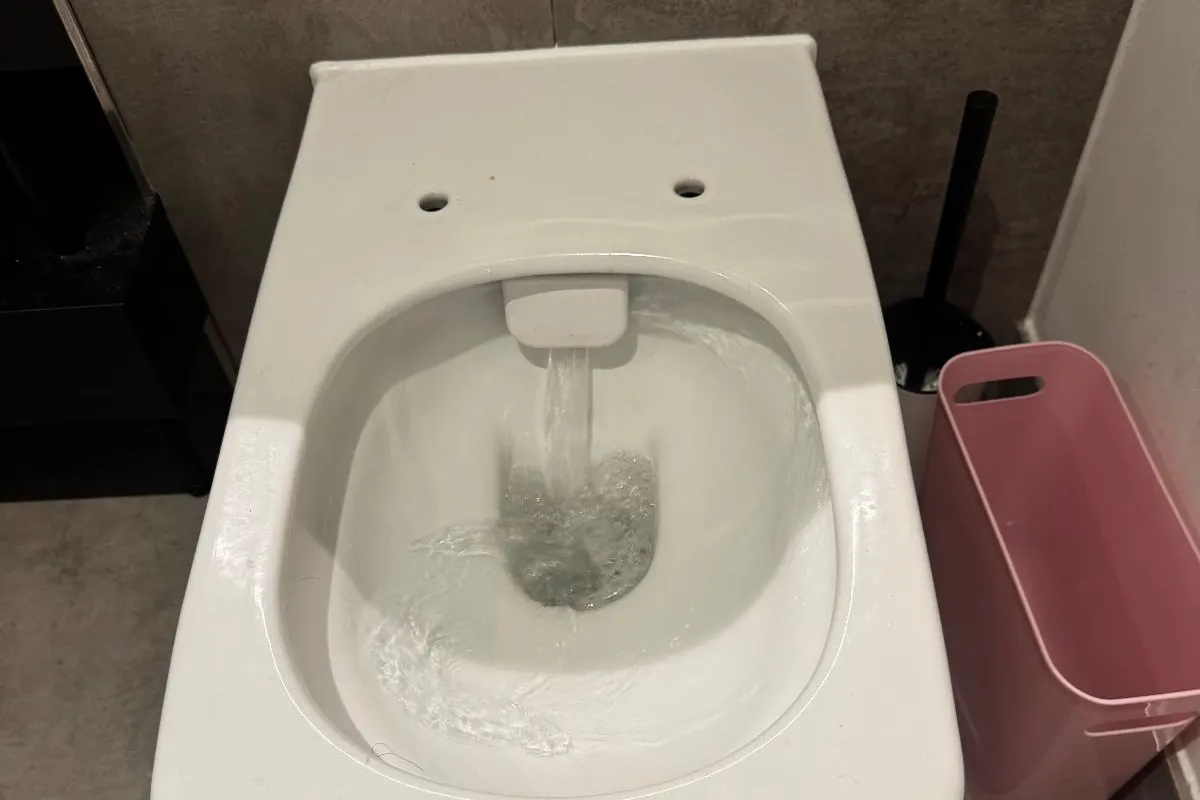
You flushed an hour ago and the toilet is still hissing. Or it goes quiet, then refills on its own every few minutes through the night. Sometimes there is no noise at all, just a thin ripple down the back of the pan that never stops.
We see a lot of these in London flats with push-button or concealed cisterns. Below: how to stop the water, which valve has failed, how to fix it, and what it costs on a meter.
⚠️ Do not force a stiff isolation valve. Use the stopcock instead. If water is reaching light fittings or coming through the ceiling below, close the stopcock, keep clear of the electrics and call us on 0207 046 1363.
Toilet Keeps Running: Stop It in 2 Minutes
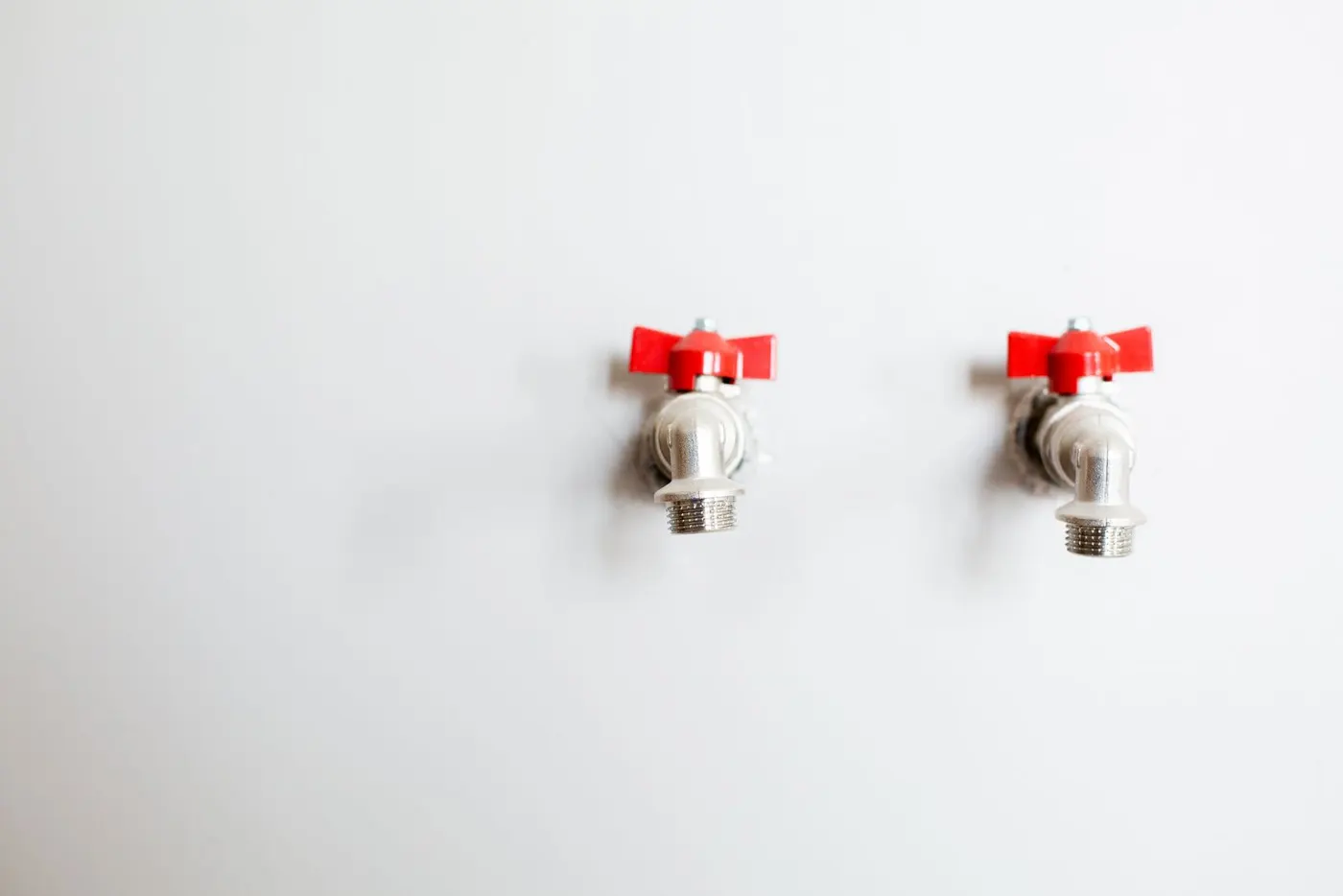
To stop a running toilet, turn the isolation valve on the cistern's supply pipe a quarter turn so the screwdriver slot crosses the pipe. That cuts off the refill.
It's usually directly under the toilet, or behind it where the pipe enters the cistern. Use a flat-head screwdriver. With the water on, the slot runs along the pipe.
If it keeps running with the valve off, or the slot won't move without real force, leave it and use the stopcock. Our guide to turning off the water at the mains shows where to find it.
Then lift the lid and check two things:
- Is the button or lever stuck down? A button that hasn't sprung back holds the flush valve open. Press it a couple of times to free it.
- Is the float caught? If it snags on the cistern wall or another part, it can't rise far enough to shut the fill valve.
Why Does My Toilet Keep Running?
A toilet keeps running because water is leaking past the flush valve into the pan, or because the fill valve isn't shutting off when the cistern is full. Thames Water and WaterSafe both point to those two valves.
- The fill valve lets mains water in after a flush, from the side or the bottom of the cistern. A float shuts it off as the water rises. Older ones have a ball float on an arm, newer ones a float cup that slides up the valve body.
- The flush valve lets water out into the pan. On most push-button and dual-flush cisterns it is a drop valve, a column that lifts off a rubber seal and drops back onto it. Older lever cisterns use a siphon: until 1 January 2001 the regulations required a valveless siphonic cistern, so drop valves were only allowed after that.
Bristol Water calls modern toilets with dual-flush drop valves "one of the main offenders" for leaks. The seal sits under water all the time, and a bit of grit or limescale on it lets water creep past.
Why the water ends up in the bowl, not outside
Most modern UK cisterns overflow internally into the pan. The regulations require a warning pipe "or with a no less effective device", and WRAS guidance refers to cisterns with "an internal warning pipe discharging into the WC pan". So a failing fill valve shows up as water running in the bowl, not dripping outside.
If your water is coming out of a pipe on an outside wall instead, see our guide to an overflow pipe dripping outside.
Fill Valve or Flush Valve? The 10-Minute Test
Thames Water's test settles it: mark the water level in the cistern and check it 10 minutes later. If the level has dropped, the flush valve is leaking into the pan. If it hasn't, look at the fill valve.
Turn the isolation valve off before you mark the level, or the fill valve will just top it up. Then:
- Watch the overflow. With the water back on, if the level keeps rising into the overflow tube, the fill valve isn't shutting off. Thames Water adds that a slow refill or a weak flush also points to the fill valve.
- Check the level. Cisterns fitted under the 1999 regulations must have an indelible fill line marked inside. Without one, aim for about an inch below the top of the overflow.
- Food colouring. Bristol Water suggests a few drops in the cistern, left for a few hours. If the pan water changes colour, the cistern is leaking into the bowl.
- Dry tissue. Thames Water's method: wait 30 minutes after flushing, dry the back of the pan and lay a dry sheet of toilet paper there. Leave it at least three hours, overnight if you can. Wet or torn means a leaky loo.
| What you see | Likely cause | What to do |
|---|---|---|
| Level drops within 10 minutes with the supply off | Flush valve seal leaking into the pan | Clean the seal, or replace it |
| Water spills into the overflow tube | Fill valve not shutting off, or float set too high | Lower the float, then clean or replace the diaphragm washer |
| Slow refill or weak flush | Fill valve partly blocked | Flush debris through and clean the washer |
| Water sloshes inside the float | Waterlogged float | Replace the float |
Toilet Keeps Running After Flush
When a toilet keeps running after a flush, the flush valve usually hasn't resealed, so water keeps draining into the pan and the fill valve never shuts off.
Crosswater, a UK bathroom maker, puts it down to a worn inlet or flush valve seal, or debris and limescale stopping the valve sealing.
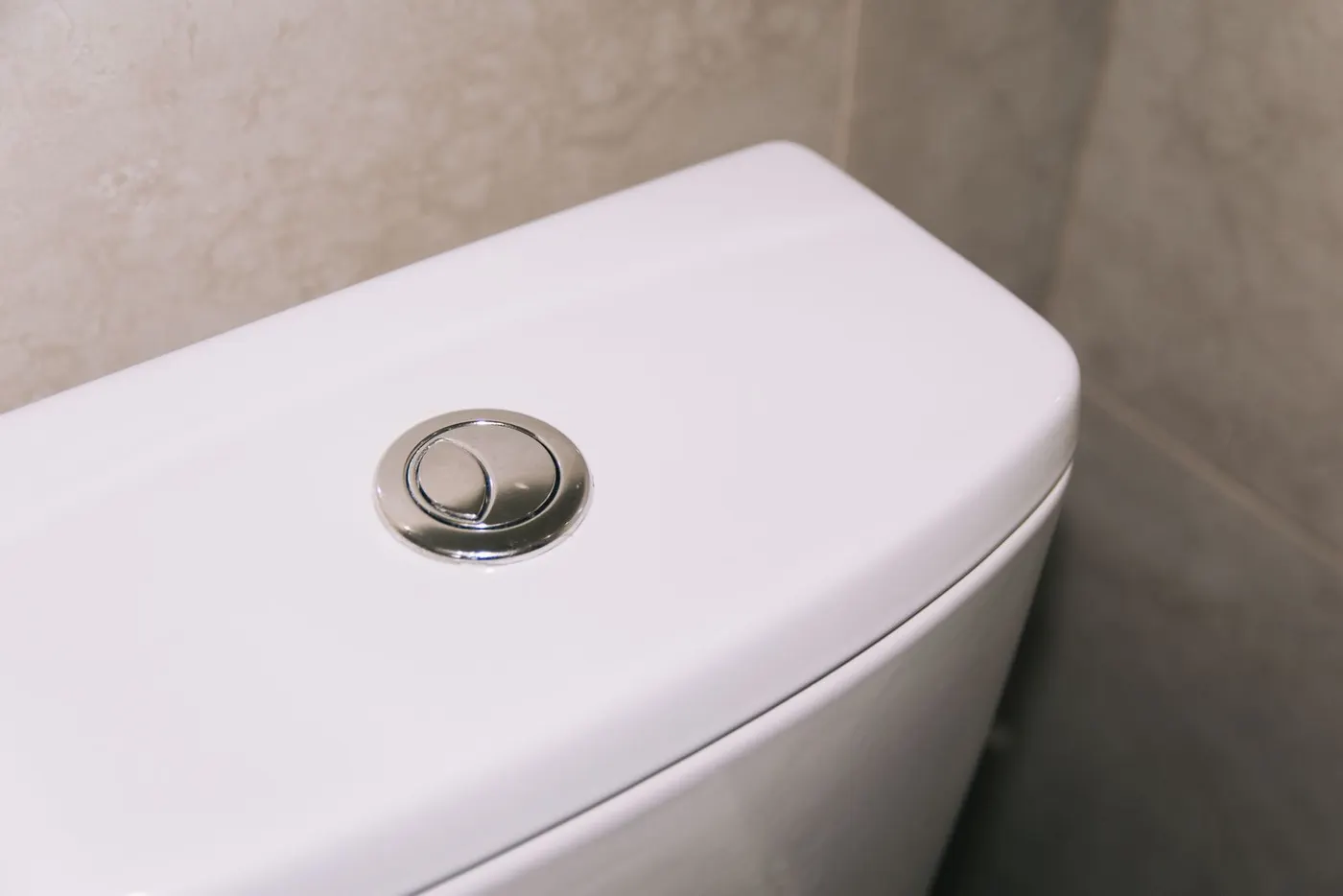
On a push-button cistern, check that the button comes fully back up, that the drop valve falls back squarely onto its seal, and that the rubber seal is clean and flat. A worn or distorted seal needs replacing, not just cleaning.
A siphon on a lever cistern works without a drop valve, so on a lever toilet start at the fill valve. If the level still drops in the 10-minute test, the siphon may be passing water, and that is usually a job for a plumber.
Toilet Cistern Keeps Filling or Refilling
A cistern that refills every few minutes usually has a flush valve letting water out. One that fills constantly into the overflow has a fill valve that won't shut. For that, work through these.
1. Lift the float
With the water on, lift the float gently by hand. If the hiss stops, the valve works and the float is set too high or snagging. If water keeps coming, the valve's washer or diaphragm is at fault.
2. Lower the water level
- Ball float on an arm: bend the arm down slightly, or tighten the screw where the arm meets the ball.
- Float cup: pinch the clip and slide the cup lower.
- Adjustment screw: anticlockwise for less water, clockwise for more. On Viva's bottom-entry valve, you twist the base to unlock it, set the height, then relock it.
3. Check for a waterlogged float
Unscrew the float and shake it. If water sloshes inside, replace it.
4. Clean or replace the diaphragm washer
Viva's instructions: turn off the supply, lift off the top assembly, run water through to clear debris, then clean or replace the diaphragm washer.
When you set a fill valve's height, its critical level mark must be at least 25 mm above the cistern's overflow level, to prevent backflow. If you can't get that and the right water level at the same time, the valve may not suit the cistern.
How to Fix a Toilet That Keeps Running
To fix a toilet that keeps running, isolate it, empty the cistern, deal with the valve the test pointed to, then refill and test again. WaterSafe says most fixes need parts under £10.
Isolate the cistern
Isolation valve a quarter turn, or the stopcock.
Flush to empty it
Keep a towel handy for what's left in the bottom.
Clean or replace the flush valve seal
Lift out the drop valve. Crosswater suggests white vinegar or a mild descaler on the seal, and a new seal if it is worn or distorted.
Adjust or service the fill valve
Lower the float, replace it if waterlogged, and clean or replace the diaphragm washer.
Refill and test
Turn the isolation valve back on, let it fill to the marked line, then repeat the 10-minute test.
Concealed cisterns
Behind a wall panel, you work through the flush plate opening. Lift the plate off by pressing its lower edge and tilting the top towards you. Gently disconnect any air hoses on the buttons, unscrew the flush rods and remove the frame fixings. Close the isolation valve inside, often a blue, yellow or red handle, and drain the cistern. The fill valve and siphon then unclip from the backplate through the opening.
The rules on replacement parts
The Water Supply (Water Fittings) Regulations 1999 set the limits:
- 6 litre maximum. New WC flushing devices may give no more than 6 litres per flush (7.5 litres was allowed until 1 January 2001). Modern UK toilets are typically 6 litres full and 3 litres reduced.
- Dual flush. The smaller flush may be no more than two-thirds of the full one, with a clear way to choose and instructions on or near the cistern.
- Older cisterns. One fitted before 1 July 1999 can be replaced like-for-like, "but a single flush cistern may not be so replaced by a dual flush cistern".
- Approved parts. WaterSafe advises parts that are compatible with your WC and comply with the regulations, for example WRAS-approved.
How Much Water a Running Toilet Wastes (and Your Bill)
Waterwise says leaky loos "can waste between 200 and 400 litres of water every single day", and Thames Water puts the average at around 400 litres a day.
| What you see in the pan | Water wasted (Thames Water estimate) | Extra cost a year |
|---|---|---|
| A small trickle | Up to 200 litres a day | £161.33 |
| Rippling water | 600 litres a day | £483.99 |
| A constant visible flow | 8,000 litres a day | £6,453.20 |
WaterSafe says a constantly leaking toilet could add around £300 a year to a water bill, and that 1 in 20 households have a leaking toilet. If you're on a water meter, Thames Water says, leaks can increase your bill too. To check for other leaks, see our guide to checking your water meter for a leak overnight.
Can you claim the water back?
Thames Water's leak allowance form covers leaks inside the property, but only one internal-leak claim is allowed, and not if you knew about the leak and didn't fix it. Ask Thames Water whether a running toilet qualifies.
Repair within four weeks and claim within three months of the repair, with a plumber's invoice or a Thames Water job number as proof. The allowance covers lost water, not the repair. Our Thames Water leak allowance guide goes through the form.
When to Call a London Plumber
Call a plumber if:
- The isolation valve is seized, or turns but doesn't stop the flow.
- The cistern is concealed or wall-hung and you'd rather not take the frame apart.
- It's running again after new seals or a new fill valve.
- There is water on the floor around the pan. See our guide to a toilet leaking at the base.
- The water in the bowl is rising.
Toilet Still Running?
We fix fill valves, flush valves and concealed cisterns across all 32 London boroughs, 24/7. £60 call-out fee at any hour for ordinary emergency work, waived for landlords, property managers and scheduled work.
Call 0207 046 1363Or WhatsApp a photo of the cistern to 07456 975436. More on our emergency plumber London page.
Frequently Asked Questions
How do I turn off water to the toilet?
Can you replace a flush valve without removing the cistern?
Is a running toilet an emergency?
Does a running toilet increase my water bill?
Why does my toilet run every few minutes?
What are the common reasons a toilet keeps running?
Emergency Repairs London provides same-day and 24/7 emergency plumbing across all 32 London boroughs. Lines are open 24/7 on 0207 046 1363.
Key Takeaways
- A quarter turn of the isolation valve with a flat-head screwdriver, so the slot crosses the pipe, stops the cistern refilling. If the water keeps coming, close the stopcock
- Thames Water's test: mark the water level in the cistern and check it 10 minutes later. If it has dropped, the flush valve is leaking into the pan
- Thames Water estimates a small trickle wastes up to 200 litres a day (£161.33 a year) and a constant visible flow up to 8,000 litres a day
- Under the Water Fittings Regulations 1999, a WC may give no more than 6 litres per flush, and a dual flush's small flush may be no more than two-thirds of the full one
- WaterSafe says most fixes need parts under £10. Use parts that are compatible with your WC and comply with the regulations, for example WRAS-approved
- Thames Water accepts 1 leak allowance claim for a leak inside the property. Repair within 4 weeks and claim within 3 months of the repair
