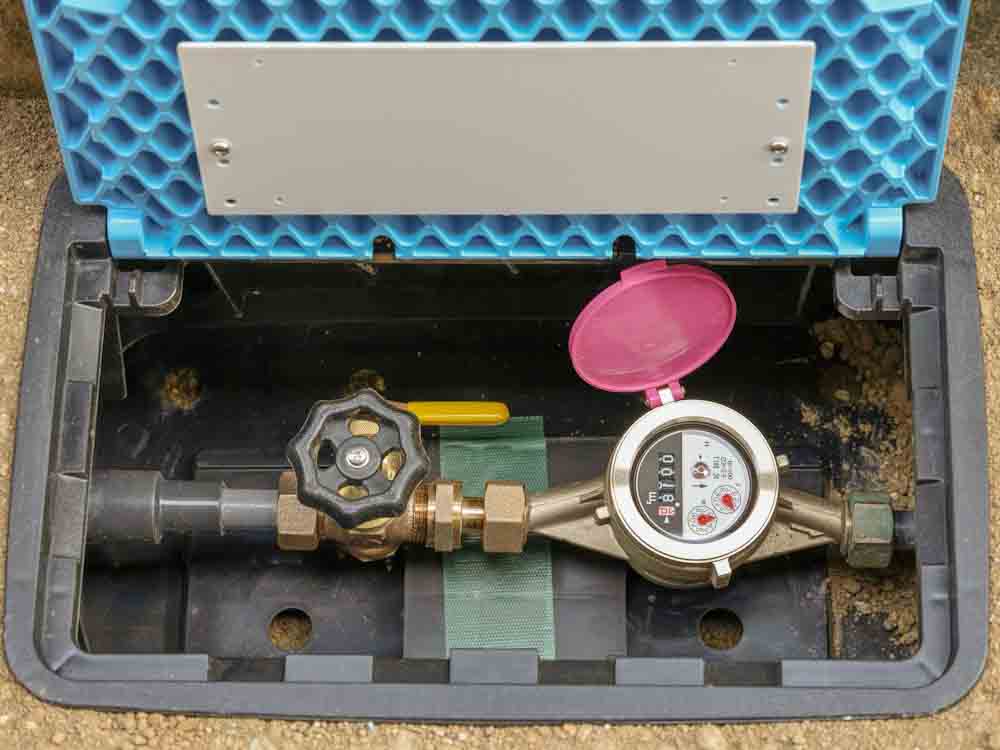
Thames Water Leak Allowance: How to Claim Your Water Rebate
If you've fixed a leak on a metered Thames Water supply, you can claim a rebate for the water you lost — but only if you claim within 3 months and follow TW's exact process. Here's how.
The Thames Water leak allowance is a rebate for water that was lost to a leak on your private supply pipe, available to metered customers who have fixed the leak. It does not cover repair costs — only the cost of the water lost. To qualify: you must be metered, the leak must have been on your supply pipe (not Thames Water's pipe), you must have repaired it, and you must submit the claim to Thames Water within 3 months of the repair date. The rebate is calculated by comparing your average usage before the leak against the elevated usage during the leak period. ERL provides all documentation needed after the repair. Call 0207 046 1363 for same-day leak detection.
Most London homeowners who fix a supply pipe leak never claim the money Thames Water owes them. The Thames Water leak allowance is a genuine, published rebate scheme — not a goodwill gesture — and for a leak that ran for two or three months, the credit can be several hundred pounds. The catch is that the claim window is only 3 months from the repair date, and Thames Water requires specific documentation that many plumbers do not automatically provide. This article covers exactly what the allowance is, who can claim it, and how to submit a successful claim.
Emergency Repairs London handles hundreds of Thames Water supply pipe repairs each year across the 32 London boroughs. We include claim-ready documentation with every job. Call 0207 046 1363 for same-day leak detection and repair.
What Is the Thames Water Leak Allowance?
The Thames Water leak allowance is a rebate scheme for metered customers who have suffered water loss due to an undetected leak on their private supply pipe or internal plumbing. Thames Water introduced the scheme as part of their water efficiency commitments under their Ofwat licence. The logic is straightforward: a customer cannot always detect a concealed supply pipe leak immediately, the water loss is involuntary, and penalising a customer for the full water cost of a fault they have now fixed creates a disincentive to fix leaks promptly. Thames Water benefits from customers repairing leaks quickly — it reduces network pressure loss and helps Thames Water meet their leakage reduction targets — and the allowance is the incentive structure that makes fast repairs financially rational for customers.
Three things the allowance is not:
- It is not a repair fund. The allowance does not cover detection surveys, excavation, pipe replacement, surface reinstatement or any other repair cost. Those are your costs to bear.
- It is not a guaranteed payment. Thames Water reviews each claim and can refuse it if eligibility criteria are not met or if documentation is insufficient.
- It is not a cash payment. The allowance is applied as a credit against your Thames Water account and will appear on your next bill statement. If the credit exceeds your annual water bill, Thames Water carries it forward.
What it is: a credit for the estimated volume of water that passed through your meter during the leak period that you would not have used under normal consumption. Thames Water calculates this by comparing your average daily metered usage in the 3–6 months before the leak against your elevated daily usage during the suspected leak period. The difference — multiplied by the number of leak days and Thames Water's current unit rate — is the credit applied to your account.
Am I Eligible to Claim?
There are four eligibility requirements. All four must be satisfied or Thames Water will refuse the claim.
- You must be a Thames Water metered customer. The scheme only applies to customers billed on measured (metered) consumption. If your property is on a rateable value (unmeasured) tariff, you pay a fixed charge regardless of how much water passes through the supply, so there is no measurable excess to rebate. If you are currently unmetered and have a leak, it is worth asking Thames Water to install a meter before the repair — meter installation is free for most domestic properties, and many London homeowners find their metered bill is lower than their rateable-value charge.
- The leak must have been on your private supply pipe or internal plumbing. The supply pipe is split into two sections at the boundary of your property (usually the footpath or garden boundary): Thames Water owns the communication pipe up to the boundary stopcock, and you own the supply pipe from the boundary stopcock into the property. Thames Water repairs leaks on their own communication pipe at their cost and without a meter credit, because the water was never registered on your meter. The allowance covers leaks downstream of the boundary stopcock — on the underground supply pipe running under your garden or driveway, or on internal plumbing.
- The leak must have been repaired. Thames Water will not issue an allowance for an ongoing leak. The claim can only be submitted once the repair is complete and you can provide a dated invoice confirming the work was done. If you received a Thames Water Section 75 notice giving you 4 weeks to repair, the 3-month claim window starts from the repair date, not from the notice date.
- You must submit the claim within 3 months of the repair date. This is a hard deadline. Thames Water does not grant extensions and does not accept retrospective claims. The 3-month window starts from the date your plumber completes the repair — which is why having a dated invoice at the time of the job matters. Delays in gathering documentation erode the window.
One further point: Thames Water applies a 24-month exclusion period between allowance claims on the same property. If a claim was granted for your property in the past two years, a new claim will be refused regardless of whether a different leak occurred. This is not widely publicised but is part of Thames Water's published scheme terms.
Step-by-Step: How to Claim the Allowance
The claim process has six steps. Do not attempt to submit the form before the repair is complete and you have a dated invoice in hand.
- Fix the leak first. The claim cannot be submitted on an ongoing leak, and Thames Water will reject any claim where the supporting documentation does not confirm a completed repair. If you have received a Thames Water leak notice, you are working to a 4-week deadline anyway — fix the leak, collect your invoice, then submit the allowance claim as a second step.
- Obtain a written invoice from your plumber. The invoice must confirm: the property address, a description of the work carried out, the date the repair was completed, and a description of the fault that confirms it was a supply pipe or internal plumbing leak (not a Thames Water responsibility). A till receipt or a cash payment without documentation will not satisfy Thames Water's requirements. Ask for a formal job report if your plumber provides one.
- Log into your Thames Water online account at thameswater.co.uk, navigate to "My Account" and then "Apply for a leak allowance." Alternatively, call Thames Water customer services on 0800 980 8800 and request the Leak Allowance Form to be posted or emailed to you.
- Complete the Leak Allowance Form. You will need: your Thames Water account number (on your bill), your property address, the approximate date the leak started (if known — estimate is acceptable), the date the repair was completed, a description of the fault, and your plumber's invoice either uploaded online or enclosed by post. Thames Water may also ask for your meter serial number, which appears on your bill or on the meter lid.
- Submit and wait for confirmation. Thames Water reviews claims and typically applies the credit within 3–6 weeks of receiving a complete submission. You will receive a letter or email confirming the outcome and the credit amount. If Thames Water requests further information, respond promptly — any delay counts against your 3-month window if the original submission was close to the deadline.
- Check your next bill statement. The credit should appear as a line item on your next Thames Water bill. If it has not appeared within 8 weeks of your submission and you have not received a refusal letter, follow up with Thames Water directly on 0800 980 8800 with your claim reference number.
What Evidence Thames Water Needs
Thames Water's claim form asks for specific supporting documentation. A claim submitted without the right evidence will be refused or delayed.
Required documentation:
- A plumber's invoice confirming the repair date and confirming that the fault was a leak on a private supply pipe or internal plumbing. The invoice must be on headed paper or otherwise identifiable as a professional document — Thames Water does not accept handwritten notes without contact details for the contractor.
- Your Thames Water account number, which appears on every bill.
Helpful additional evidence:
- The approximate date the leak started, if you can identify it. If Thames Water notified you of the leak, use the date of their letter or call as the earliest known start date. If you self-identified the leak, use the earliest date you noticed any symptom (higher bill, wet ground, reduced pressure).
- Photographs of the excavation and the failed pipe, if your plumber took them. Visual evidence of corrosion or pipe condition can support a longer estimated leak period and increase the credit.
- Your meter serial number (on the face of your water meter or on your bill). This helps Thames Water pull your meter read history quickly.
What ERL provides after every supply pipe repair: a written job report including the property address, a description of the pipe fault (location, pipe material, type of failure), confirmation that the repair was completed, the date of completion, our company details and Gas Safe / WaterSafe registration numbers. This report is formatted to satisfy Thames Water's claim requirements and is included at no additional cost with every supply pipe repair. We also note the likely leak start date based on pipe condition and corrosion evidence, which supports the longest defensible claim period.
How Much Will You Get Back?
Thames Water calculates the credit using their own meter data — you do not calculate it yourself and cannot negotiate the figure directly. Understanding how they arrive at the number helps you assess whether the credit applied is reasonable.
The calculation works as follows: Thames Water establishes your baseline daily consumption by averaging your metered usage over the 3–6 months before the leak period began. They then identify the period of elevated usage from your meter records. The difference between your baseline daily usage and your elevated daily usage is the estimated daily leak volume. That volume, multiplied by the number of days, and then multiplied by Thames Water's current unit rate (approximately £3.31 per cubic metre including wastewater charges, as of mid-2026), gives the credit.
Example calculation: A 1 litre per minute supply pipe leak running for 90 days loses approximately 129,600 litres — 129.6 cubic metres. At £3.31 per m³, that is approximately £429 in credit. Most London supply pipe leaks we detect run at 0.3 to 2 litres per minute. At the lower end (0.3 L/min for 60 days), the credit is around £85. At the upper end (2 L/min for 120 days), the credit is around £1,143. Most ERL customers who successfully claim the allowance receive between £200 and £800.
Two factors that reduce the credit below your estimate: Thames Water may identify a shorter leak period in their meter data than you believe occurred (if your meter was not reading elevated flow before a certain date), and Thames Water applies the wastewater component only if your property is also billed for wastewater by Thames Water — properties on a different sewerage provider will have the wastewater element deducted.
One factor that can increase the credit: if your plumber's job report notes significant corrosion or long-running pipe deterioration suggesting the leak has been active for longer than meter data shows, Thames Water may extend the estimated leak period. This is not guaranteed, but supporting evidence from the contractor helps.
Need same-day leak detection or a supply pipe repair in London? Call Emergency Repairs London on 0207 046 1363. We detect and repair supply pipe leaks across all 32 London boroughs, provide the documentation Thames Water requires for your allowance claim, and can advise on the Section 75 compliance deadline if you have received a Thames Water leak notice.
FAQs
The six most common questions we receive from customers after a supply pipe repair, covering the claim deadline, what the allowance pays, unmetered properties, Thames Water-notified leaks, estimating the leak start date, and whether the credit is paid in cash.
If you have received a Thames Water leak notice and are uncertain whether the leak is on Thames Water's pipe or yours, see our related article on Thames Water leak responsibility in London. If you have trace and access insurance and are unsure whether your policy covers the detection survey cost, see trace and access insurance cover explained. For properties on a shared supply pipe where more than one household is affected, see shared supply pipe responsibility in London.
Valentin N. — Operations Director, Emergency Repairs London
Key Takeaways
- The Thames Water leak allowance is a water cost rebate — it covers the cost of water lost to the leak, not your repair or detection costs
- You must be a Thames Water metered customer to be eligible — rateable value (unmetered) customers cannot claim
- The leak must have been on your private supply pipe or internal plumbing — Thames Water does not allow claims for leaks on their own communication pipe (which they repair for free)
- You must submit the claim within 3 months of the repair date — Thames Water does not accept backdated claims
- To claim, you need a plumber's invoice or job reference confirming the repair and the approximate leak start date
- Thames Water calculates the allowance by comparing your metered usage before the leak against elevated usage during the leak period — the difference is the allowed volume
- The allowance is typically applied as a credit on your Thames Water account, not a cash payment
- ERL provides the written repair documentation Thames Water needs for the claim, included with every supply pipe repair
