EICR (Electrical Installation Condition Report) City of London
Book an EICR in City of London — 1-bed flats £120-£180, 3-bed houses £200-£280, HMO from £300. Qualified supervisor signature, NICEIC scheme paperwork, same-week slots.
Call 07456 975436Landline: 0207 046 1363 · Covering EC1–4
EICR (Electrical Installation Condition Report) across City of London
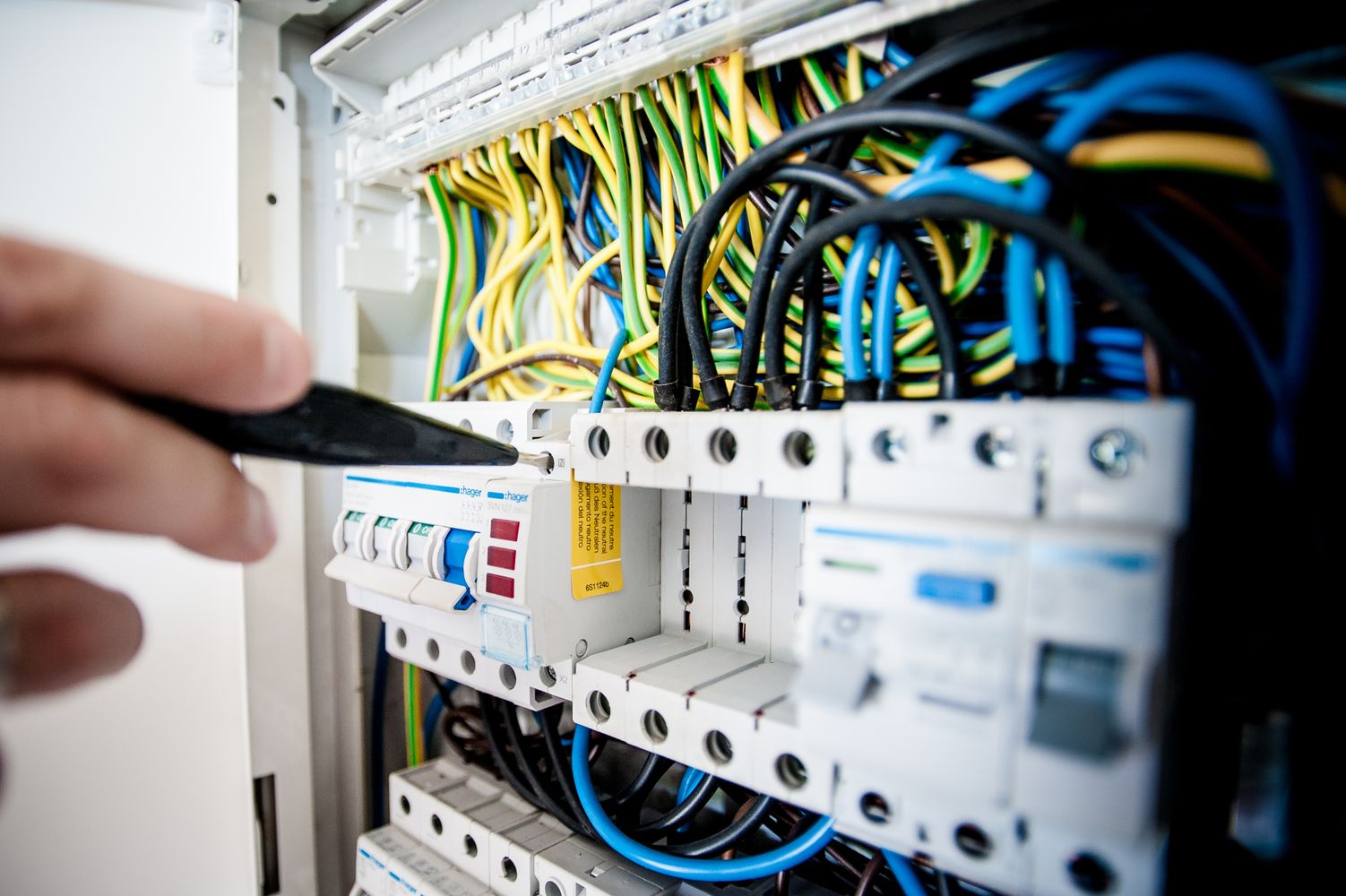
An Electrical Installation Condition Report — EICR — is the 5-yearly legal document every landlord in City of London must hold for every privately rented property since the Electrical Safety Standards in the Private Rented Sector (England) Regulations 2020 came into force in April 2020. Our NICEIC registered electricians cover every postcode in EC1–4 with same-week bookings available on most days and same-day slots reserved for priority landlord contracts. Typical site time runs 2-3 hours on a 1-bed flat with a single RCD group, 3-4 hours on a 3-bed house with two RCD groups, and a half-day to a full day on HMOs and small commercial premises. The inspection is part-live and part-dead testing, which means the power does need to be off for sections of the visit — we work with tenants and managing agents to minimise the disruption, and we carry generators and work lights for the dead-test windows.
City of London neighbourhoods we service include Barbican, Moorgate, Aldgate. The digital report is issued in BS 7671 model format, signed by an NICEIC qualified supervisor, and emailed within 48 hours of the on-site inspection. Every C1 Danger Present, C2 Potentially Dangerous and FI Further Investigation finding triggers a 28-day remedial clock under the 2020 Regulations, and in roughly seven out of ten cases the remedial work is completed on the same visit from van-stock before the original test is even uploaded. Serving buildings near St Paul's Cathedral, the Guildhall, and the Bank of England.
Covering City of London — Barbican, Moorgate, Aldgate
The City of London - the Square Mile - is home to major commercial buildings, historic Guildhall properties, and a growing residential population. Plumbing issues in commercial premises require fast, professional response, and our engineers reach the City within 30–45 minutes around the clock. For eicr work specifically, our engineers service every postcode in the borough — EC1–4 — at the same fixed pricing, with no neighbourhood loading and no out-of-hours premium for weekday or Saturday bookings. Serving buildings near St Paul's Cathedral, the Guildhall, and the Bank of England.
EICR coverage across Barbican and the surrounding EC1–4 streets.
EICR coverage across Moorgate and the surrounding EC1–4 streets.
EICR coverage across Aldgate and the surrounding EC1–4 streets.
What City of London eicr covers

The full service breakdown. Every point below is standard on every City of London eicr booking we take — not upsells, not optional extras, not cost-extra items.
Visual inspection with photo evidence
Every accessible accessory, enclosure, consumer unit and length of wiring is visually inspected and recorded. Photographic evidence is captured against every numbered observation in the report. The consumer unit in particular is the most inspected item — enclosure rating, main switch, RCDs, RCBOs, MCBs and connections are all checked and photographed.
Dead testing with power isolated
Continuity of protective conductors (R1+R2), continuity of ring final circuits (Zs), insulation resistance at 500V DC between conductors and to earth, and polarity verification at every accessory. This section takes typically 45-90 minutes and requires the property to be powered down; we work with the tenant to isolate each circuit in sequence rather than the whole consumer unit at once where that is practical.
Live testing with power restored
Earth fault loop impedance (Zs) at the end of every circuit, Ze at the origin, prospective short-circuit current and prospective earth fault current. All tests logged against the BS 7671 maximum disconnection times for the protective device rating. Zs results outside tolerance flag an immediate C1 or C2 code and a remedial investigation.
RCD and RCBO trip-time measurement
Every residual current device (30mA RCD, 100mA time-delayed RCD, and any RCBO) is tested at half, full and five times rated residual current. Trip times are recorded in milliseconds against the BS EN 61008/61009 maximum disconnection times. RCDs outside tolerance are replaced the same day from van-stock if the landlord authorises the remedial.
Full circuit schedule written up
A comprehensive circuit schedule is completed in the BS 7671 model format listing every circuit with its function, conductor csa, protective device rating, maximum Zs, measured Zs, insulation resistance, polarity verification, and any coded observation. The schedule becomes part of the digital PDF and forms the audit trail for any future EICR cycle.
C1/C2/C3/FI coding with photographic evidence
Every observation is classified under the BS 7671 coding scheme: C1 Danger Present (immediate make-safe required), C2 Potentially Dangerous (28-day remedial), C3 Improvement Recommended (advisory only, does not fail the inspection), or FI Further Investigation (inspection blocked, report cannot complete without further work). Every code carries a photograph in the final report.
Digital report in BS 7671 model format
The final report is issued as a digital PDF in the BS 7671 model format, signed by the attending NICEIC registered electrician and countersigned by the NICEIC Qualified Supervisor. It is emailed within 48 hours of the on-site inspection and stored against the property record in our system for the full 5-year cycle so a lost copy is re-sent inside minutes of a phone call.
How a City of London eicr booking runs
Step-by-step process for every eicr visit across EC1–4. Consistent whether we are attending a single flat or a portfolio account.
Initial booking
Ring or email with property address, number of circuits if known, and tenant contact. Booking window 3-5 working days for domestic, same-day for priority landlord contracts, out-of-hours slots reserved for commercial sites.
Arrival and tenant brief
Electrician arrives inside the booked window with photo NICEIC ID, explains the test sequence to the tenant, and sets expectations about power-down windows. Isolations are sequenced circuit-by-circuit to minimise disruption.
Visual inspection
Consumer unit, accessories, wiring, enclosures, main earth bonds, equipotential bonding and supply arrangements visually inspected and recorded with photographs. Any immediately obvious C1 defect is made safe before testing continues.
Dead testing (power off)
Continuity R1+R2, ring final circuit continuity, insulation resistance at 500V DC, polarity verification. Circuit-by-circuit isolation sequence. Typically 45-90 minutes depending on circuit count.
Live testing (power restored)
Ze at origin, Zs at end of every circuit, PSCC and prospective earth fault current at the origin. Every reading logged against BS 7671 maximum disconnection times. Typically 30-60 minutes.
RCD and RCBO functional test
Every RCD and RCBO tested at 0.5x, 1x and 5x rated residual current. Trip times recorded in milliseconds. Failing devices flagged for same-visit replacement from van-stock if landlord authorises.
Report writeup and issue
Full circuit schedule, numbered observation list with C1/C2/C3/FI codes and photographs, final summary page. Digital PDF signed by the attending engineer and the Qualified Supervisor, emailed within 48 hours.
EICR pricing in City of London
Identical to our London-wide published pricing. No EC1–4 loading, no City of London surcharge. Quote on the phone matches the invoice.
Full breakdown on the pricing page or the main EICR London page.
Why choose us for City of London eicr

Seven out of ten C1 and C2 findings on our City of London EICRs are resolved on the same visit without a second call-out. That figure holds because our electricians carry a full van-stock of the common remedial parts: RCDs and RCBOs in 6, 10, 16, 20 and 32 amp ratings, main earth bonding clamps in 10mm, 16mm and 25mm, PME main tails in 16mm and 25mm, meter tails, socket fronts, cooker isolators, consumer unit blanks and a full set of terminal blocks. The most common C1 and C2 codes in City of London — a missing earth bond on a gas or water service, a broken cooker isolator, an incomplete RCD rating on a shower circuit — are all fixable on the first visit from van-stock at typical remedial costs of £60-£180.
A full consumer unit upgrade to 18th Edition metal enclosure, where the existing unit is coded for replacement, is typically £450-£800 quoted in writing before work begins.
EICR City of London — FAQ
Borough-specific questions plus the general eicr questions we get asked most often.
How do I book an EICR in City of London?
+
Ring 07456 975436 or email with the property address, approximate circuit count (or just a 'X-bed flat' description if you don't know), and tenant contact details. We cover every postcode in City of London across EC1–4 with typical booking windows of 3-5 working days for standard domestic jobs, same-day for portfolio landlord contracts, and out-of-hours slots reserved for commercial sites where a daytime power-down would disrupt trading.
Do you cover Barbican, Moorgate and Aldgate?
+
Yes — every City of London neighbourhood is inside our standard coverage area at the same fixed pricing. Barbican, Moorgate and Aldgate see a steady flow of EICR renewals every month. Serving buildings near St Paul's Cathedral, the Guildhall, and the Bank of England. Our NICEIC registered electricians work across EC1–4 with no postcode loading and no neighbourhood surcharge.
What's a typical EICR cost for a City of London rental?
+
Fixed tiers apply across Central London: 1-bed flat £120-£180, 2-bed £160-£220, 3-bed house £200-£280, 4-5 bed £280-£400. HMOs with 5 or more occupants £300-£500 depending on unit count. Small commercial (office, retail unit) from £350. All prices include VAT, the digital BS 7671 report, and a phone consultation on any findings before the report is finalised. Portfolio landlord contracts on 5+ City of London properties get a 10 per cent discount plus consolidated monthly invoicing.
What's the difference between an EICR and a PAT test?
+
An EICR inspects the fixed electrical installation — the wiring, consumer unit, sockets and switches built into the building. A PAT test (Portable Appliance Test) inspects plug-in items like kettles, lamps, extension leads and printers. Landlords of HMOs and commercial premises usually need both; single-let private rentals usually just need the EICR plus reasonable assurance that any landlord-supplied appliance is safe.
How often do I need an EICR as a landlord?
+
Every 5 years for privately rented properties in England under the Electrical Safety Standards in the Private Rented Sector (England) Regulations 2020, or sooner if the inspecting electrician specifies a shorter review period on the report itself. HMOs under Additional Licensing are sometimes required every 5 years by the borough regardless of expiry, and at every change of tenancy where the borough licence conditions specify.
Is the EICR valid for 5 years?
+
In the private rented sector, yes — the default review period under the 2020 Regulations is 5 years unless the inspecting electrician records a shorter period on the report itself (1 or 3 years on installations with known faults under watch). Owner-occupier EICRs in England have no statutory renewal period but 10 years is the common guidance in BS 7671 Part 6.
How long does an EICR inspection take?
+
A 1-bed flat takes 2-3 hours on site. A 3-bed house with two RCD groups is 3-4 hours. HMOs and small commercial premises are a half-day to a full day depending on the number of distribution boards and circuits. The inspection is part-live and part-dead testing, so the power does need to be off for sections of the visit — we sequence circuit-by-circuit to minimise disruption.
Do short-term lets and Airbnb properties need an EICR?
+
Yes. Airbnb, Booking.com and Vrbo hosts are treated as landlords under the Electrical Safety Standards 2020 because each booking is a short tenancy. Most London boroughs with Additional or Selective Licensing explicitly request a current EICR for short-let properties, and an increasing number of host platforms now require one as part of listing verification.
EICR in neighbouring London boroughs
Related pages
Book eicr in City of London
An engineer — not a call centre — answers the phone, takes the property address, and books the next available slot across EC1–4.
Call 07456 975436Landline: 0207 046 1363