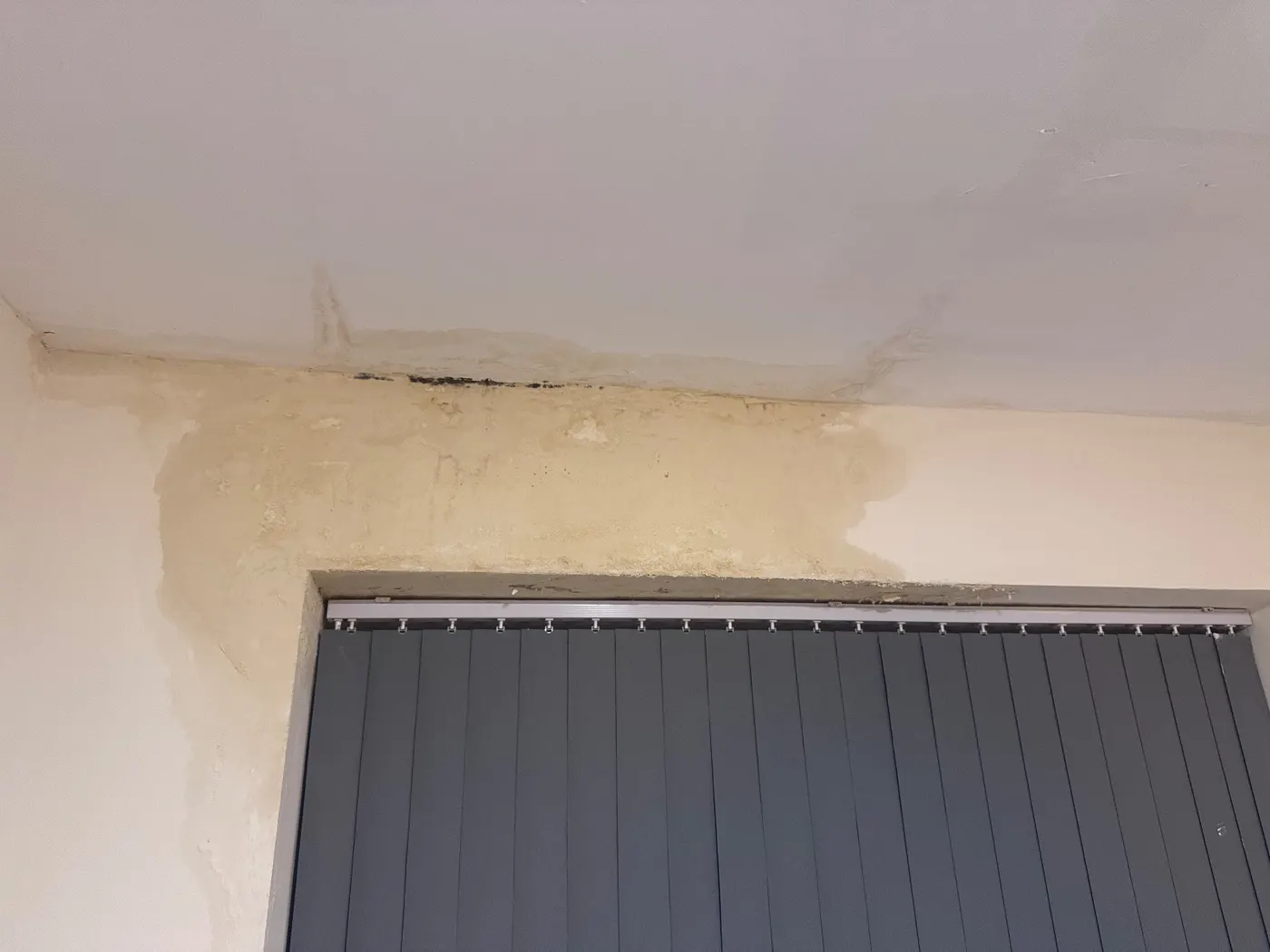
Water Coming Through Ceiling? What to Do in 15 Minutes
Water coming through the ceiling? Keep clear, cut the power if safe, stop the water, then find the cause. Covers upstairs flats, claims and who pays.
Keep people and furniture away from the wet area. Switch the power off at the fuse box only if you can reach it without standing in water. Turn off the water at the stopcock, catch drips in a bucket, photograph the damage, then call a plumber. Water near lights you cannot isolate is an emergency.
Ask AI a questionIt starts as a brown ring on the paint, a slow drip onto the carpet, or a sudden patter in the middle of the night. Either way, you want it stopped.
In a London flat the water may come from the floor above, a worn bath seal or a pipe in a ceiling void you cannot see. This guide gives the first 15 minutes in order, then the likely causes, who pays when a neighbour is the source, and how to protect an insurance claim.
⚠️ Water and electrics do not mix. Do not touch light switches, sockets or light fittings that are wet or under the wet area. Do not stand in water to reach the fuse box. If you see sparks, smell burning, or someone has had a shock, call 999. If the leak is near lights or wiring and you cannot switch the power off safely, treat it as an emergency and call us on 0207 046 1363.
Water Coming Through the Ceiling: What to Do First
In the first 15 minutes, keep people safe, cut the power if you can do it safely, stop the water and record the damage.
- Clear the area. Move people, pets and furniture away from under the wet patch. A wet ceiling is heavy.
- Catch the drips. Put a bucket under the leak, where the water actually falls, not where the stain is. A towel in the bucket stops splashing.
- Deal with the power. If you can reach the fuse box without standing in water, switch the electricity off. The next section explains what to do when you cannot.
- Turn off the water. Close the stopcock, which is usually in the kitchen, by the downstairs toilet or under the stairs, by turning it clockwise. Our guide to finding and turning off the stopcock covers the awkward cases.
- Check whether it stops. If the dripping stops once the water is off, the leak is on your own supply pipework. If it keeps coming, think flat above, roof or waste pipe.
- Take photos and video. Photograph the ceiling, the floor and anything damaged. Note the date and time you first noticed it.
- Open windows. Mould can begin within 24 to 48 hours in damp conditions.
- Make the calls. A plumber for the repair, your landlord or managing agent if you rent or live in a flat, and your insurer if you intend to claim.
Renting? The landlord side of a burst pipe is in our landlord guide.
Water Near Lights and Electrics
Water near ceiling lights or wiring is an emergency if you cannot switch the electricity off safely.
Water gets into ceiling roses and downlights, and it can run along cables before it drips anywhere you can see.
- Do not switch the light on or off. Leave the switch alone, even if the bulb is dim or flickering.
- Use the fuse box, not the wall switch. Switch off the whole supply, or the lighting circuit if you know which it is, from the consumer unit. Only do this if the floor around it is dry and you can reach it without crossing the water.
- If you cannot reach it safely, stay out. Keep everyone out of the room, stop the water if you can, and call an emergency plumber and an electrician.
- Do not turn the power back on until the water has stopped and an electrician has checked the circuit. Water in fittings can leave damage you cannot see. Have a registered electrician assess any wiring that has been wet before you use it again.
Our signs of a plumbing emergency guide covers other cases where waiting is not an option.
Bulging Ceiling: Should You Pierce It?
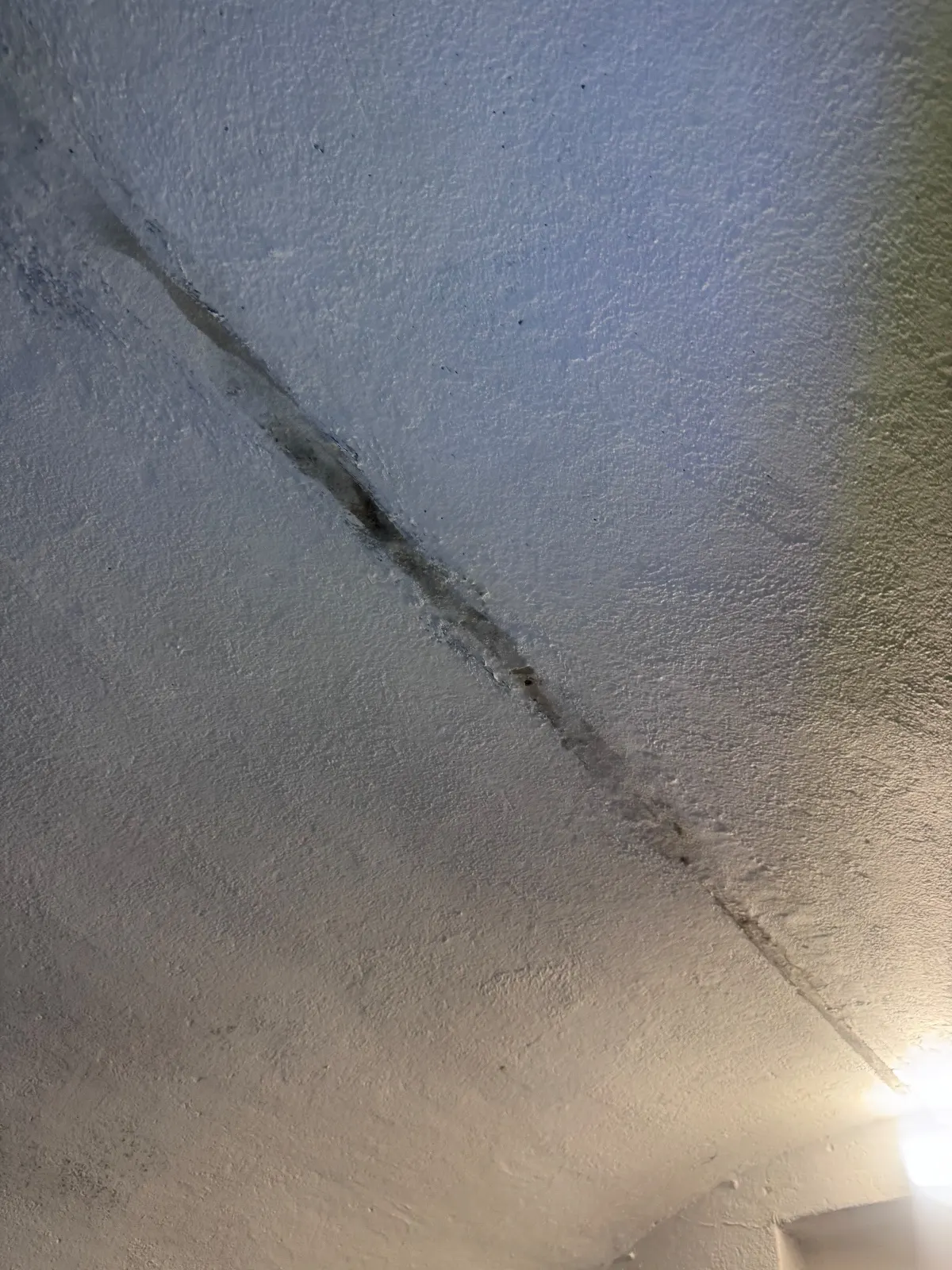
If the ceiling is bulging with water, keep everyone out from underneath it and call a plumber, because a full plasterboard ceiling can fail suddenly.
We would not pierce it yourself. Wet plasterboard can give way with little warning, and you cannot see what wiring or pipework sits in the void above. Releasing the water is a job for someone who can see what is up there.
Instead:
- Move people, pets and furniture away from the bulge, and shut the door if you can.
- Turn off the water and, if safe, the power, as above.
- Photograph the ceiling before anything changes.
- Call a plumber and say the ceiling is bulging.
Why Is My Ceiling Leaking? Causes in Order
Most ceiling leaks come from a bathroom, kitchen or pipe on the floor above, from heating pipework, or from the roof. Match what you see to the table, then narrow it down with the tests below.
| Likely cause | How to tell | Who usually fixes it |
|---|---|---|
| Bath, shower tray or toilet seal and waste above | Leak appears when the fixture is used, often within minutes | Plumber; leaseholder or owner of the flat above |
| Supply or waste pipe in the floor or ceiling void | Drip is constant, or follows a tap or flush being used | Plumber; leak detection if the pipe is hidden |
| Central heating pipe or radiator valve | Stain follows a radiator or heating pipe run, with no link to taps or rain | Heating engineer |
| Roof, gutter, flashing or tiles | Stain grows during or after rain, and the loft may be damp | Roofer; freeholder or owner for a roof |
| Washing machine or dishwasher hose above | Leak appears when the appliance is running | Plumber or appliance engineer |
| Condensation | Damp patches without drips, worse in cold weather, often with mould in corners | Ventilation fix; no plumber needed |
Test one fixture at a time
Run each tap, shower and toilet above the stain in turn while someone watches the ceiling, with a few minutes between each. A drip that starts when the bath or shower runs points to the bath, tray, seal or waste. One that starts only on a flush points to the toilet connection. Check the sealant for gaps and lifting.
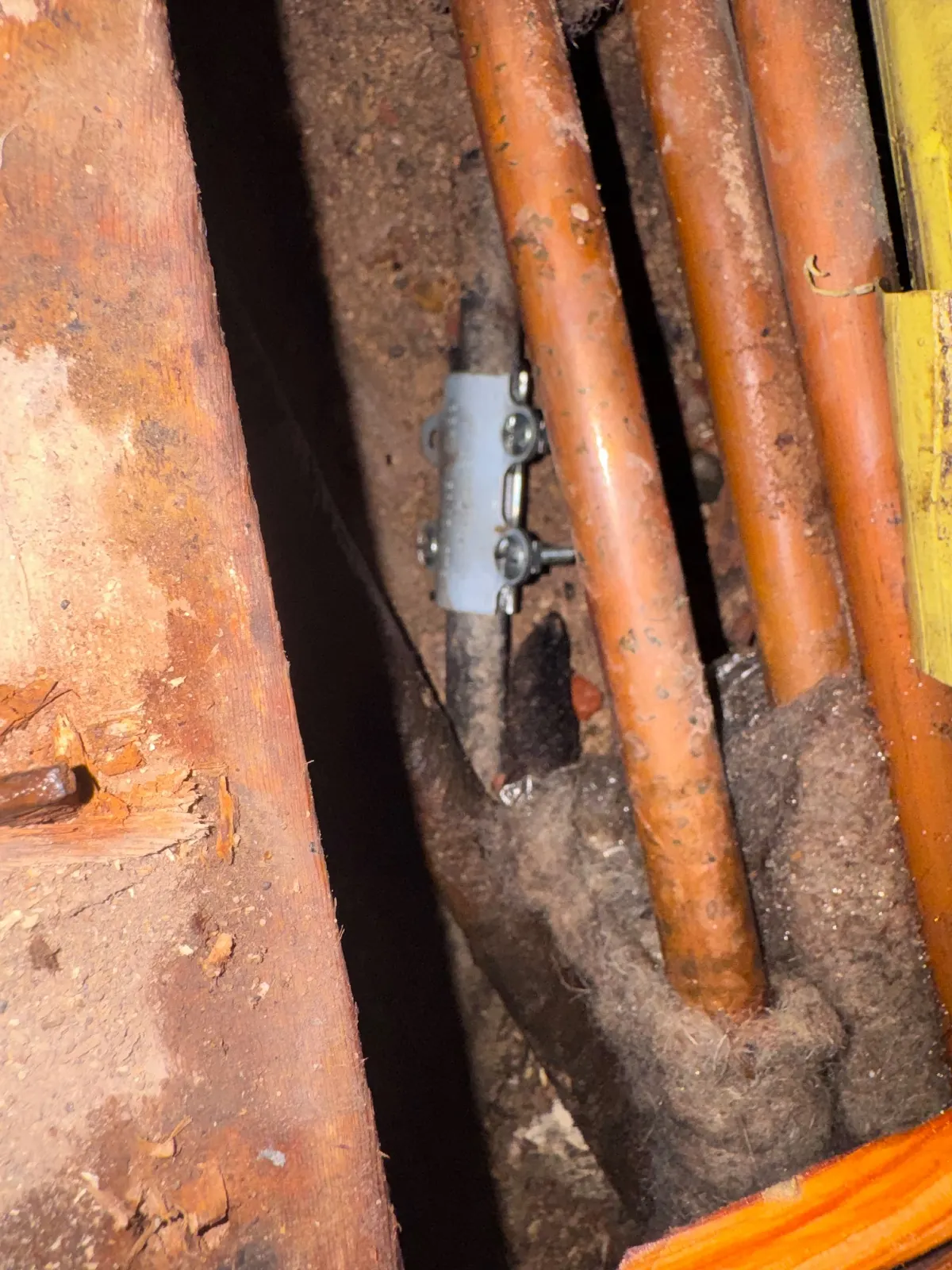
Do the meter test
If no fixture matches, check the supply. Thames Water's method is to turn off every water-using appliance, close the inside stop valve, take a meter reading, wait 30 minutes and read it again. A different reading means a leak between the meter and the inside stop valve. Our guide on checking your water meter for a leak gives the full steps.
Thames Water also describes a toilet test: dry toilet paper left behind the pan for 3 hours or overnight shows whether the toilet is leaking. It recommends a WaterSafe approved plumber for repairs.
Heating pipework
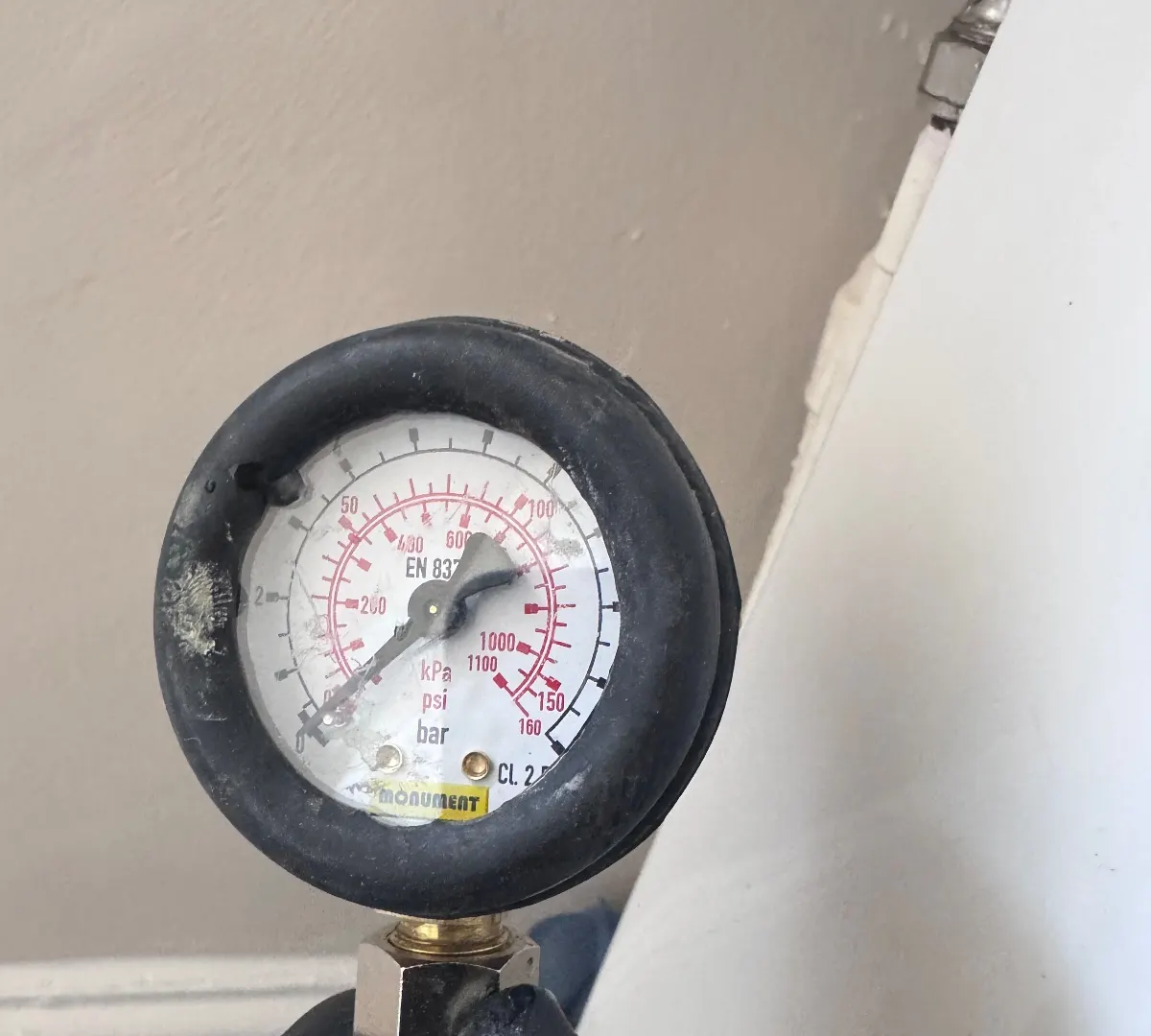
If the stain follows a radiator or a heating pipe run, get a heating engineer to look at it and do not keep topping up the boiler while water pours into a ceiling. Our guide on why a boiler keeps losing pressure explains what a falling gauge means.
Roof, gutters and the loft
If the stain grows after rain, look in the loft if you have one, and check the timbers and the underside of the roof for damp. Slipped tiles, worn flashing and blocked gutters can all let water in. For a top-floor flat the roof usually belongs to the freeholder, so report it to them as well as calling a plumber.
Condensation and old stains
A stain with no active leak can be an old leak that has stopped, or condensation. Draw a pencil line round the edge and check it after rain and after the next shower. If it grows, there is still a source.
If none of this finds it, a hidden pipe needs a trace, and our leak detection versus leak repair guide explains how that works before anyone cuts into the ceiling.
Leak From an Upstairs Flat: Who Is Liable?
Liability follows the source of the leak. For tenants, the landlord is usually responsible for repairing the damaged ceiling once they know about it.
Citizens Advice says that where a leak comes from a neighbouring flat, the landlord is usually responsible for repairing the structure, such as walls, ceilings and plasterwork, from the moment they know about it. If the neighbour's carelessness caused it, for example by leaving a bath to overflow, the neighbour pays for damaged belongings. If the leak came from a failure to repair in a neighbour's flat or a communal area, the landlord may also be liable for your belongings and for loss or inconvenience.
For leaseholders, pipes inside the flat are typically yours, while communal pipes, the roof and the structure are usually the freeholder's, who normally arranges buildings insurance and recovers the cost through the service charge. Check your lease.
What the law says for tenants
Section 11 of the Landlord and Tenant Act 1985 requires a landlord to keep in repair the structure and exterior of the dwelling, including drains, gutters and external pipes. It also covers installations for the supply of water, gas, electricity and sanitation, and for space heating and heating water.
Shelter's guidance adds limits. The duties generally do not apply to fixed-term tenancies of 7 years or more. A landlord is not normally liable until put on notice, and notice can be verbal, written, email or text. The duty cannot be contracted out of, and it does not cover repairs needed because the tenant failed to use the property in a tenant-like manner. Our guide to Section 11 repair obligations in London goes through each point.
Practical steps if the water comes from next door or upstairs
- Talk to the neighbour first. Citizens Advice suggests trying to resolve it that way before anything formal.
- Report it in writing to your landlord or managing agent, including the location, how long it has been happening, photos or video, and the date and time you first noticed.
- Get a written report. Proving negligence is hard, so ask a plumber or surveyor to name the source.
- Tell your insurer. Contents insurance may cover your belongings.
- Treat court as a last resort. Citizens Advice says action for nuisance or negligence is a last resort.
If the leak is on a pipe that two or more homes share, see our guide to shared supply pipe leaks between neighbours.
Ceiling Leak Insurance Claim Steps
If you plan to claim, call your insurer early and check with them before starting repairs.
Buildings insurance usually covers ceilings, walls and floors, and contents insurance covers belongings, but cover depends on your policy. Our guide on whether home insurance covers plumbing sets out the common exclusions.
- Stop the damage getting worse. Turn off the water and power as above. Check your policy wording, because many policies expect you to take reasonable steps to stop further damage.
- Photograph before you touch anything. Take wide shots and close-ups of the ceiling, walls, floor and damaged items.
- Call the insurer straight away, and ask what they need before work starts.
- Keep damaged items until the insurer has seen them or said you can throw them away.
- Get a written plumber's report naming the source, and keep every receipt.
The photos a loss adjuster looks for are covered in burst pipe insurance claim photos, and for larger drying-out jobs see water damage restoration in London.
Emergency Plumber for a Ceiling Leak in London
Call an emergency plumber if the water will not stop after you close the stopcock, if it is near electrics, if the ceiling is bulging, or if you cannot find the source.
- Leave to a professional: anything near wiring, a bulging ceiling, a hidden pipe, a leaking heating system, roof defects, and any repair that needs the ceiling opened.
- If you rent or live in a flat: report it to the landlord or managing agent in writing, and agree any costly repair on a shared pipe or roof first.
If the pipe is hidden, a trace and access job finds it with the least damage. Our guide to emergency plumber costs in London explains what a visit involves.
Water Coming Through Your Ceiling?
We stop ceiling leaks, trace the source and make the supply safe across all 32 London boroughs, 24/7. £60 call-out fee at any hour for ordinary emergency work, waived for landlords, property managers and scheduled work.
Call 0207 046 1363Or WhatsApp a photo of the ceiling to 07456 975436. For hidden pipes, see our leak detection London page.
Frequently Asked Questions
What should I do first if water is coming through my ceiling?
Is a leaking ceiling an emergency?
Who is responsible for a leak from the flat above?
Why do I have a water stain on the ceiling but no leak?
Will home insurance pay for a leaking ceiling?
How long before mould grows after a ceiling leak?
Emergency Repairs London provides same-day and 24/7 emergency plumbing and leak detection across all 32 London boroughs. Lines are open 24/7 on 0207 046 1363.
Key Takeaways
- Mould can start within 24 to 48 hours in damp conditions, so dry out and photograph the damage on day one
- A water meter test takes 30 minutes: close the inside stop valve, switch off every appliance, read the meter, wait, read it again
- The toilet paper test takes 3 hours or overnight: dry paper behind the pan shows whether the cistern is leaking
- Section 11 of the Landlord and Tenant Act 1985 covers structure, exterior, and water and heating installations, but a landlord is not normally liable until put on notice
- Report the leak to your landlord or managing agent in writing, with the date, time first noticed and photos or video
- Our call-out fee is £60 at any hour for ordinary emergency work, waived for landlords, property managers and scheduled work
