
Cylinder Thermostat Replacement London
G3 qualified engineers across all 32 London boroughs. Wired strap-on, pocket bulb, immersion stats, wireless retrofits and Hive / Nest / Wiser smart controls. Same-day callouts for no hot water, scalding water, tripping cut-outs and short-cycling cylinders.
Most common stats fitted in 60–90 minutes from van stock. Fixed-price quote on site, Benchmark logbook updated, 12-month workmanship guarantee.
Cylinder thermostat replacement in London is £155–£220 for a wired strap-on stat, £165–£240 for a pocket bulb stat, £195–£290 for an immersion thermostat, and £245–£575 for wireless or smart upgrades. Work on unvented cylinders is a controlled service under Approved Document G3 and must be done by a G3 qualified engineer. Most swaps take 60–120 minutes from van stock with the Benchmark logbook updated on site.
What is a cylinder thermostat — and why does it fail?
A cylinder thermostat is the temperature sensor and switch that tells your hot water cylinder when to heat and when to stop. On an indirect cylinder (the common UK setup with a boiler), the stat sits on the side of the tank — strapped on or in a pocket — and wires back to the central wiring centre. When the stored water drops below set-point, the stat closes its contacts, the wiring centre energises the 2-port motorised zone valve, the valve opens, the boiler fires and primary water circulates through the cylinder coil until the stat is satisfied. On a direct electric cylinder the same logic runs through the immersion element thermostat inside the heater shroud.
Cylinder thermostats are mechanical bimetallic strips inside a metal head. Over 8–15 years they drift, stick, or fail outright — the bimetal corrodes, the snap-action loses calibration, or moisture ingress shorts the contacts. The three failure modes we see daily in London are: failed open (no hot water at all), failed closed (scalding water above 65°C, often tripping the high-limit cut-out), and hysteresis collapse (short-cycling, with the boiler firing for one minute then off for one minute, repeatedly).
On an unvented cylinder the thermostat is the first of four layered safety devices required by Approved Document G3 — the others being the non-self-resetting energy cut-out (typically 85°C), the expansion device, and the temperature & pressure relief valve. Replacement work is a controlled service: it must be done by a G3 qualified engineer, the cut-out cannot be reset without root-cause diagnostic, and every job ends with a Benchmark logbook entry to preserve the 25-year tank warranty.
Wired vs wireless cylinder thermostats — which to choose
Five thermostat types cover almost every London cylinder. The right call depends on cylinder age, brand, wiring access and whether you want app-based control.
Wired strap-on thermostat
Held to the cylinder side by a metal strap, typically 2/3 height. Wired back to the wiring centre, calling a motorised zone valve when hot water is below set-point. Most common in UK indirect cylinders 1990–present. Stocked on every ERL van — same-day swap from £155.
Pocket / capillary bulb stat
Sensing bulb sits inside a sealed dry pocket welded to the cylinder. Older Range Tribune, Sunvic and Tower Manton designs. Stiff to remove if scaled in; from £165 fitted, allow 90 minutes for the swap.
Immersion heater thermostat
Lives inside the immersion element on direct (electric-only) cylinders. Two thermostats per element — control stat (60°C set) and non-self-resetting cut-out (85°C). Swapped as a pair; £195–£290 depending on twin or single element.
Wireless thermostat & receiver
Sensor at the cylinder, RF receiver near the wiring centre. Honeywell DT92E, Drayton Wiser, Salus RT510TX. £245–£385 fitted, with app-driven schedules and away modes — popular retrofit when re-routing wires is messy.
Smart hot water (Hive / Nest / Wiser)
Replaces stat and programmer with a connected hub. Boost from phone, schedule by tariff, learn-mode optimisation. £385–£575 retrofit including hub, wiring centre re-termination and the full commissioning paperwork.
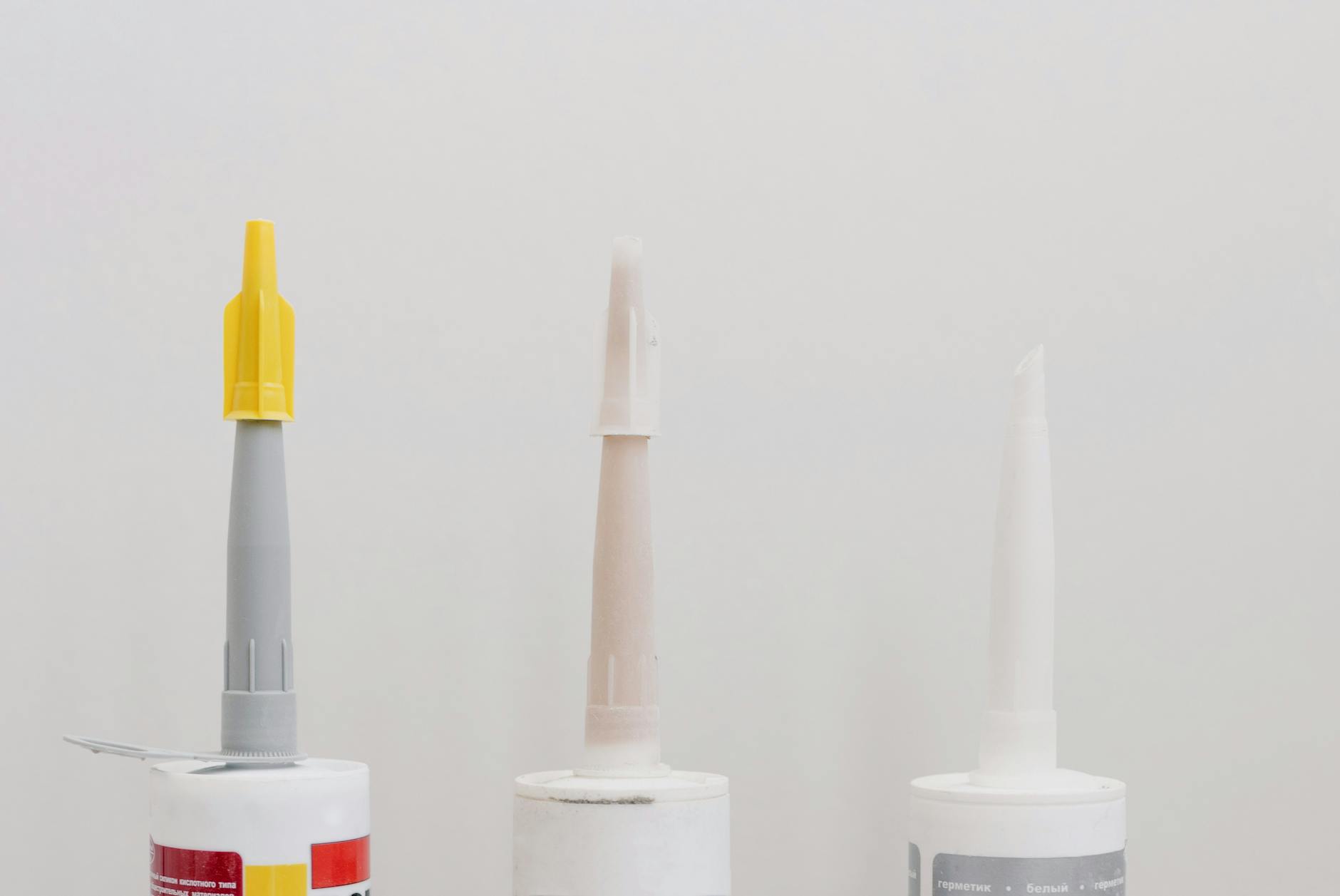
Cylinder thermostat replacement cost London — 2026 prices
Every quote is a fixed figure given on site after a 15-minute diagnostic. No call-out fee on quoted work, no parking add-ons, and out-of-hours premiums are stated up front before any spanner is lifted.
| Job | What's included | Typical cost |
|---|---|---|
| Cylinder thermostat replacement — wired strap-on (indirect) | Like-for-like wired strap-on thermostat (Horstmann HRT4-ZW, Danfoss RET230, Honeywell L641A), isolate, swap, recommission, test. | £155–£220 |
| Cylinder thermostat replacement — pocket / bulb-type | Spring-clip strap or capillary bulb stat (Sunvic SZP, Tower Manton) — replacement, repositioning, calibrated cut-out set to 60°C. | £165–£240 |
| Dual immersion thermostat replacement (direct cylinder) | Twin element top & bottom thermostats with non-self-resetting high-limit cut-outs, drain to immersion boss, refill, vent, electrical safety check. | £195–£290 |
| Wireless cylinder thermostat upgrade | Honeywell DT92E, Drayton Wiser HotWater, Salus RT510TX — receiver, programmer pairing, hot water schedule configuration, app onboarding. | £245–£385 |
| Smart hot water control retrofit (Hive / Nest / Wiser) | Smart hub install, wiring centre re-termination, motorised valve interlock, hot water timer & app setup, full system test. | £385–£575 |
| Energy cut-out (high-limit stat) replacement — unvented | Non-self-resetting 85°C cut-out on the cylinder boss, root-cause check before reset (G3 rule), commissioning logbook entry. | £175–£260 |
| Thermostat + motorised valve diagnostic | Full system trace — boiler stat, cylinder stat, 2-port motorised valve, programmer call-for-heat — to isolate the actual fault. | £125 diag |
| Out-of-hours / emergency stat callout | Evenings, weekends, bank holidays — same-day attendance, +20% on standard rates, van-stock common stats fitted on first visit. | From £185 |
* Prices include VAT, parts, labour, commissioning and Benchmark logbook update. Full price list on the call-out fee & pricing page.
Need a fixed quote on your specific stat?
Call 0207 046 1363Our 5-step replacement process
Diagnose the actual fault
15–25 minBench-test the existing stat with a continuity meter. Confirm it is the stat — not a stuck motorised valve, failed programmer, cut-out tripped, or boiler-side fault. Around 30% of suspected stat faults are something else entirely.
Isolate & make safe
10 minCylinder electrically isolated at the spur. Heat source (boiler or immersion) locked off. Pocket bulb stats may need 100 ml of water out at the boss; strap-on stats need nothing draining.
Remove & replace
20–40 minStrap-on: pull strap, slide off, fit new, tighten to 50 mm overlap on the lagging. Pocket: withdraw bulb, swap capillary, refit thermal paste. Immersion: unscrew thermostat shroud, lift element-side stat free of the dry tube.
Wire & set
15 minTerminate to wiring centre, polarity checked, earth verified, set-point dialled to 60°C (Legionella minimum per HSG274 / L8). Bond to BS 7671 18th Edition where required.
Commission & certify
20 minRun the system up, witness stat cut-out at 60°C, log temperature & response time, update the Benchmark logbook, email the customer the commissioning record within 24 hours.
G3 compliance & Benchmark commissioning
Thermostat replacement on an unvented cylinder is a controlled service under Building Regulations Part G. That is not paperwork box-ticking — it is the legal framework that protects the homeowner, the manufacturer warranty, and the layered safety design that makes unvented hot water safe. Every job we book follows the same compliance trail.
Approved Document G3 — Hot water supply and systems
Thermostat work on unvented cylinders is a controlled service under Building Regulations Part G. The energy cut-out is the second of four safety layers — and the G3 rule is that the cut-out cannot be reset until the root cause is identified and rectified.
Legionnaires' disease — control of legionella in water systems
Stored hot water must be held at or above 60°C and reach outlets at 50°C within one minute. We set every replacement cylinder thermostat to 60°C minimum — never lower for energy-saving claims.
18th Edition Wiring Regulations (2018+A2:2022)
Every cylinder stat and immersion thermostat circuit is checked for RCD protection, isolator rating, bonding and earthing. Replacement work is documented in an Electrical Installation Certificate where notifiable.
Indirectly heated unvented closed storage water heaters
Specifies the layered safety devices on every UK unvented cylinder — the control thermostat is one of four. Replacement must preserve all four layers; ERL never bypasses a cut-out for convenience.
HHIC Benchmark commissioning scheme
Every cylinder shipped in the UK comes with a Benchmark logbook. Each thermostat or cut-out replacement is logged — date, engineer, set-point, witness test — to preserve the 25-year tank warranty.
Benchmark logbook — what we update on every visit
- Date of service, engineer name, G3 ticket number and expiry
- Old stat make / model, new stat make / model
- Set-point at handover (always 60°C minimum, per HSG274 / L8)
- Witness cut-out test result and trip-point recorded
- Outlet temperature at the nearest hot tap, measured and logged
- Customer signature and PDF copy emailed within 24 hours
Real London jobs — common faults & fixes
Every London property is different. Here are five anonymised thermostat jobs from the last twelve months — the diagnostic, the work, the final figure.
No hot water at all — 3-bed flat, Camden
Heatrae Sadia Megaflo CL 170L, 2019 install. Indirect cylinder, gas combi feeding a 2-port motorised valve. Customer reported no hot water at any tap. Diagnostic showed the wired Horstmann strap-on stat showing infinite resistance — open circuit, failed. New Horstmann HRT4-ZW fitted, valve interlock confirmed, system run-up to 62°C in 22 minutes. Total time on site: 70 minutes. Final invoice: £175 inc. VAT.
Scalding hot water — Victorian terrace, Islington
210L Gledhill StainlessLite Plus, 2016. Customer reported bath taps running at 71°C — clear scald risk. Cylinder stat had failed in a closed-call position — the high-limit cut-out had then tripped at 85°C, but the customer had reset it without diagnostic. We traced the stuck stat, swapped it, then verified the cut-out function with a controlled overheat test before re-arming. £210 inc. VAT.
Wireless stat retrofit — Wandsworth maisonette
Customer wanted phone-based hot water control without re-routing cables through a finished ceiling. Existing Honeywell wired strap-on replaced with a Honeywell DT92E wireless stat and BDR91 receiver paired to the existing S-Plan wiring centre. Schedule programmed via the customer's app, away mode tested. £295 inc. VAT.
Tripping RCD — twin immersion direct cylinder, Hackney
1970s mid-terrace, direct electric cylinder, no gas. Bottom immersion element thermostat had failed with internal moisture causing intermittent earth-leakage trips on the consumer unit. Both thermostat and cut-out replaced as a pair, the element megger-tested at 35 MΩ (good), electrical safety certificate updated. £230 inc. VAT.
HMO scald risk — Tower Hamlets
Landlord G3 service flagged a stat reading 67°C against a 60°C set-point — drift over time. Strap-on stat replaced, all TMV2 bath outlets re-verified to 43°C, written confirmation issued for the HMO licence file. Cost: £225 inc. VAT.
Suspect a failed cylinder stat?
No hot water, scalding hot water, or boiler short-cycling — call the landline and a G3 engineer will diagnose over the phone in two minutes. Same-day attendance across central London, fixed-price quote on site, Benchmark logbook updated before we leave.
Areas covered across London
Cylinder thermostat work carried out across every London borough. Heaviest call volumes from Camden, Westminster, Islington, Hackney, Tower Hamlets, Wandsworth, Kensington & Chelsea and Hammersmith & Fulham.
Frequently asked questions
What does a cylinder thermostat actually do?
How do I know if my cylinder thermostat has failed?
How much does cylinder thermostat replacement cost in London?
Wired or wireless cylinder thermostat — which should I choose?
Can I replace a cylinder thermostat myself?
What temperature should a cylinder thermostat be set to?
My energy cut-out keeps tripping — should I just reset it?
Will a new cylinder thermostat save me money?
Do you replace immersion heater thermostats too?
How long does the replacement take?
Do I need to be at home for the visit?
Is the work guaranteed?
Can you fit a Hive, Nest or Wiser hot water control?
What if my whole cylinder needs replacing instead?
Are you available out-of-hours for thermostat emergencies?
Question not answered? Call 0207 046 1363 and talk to a G3 engineer directly — no call centre, no triage.
Service area
Service Area — All London Boroughs
G3 qualified cylinder engineers based in central London with same-day cover across all 32 London boroughs and the City. Average response time inside Zone 2 is 60 minutes for emergencies.

No hot water? Scalding hot water? Short-cycling cylinder?
G3 qualified engineers across London. Same-day attendance, fixed-price quote on site, Benchmark logbook updated before we leave. £5M public liability, fully insured, 24/7 emergency line on the landline.
Emergency Repairs London Ltd · Company No. 17120057 · £5M public liability · G3 qualified · 24/7 emergency line