HMO Fire Risk Assessment in London
Borough-licensing-ready HMO fire risk assessments across London from £169. PAS 79-1:2020 inspection, LACORS-compliant, annual review for every licensed HMO. Same-week booking, digital report within 48 hours.
Lodged with Camden, Hackney, Tower Hamlets, Newham, Brent, Waltham Forest and every selective licensing borough.
Mobile / WhatsApp: 07456 975436
An HMO fire risk assessment in London costs £169–£249 depending on size. Every licensed HMO must have one reviewed annually under the Management of Houses in Multiple Occupation (England) Regulations 2006 and the Regulatory Reform (Fire Safety) Order 2005. The PAS 79 report is lodged with the borough licensing team and must reference the LACORS National Fire Safety Guidance.
What is an HMO fire risk assessment?
An HMO fire risk assessment is the formal, written record that the responsible person — the landlord, managing agent or operator of a House in Multiple Occupation — has identified every fire hazard in the building, assessed who is at risk, and put proportionate measures in place to remove or control those risks. It is mandatory under Article 9 of the Regulatory Reform (Fire Safety) Order 2005 for every HMO with shared escape routes, and a current copy is a condition of every borough HMO licence in London.
Our assessor follows the PAS 79-1:2020 methodology — Fire risk assessment in premises other than housing — Code of practice. PAS 79 sets out the five-step structure used by every reputable risk assessor in the UK: identify the hazards, identify people at risk, evaluate and act, record and inform, and review. The assessment is benchmarked against the LACORS National Fire Safety Guidance for HMOs, which every London borough environmental health team uses as the working compliance standard.
The output is a written report lodged in the borough HMO licensing portal — a significant findings log, a priority-rated remedial action plan with statutory deadlines, drawings of the escape route and a clear statement of compliance status. It is the single most scrutinised document in an HMO licence renewal, and the most common reason for a renewal to be refused or delayed.
When an HMO needs a fire risk assessment
HMO fire safety duty is triggered by occupancy, not by licence type. The duty applies to every HMO under the Housing Act 2004 — a property with three or more occupants from two or more households sharing kitchen, bathroom or living facilities — regardless of whether it is mandatorily licensed, additionally licensed or selectively licensed.
- Mandatory licensed HMOs — five or more occupants from two or more households. Annual fire risk assessment required as a condition of licensing in every London borough, reviewed every 12 months, re-done in full on any layout change.
- Additionally licensed HMOs — three or four occupants in boroughs operating an additional licensing scheme (Camden, Tower Hamlets, Hackney, Brent and others). Same annual FRA duty as a mandatory licence.
- Selective licensing properties — any rented property in a designated selective licensing area (Newham, Croydon, Waltham Forest, Enfield, parts of Tower Hamlets). The borough licence conditions require a written fire risk assessment regardless of HMO status.
- Unlicensed HMOs with shared common parts — the Regulatory Reform (Fire Safety) Order 2005 still applies. The landlord is the responsible person and a written FRA is required for any HMO with five or more occupants by Article 9(7).
- Material changes — any change of layout, new kitchen, loft conversion, change of tenant cohort or fire incident triggers a re-assessment under PAS 79 Step 5. Combined with the EICR and smoke alarm installation on the same visit for portfolio efficiency.
Our HMO fire risk assessment service
Every HMO fire risk assessment is carried out by a qualified fire risk assessor on the Institution of Fire Engineers (IFE) or Fire Protection Association (FPA) register, holding current third-party certification under a UKAS-accredited scheme. The assessor brings calibrated equipment for door gap measurement, smoke seal testing, alarm decibel readings and emergency lighting illuminance checks.
HMO bookings are usually attended within 3 to 5 working days across London. Same-week slots are routinely available for landlords approaching a licence renewal deadline. Multi-property bookings on portfolio landlord accounts are scheduled in a single afternoon block to minimise tenant disturbance. Access notices are coordinated with the managing agent at booking — every bedroom needs to be accessible for the door survey.
Digital reports are issued within 48 hours in PAS 79-1:2020 format, sized to upload directly to the borough HMO licensing portal. Significant findings are colour-coded by priority — High (28 days), Medium (90 days), Low (12 months) — with a clear remedial action plan. Any high-priority finding can be fixed-price quoted on the same visit and remedied within the borough deadline by our in-house compliance teams.

HMO fire risk assessment cost — transparent pricing
Pricing is by HMO size, banded against the LACORS HMO categories. A fixed figure is confirmed on the call based on the bedroom count, the number of storeys, the presence of a basement, and whether the property is a single-let HMO or a converted block. No VAT add-ons, no parking charges, no premium for borough-specific licensing portals.
| HMO Type | What's Covered | Price |
|---|---|---|
| 3-bedroom HMO (small) | Small HMO under selective licensing - PAS 79 inspection. | £169 |
| 4-bedroom HMO | Mandatory licensed HMO - common parts + sample bedroom checks. | £179 |
| 5-bedroom HMO | Larger mandatory HMO - full corridor and escape route audit. | £219 |
| 6-bedroom HMO | Multi-storey HMO - fire door survey, compartmentation review. | £229 |
| HMO communal block | Block-wide HMO common parts assessment. | £249 |
* Prices include VAT. Larger HMOs (7+ bedrooms) and purpose-built HMO blocks are quoted on the call.
Need a borough-ready HMO FRA this week?
Same-week slots across every London borough. PAS 79 PDF in your inbox within 48 hours of the visit.
What's included in every HMO FRA
- PAS 79-format five-step fire risk assessment for the Regulatory Reform (Fire Safety) Order 2005
- Compliance check against the LACORS National Fire Safety Guidance for HMOs
- Fire door inspection — intumescent strips, smoke seals, self-closers, gaps and integrity
- Escape route audit — width, lighting, signage, travel distance from furthest bedroom
- Compartmentation review — 30 or 60 minute separation between bedsits, kitchens and stairs
- Detection and alarm grading check against BS 5839-6 (LD1/LD2/LD3 system for HMOs)
- Emergency lighting check against BS 5266-1 in stairwells and internal corridors
- Kitchen fire safety — fire blankets, extinguishers, gas isolation, cooker provision
- Significant findings log with priority risk ratings and remedial action plan
- Digital PDF report formatted for borough HMO licensing submission within 48 hours
The four highest-risk HMO hazards we check
HMO fires have a different risk profile to single-family lets. Shared kitchens, longer travel distances, multiple sleeping risks behind individual lockable doors and post-conversion compartmentation breaches dominate the picture. Every PAS 79 assessment focuses scrutiny on four core areas before moving to secondary risks.

The single highest-risk room in any HMO
Shared kitchens are responsible for around 60% of HMO fires. The assessment inspects the cooker provision (one hob per five sharers under LACORS), the fire blanket and CO2 extinguisher placement, gas isolation valves, range hood ducting, the 30-minute fire door separating kitchen from escape route, and storage of combustibles. Open-plan kitchen-to-living spaces in converted flats trigger specific compartmentation findings.
Protected route from every bedroom to a final exit
Every bedroom must have a protected route to a final exit, lit by emergency lighting and free from storage. LACORS sets travel distance limits — 9m single direction, 18m two-way — and requires 30-minute fire resistance on stairwell construction in two-storey HMOs, 60-minute in three-storey and above. The audit measures actual travel distances, checks for obstructions, and tests every door on the route.
FD30 / FD60 doors to bedrooms and risk rooms
FD30 (30-minute) fire doors are required to every bedroom, kitchen and risk room in a licensed HMO. The survey records the certifier label, intumescent strip condition, cold smoke seals, self-closer operation, hinge count and gap tolerances (3mm sides, 8mm bottom). Painted-over strips, missing self-closers and packed-out gaps are the most common HMO licensing failures across London boroughs.
Walls and ceilings that hold fire for 30 or 60 minutes
Each bedsit in a licensed HMO must be a fire-resisting compartment — walls, ceilings, floors and service penetrations have to maintain integrity for 30 minutes (LACORS Type B) or 60 minutes (Type C in larger HMOs). The inspection looks for breaches around extract fans, service risers, loft hatches, downlighters and any post-conversion alterations that may have punctured a fire-resisting line.
Secondary risks — electrical (cross-checked against the property's current EICR), gas appliances, smoking management, refuse storage, external means of escape and arson protection — are recorded in the significant findings log with their own priority ratings.
What "council-approved" actually means
There is no statutory accreditation scheme called "council-approved" — but every London borough has a documented standard for what an HMO fire risk assessment must contain to be accepted at licence renewal. The shorthand "council-approved" means a report that meets all of those standards and is routinely accepted without challenge.
In practical terms that requires four things: a PAS 79-1:2020 structured methodology, a clear reference to the LACORS National Fire Safety Guidance, a competent assessor (third-party certified on a UKAS-accredited register such as IFE, FPA, BAFE SP205 or IFSM), and a significant findings log with priority ratings and timeframes. Reports missing any of those four elements are commonly rejected by Camden, Hackney, Tower Hamlets, Newham, Brent and Waltham Forest licensing teams.
Beyond the licensing portal, the report has to stand up to scrutiny from the London Fire Brigade. The LFB has prosecutorial powers under Article 32 of the Regulatory Reform (Fire Safety) Order 2005 and routinely audits HMO FRAs after every reportable incident. A weak risk assessment is the single most common evidential lever in Fire Order prosecutions in London.
Portfolio HMO landlord benefits
For landlords and managing agents running three or more HMOs in London, the fire risk assessment sits inside a wider compliance calendar that also holds EICRs, gas safety certificates, PAT testing, legionella checks, smoke alarm installation and fire alarm testing. Aligning those expiry dates saves real money and removes the licence-renewal panic.
- • Portfolio discount — 10–20% off HMO FRAs from three properties, scaling with volume.
- • Combined HMO FRA + fire alarm testing + EICR in a single attendance.
- • Annual review reminders keyed to each borough's HMO licence anniversary.
- • Borough-specific report templates pre-mapped to Camden, Hackney, Tower Hamlets, Newham and 20 other portals.
- • Consolidated monthly invoicing with property-level breakdown and VAT receipts.
- • Remedial work fixed-price-quoted on site — no second visit fee on agreed works.
Penalties for HMO fire safety breaches
Enforcement is shared between the borough housing standards team (Housing Act 2004) and the London Fire Brigade (Regulatory Reform (Fire Safety) Order 2005). Both can prosecute, both can issue unlimited fines on conviction, and both routinely do across London every year.
- Unlimited fines on conviction under Article 32 of the Regulatory Reform (Fire Safety) Order 2005 for failing to make a suitable and sufficient fire risk assessment. Recent London prosecutions routinely reach £30,000–£150,000 per HMO.
- Civil penalties up to £30,000 per offence under the Housing and Planning Act 2016 for breach of HMO management regulations — issued by the borough without going to court.
- Rent Repayment Orders at First-tier Tribunal — tenants can recover up to 12 months of rent where the HMO was operating without a valid licence, and a missing or expired FRA is the most common trigger.
- Banning orders and the rogue landlord database under the Housing and Planning Act 2016 for repeat or serious HMO breaches.
- Insurance void — every commercial landlord policy requires a current FRA as a policy condition. A fire claim on an HMO with an expired or absent FRA is commonly refused.
- Loss of HMO licence — licence revocation by the borough means the property can no longer be operated as an HMO, with rent loss running into tens of thousands per year per property.
What we check on every HMO visit
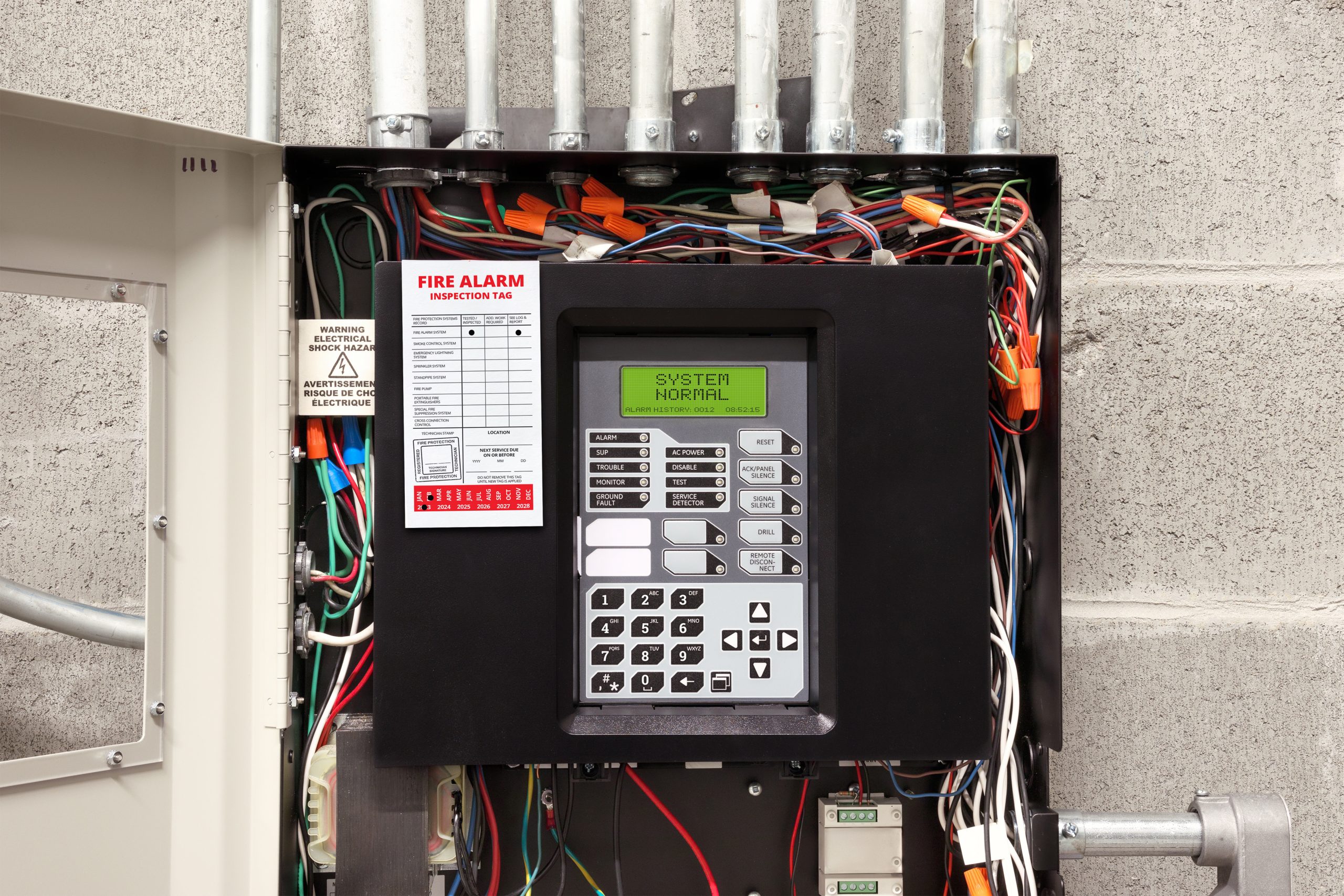
A working tick list runs through the five PAS 79 steps in order. Every item is photographed, measured and recorded in the significant findings log. Nothing is judged by sight alone — door gaps are measured with a feeler gauge, alarm sounders are decibel-tested at the head of every bedroom, emergency lighting is illuminance-checked at the floor.
- Fire detection grade against BS 5839-6 (LD1 / LD2 / LD3)
- Emergency lighting against BS 5266-1 in every common area
- FD30 / FD60 fire door survey — every door, every component
- Travel distance from furthest bedroom to final exit
- Compartmentation integrity — bedsit walls, ceilings, service penetrations
- Kitchen fire safety — fire blanket, CO2 extinguisher, gas isolation
- Means of escape signage and pictograms
- Fire safety information — notices in every bedroom and common area
- Refuse storage, smoking management, external means of escape
- Recent fire incidents, log book and tenant complaints review
Areas covered
HMO fire risk assessments are carried out across all 32 London boroughs. Heaviest HMO licensing volumes come from Camden, Hackney, Tower Hamlets, Newham, Brent, Waltham Forest, Southwark, Lambeth, Lewisham, Haringey, Islington and Westminster.
Frequently Asked Questions
How much does an HMO fire risk assessment cost in London?
How often is a fire risk assessment required for an HMO?
What regulations apply to HMO fire safety?
Does a small HMO under selective licensing need a fire risk assessment?
What is LACORS and why does it matter for HMOs?
What alarm system does an HMO need?
Do HMO bedrooms need FD30 fire doors?
How long does an HMO fire risk assessment take on site?
Will the report be accepted by the borough licensing team?
Can you do the remedial work as well?
Still have questions about your HMO?
Talk to our HMO compliance team direct. We will price the assessment on the call, book the visit within the week, and have the borough-ready PDF in your inbox within 48 hours of the inspection.
£5m Public Liability + £5m Employers Liability (Hiscox) • PAS 79-1:2020 certified assessor • VAT-registered invoices • Borough licensing portal-ready