Fuse Board Upgrade London
NICEIC registered electricians installing 18th Edition metal consumer units across London from £500. RCBO per circuit, Type 2 SPD, Part P certified, EIC issued on completion.
Most common reason for the upgrade: an EICR coded C2 because of missing RCD protection. We clear the fault and re-issue the EICR Satisfactory on the same visit.
Mobile? 07456 975436. Landline 0207 046 1363 answered 24/7.
A new 18th Edition metal consumer unit in London costs £500 for a 6-way, £650 for a 10-way, £800 for a 14-way and £900 for an 18-way — fitted, tested, certified and notified under Part P. Add £120 for Type 2 surge protection. Same-week install, EICR re-issued Satisfactory on the same visit.
What is a fuse board upgrade?
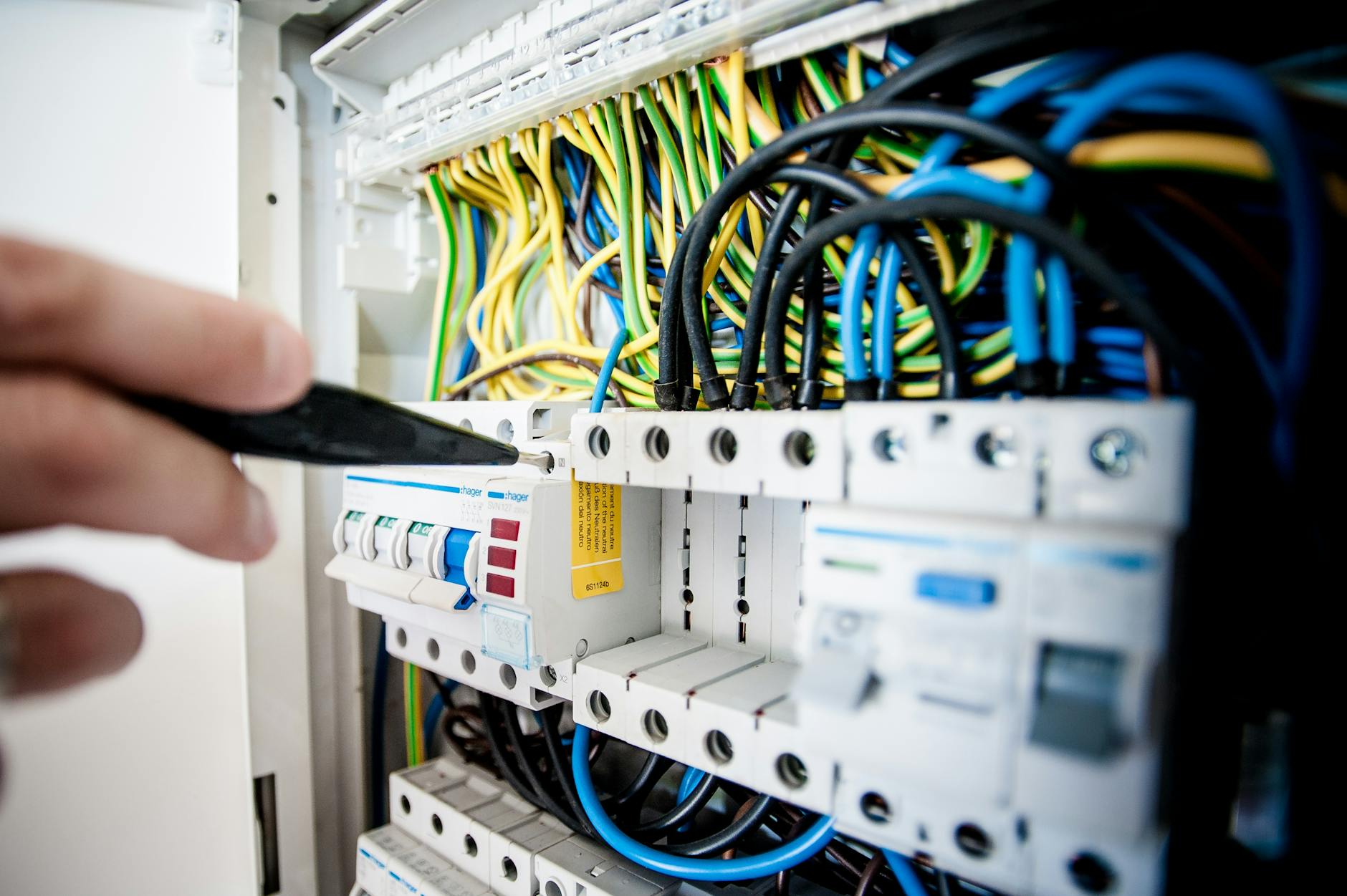
A fuse board upgrade — sometimes called a consumer unit replacement — is the swap of the protective enclosure that sits between your incoming meter tails and every circuit in the property. The old unit, often a wooden-backed BS 3036 fuse box from the 1960s or a plastic split-load RCD board from the 2000s, is removed and a new 18th Edition metal-clad consumer unit is fitted in its place, wired in to BS 7671:2018 Amendment 2:2022 standards.
Modern boards differ from older ones in three ways. The enclosure is steel (non-combustible) rather than wood or plastic. Each circuit gets its own RCBO — a single device combining over-current and earth-fault protection — instead of being grouped under a shared RCD, so a fault on the kitchen ring no longer trips the freezer, alarm and lights together. And a Type 2 Surge Protective Device is added at the main switch to absorb transient over-voltages from lightning and grid switching, satisfying BS 7671 Section 443.
The work is notifiable under Part P of the Building Regulations. As a NICEIC registered installer the certification, Building Control notification and final compliance certificate are all handled for you within 30 days at no extra cost.
When you need to upgrade
Most upgrade calls fall into one of four buckets. Reading them in order is the quickest way to know whether your board needs to go or just needs an RCBO swap.
EICR failed on RCD protection
An EICR coded C2 because socket circuits, bathroom circuits or kitchen circuits run without 30mA RCD protection is the most common reason a London landlord calls for a board change. A modern all-RCBO consumer unit clears those C2s in one visit and turns the EICR Satisfactory at re-test.
Wooden or plastic consumer unit
Older wooden back-boards and the plastic enclosures common before 2016 are routinely coded C3 — improvement recommended — because they do not meet the post-Amendment 3 requirement for non-combustible enclosures in domestic premises (BS 7671 Reg 421.1.201). Many landlords clear the C3 at the same visit as the EICR.
Cooked bus-bar or burnt neutrals
Brown discolouration on the bus-bar, melted neutral connections or a smell of bakelite around the main switch flags a board operating near its thermal limit. Continuing to use it risks an electrical fire. A full board change with correctly torqued connections is the only safe remedy.
BS 3036 rewireable fuses still in service
Rewireable fuse carriers (the old cartridge-and-wire type) cannot meet modern disconnection times and offer no RCD protection. On a current EICR they are usually coded C2 minimum, sometimes C1 if the wire gauge is wrong. An 18th Edition replacement board is the standard fix.
Not sure where your board sits? An EICR is the clean answer — it codes every observation against BS 7671 and tells you exactly which circuits are non-compliant.
Our fuse board upgrade service
Every upgrade is fitted by an electrician on the NICEIC register holding current 18th Edition (BS 7671:2018+A2:2022) and City & Guilds 2391 inspection and testing qualifications. Brands fitted as standard are Hager Design 10, Wylex NM Series, MK Sentry and Schneider Easy9 — all UK manufactured, all metal-clad, all stocked daily on the van.
The visit is sequenced to minimise downtime. Power is isolated at the meter at the start, the old board is photographed and removed, the new enclosure is mounted, tails and bonding are checked, every circuit is terminated into its own RCBO and labelled, then the whole installation is dead-tested (continuity, insulation resistance, polarity) and live-tested (Zs, RCD trip times) before re-energising. The first appointment of the morning means power back on by early evening.
On completion you receive a 6-page Electrical Installation Certificate signed under our NICEIC scheme number, a laminated circuit schedule inside the new cover, and a Part P Building Compliance Certificate by post within 30 days.
Fuse board upgrade cost in London — transparent pricing
Pricing is by the number of ways (final circuits) the new board will hold, plus any add-ons for surge protection, AFDDs or supply uprating. A fixed figure is confirmed on the call from a photo of the existing board sent over WhatsApp — we do not quote on a vague description.
| Configuration | What’s Covered | Typical Cost |
|---|---|---|
| 6-way consumer unit | Small flat or studio. Up to 6 final circuits, main switch + 6 RCBOs, metal enclosure. | £500–£750 |
| 10-way consumer unit | Typical 2–3 bed flat or terrace. Main switch + 10 RCBOs, metal enclosure, SPD ready. | £650–£900 |
| 14-way consumer unit | 3–4 bed house. 14 RCBOs covering ring mains, lighting, cooker, shower, EV/solar. | £800–£1,100 |
| 18-way consumer unit | Large house, HMO landlord board, separate annexe or outbuilding supply. | £900–£1,300 |
| Surge protection (SPD) add-on | Type 2 surge protective device fitted to incoming main switch — protects all circuits. | +£120 |
| AFDD per circuit | Arc Fault Detection Device — required on bedrooms in HMOs and recommended in lofts. | +£60 / circuit |
| Tails + earthing upgrade | 25mm tails, 16mm earth, new main earth clamp where existing supply is undersized. | from £180 |
* Prices include parts, labour, certification, Part P notification and VAT. Full pricing list on the call-out fee & pricing page.
What every upgrade includes
- Removal and safe disposal of existing wooden or plastic consumer unit
- New 18th Edition (BS 7671:2018+A2:2022) metal-clad consumer unit installed
- Individual RCBO per circuit — no shared RCD groups, no nuisance tripping
- Type 2 Surge Protective Device (SPD) wired to the main switch where specified
- Main earth conductor uprated to 16mm and bonded to gas and water service
- New 25mm meter tails between meter and consumer unit where existing tails are undersized
- Full circuit identification, labelling and laminated circuit schedule inside the cover
- Dead and live testing on every circuit before re-energising (continuity, IR, Zs, RCD trip)
- Electrical Installation Certificate (EIC) issued under NICEIC scheme registration
- Building Control Part P notification submitted via NICEIC within 30 days
How the upgrade works — 4 steps
- 1
Quote and survey
WhatsApp a photo of the existing board to 07456 975436. A fixed price is confirmed within the hour, covering the new consumer unit, RCBOs, SPD, certification and Part P notification. A site survey is offered free where the supply or earthing arrangement is unclear.
- 2
Isolation and removal
On the day, the meter is isolated, the old board is photographed for circuit identification, then carefully removed. Existing cable tails are tested and uprated to 25mm where needed. Main earth and bonding to gas and water are checked against BS 7671 Reg 411.3.1.2.
- 3
Install and test
The new metal-clad consumer unit is mounted, an RCBO is wired per circuit, Type 2 SPD is fitted at the main switch and every termination torqued to manufacturer spec. Dead tests (continuity, IR at 500V DC, polarity) and live tests (Ze, Zs, RCD trip at ½×, 1× and 5×) are recorded against BS 7671 limits.
- 4
Certify and notify
Electrical Installation Certificate (EIC) is issued on completion under our NICEIC scheme number. Part P notification is submitted to the local authority Building Control via NICEIC within 30 days. A laminated circuit schedule goes inside the new cover. If the visit was triggered by a failed EICR, a fresh Satisfactory EICR is also issued the same day.
Landlord and HMO upgrades
For HMO landlords the fuse board upgrade is almost always driven by EICR or licence renewal. London boroughs running Additional or Selective Licensing schemes routinely list non-compliant consumer units as a Category 1 hazard under the Housing Health and Safety Rating System (HHSRS), and refuse licence renewal until the board is replaced.
- • AFDDs fitted to bedroom circuits as standard on HMO upgrades (BS 7671:2018+A2:2022 Reg 421.1.7).
- • Combined upgrade + EICR re-issue the same day clears the 28-day landlord remedial clock.
- • Out-of-hours scheduling for tenanted properties at no premium — evenings and weekends.
- • Portfolio discount — 10–20% off boards from three properties.
- • Consolidated monthly invoicing with VAT breakdown per property.
- • Compliance calendar — 5-year EICR renewal reminder triggered from install date.
Areas covered
Fuse board upgrades carried out across all 32 London boroughs and the City of London. Heaviest install volumes come from Camden, Westminster, Islington, Hackney, Tower Hamlets, Southwark, Lambeth and Wandsworth.
Frequently Asked Questions

How much does a fuse board upgrade cost in London?
Why do I need to upgrade my fuse board?
What is the difference between a fuse board, consumer unit and distribution board?
How long does a fuse board upgrade take?
What is an RCBO and why do I need one per circuit?
Do I need surge protection (SPD) on my new board?
What is an AFDD and when is it required?
Will I need to rewire the whole house?
Does the new consumer unit need Building Control notification?
Can you do the fuse board upgrade and the EICR together?
Book your fuse board upgrade today
NICEIC registered electrician, fixed price confirmed from a photo, 18th Edition metal consumer unit fitted same week, EIC and Part P certification handled in full. Combined with an EICR re-issue where required.
Fully insured (£5m Public Liability, Hiscox UK) • Co. No. 17120057 • NICEIC scheme number on every certificate • Part P notification included